
The Red Sea is known for its stunning coral reefs, abundant marine life, and world-class dive sites. Among these is Abu Nuhas, a name synonymous with adventure, metal, and a fascinating glimpse into maritime history. In this blog post, we explore why Abu Nuhas is a shipwreck hub. We will look at the origins of the name, its location, topography, and why it’s considered one of the best dive sites in the Red Sea. We’ll also discuss practical tips for diving at Abu Nuhas.
Where Does the Name “Abu Nuhas” Come From?
Sha’ab Abu Nuhas (its full name) is derived from Arabic (شعب أبو النحاس), translating to “Father of Copper” or “Copper Father.” This name likely refers to the site’s rich history as a location where ships met their unfortunate fate. Over the years, Abu Nuhas has earned a reputation for being a ship graveyard, with many vessels succumbing to its hazards.

Location, location
Abu Nuhas is a shallow reef located in the Strait of Gubal, near the northern end of the Red Sea. It lies northwest of Shadwan Island and about 65 km from Hurghada. The reef is a navigation hazard because it sits extremely close to the busy shipping channel leading to or from the Suez Canal.
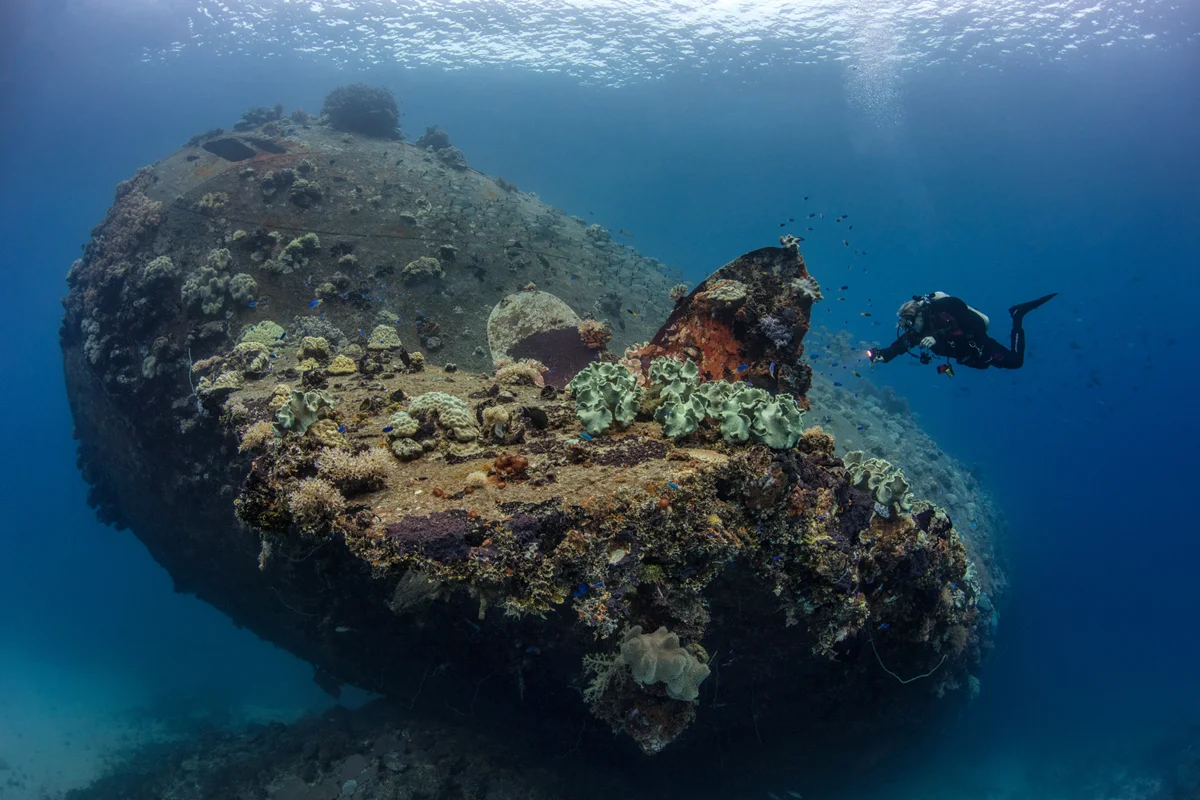
This unique location is what makes Abu Nuhas a hot spot for shipwrecks, offering a wealth of wreck diving opportunities; A shipwreck hub for us scuba divers.


Highlights: The Wrecks of Abu Nuhas, the Shipwreck Hub
Abu Nuhas is famous for its impressive collection of shipwrecks, each with its own story and allure. Among the most popular, and within recreational limits, wrecks to explore are:
- Carnatic: A British steamship that sank in 1869, known for its skeletal structure and abundant marine life.
- Giannis D: A Greek cargo ship that sank in 1983, now home to an array of corals and fish species.
- Chrisoula K: Another Greek cargo ship that sank in 1981, offering a unique glimpse into its engine room and cargo holds. We all know it as a the Tile Wreck due to the cargo it was transporting.
- Kimon M (controversies here!): Locally known as the “Lentil Wreck”, now a haven for schools of fish and vibrant coral growth.
Each of these wrecks provides a unique diving experience, from exploring the open holds of the Chrisoula K to the intricate engine rooms of the Giannis D (and their frankly disorienting angle!).

Why Abu Nuhas is One of the Best Dive Sites in the Red Sea
Abu Nuhas‘s appeal lies in its combination of historical intrigue, diverse marine life, and accessible diving. The shipwrecks offer a tangible connection to the past, while the surrounding reef supports a thriving ecosystem of corals, fish, and other marine creatures. This mix of history and biodiversity makes Abu Nuhas a top destination for divers seeking a well-rounded experience. And there are not many places in the world where you find such a concentration of wrecks in one spot!
The visibility in this part of the Red Sea is typically excellent, often reaching 20-30 metres or more, allowing divers to fully appreciate the wrecks and their surroundings. Additionally, the variety of wrecks means there is something for every diver. You can explore more or less intact wrecks – if you are a metal head – or simply enjoy a reef dive because the wrecks have now become reefs in themselves. There really is something for everyone!

Diving Practicalities
Best Time to Dive
The Red Sea enjoys a warm climate year-round and Abu Nuhas can be visited all year round. There really isn’t a ‘best time’ to dive this shipwreck hub!
As the wrecks are on the exposed side of the reef, we do need a semblance of calm weather but even with windier gusts, you still can dive some of the wrecks.

Certification Level
In order to fully enjoy the site, it is best to be certified as an Advanced Open Water Diver or equivalent. You will also benefit from diving the wrecks on nitrox to have an extended NDL.
Itinerarios
We visit Abu Nuhas on most of the Egipto Northern Red Sea itineraries onboard Blue Melody y Blue Horizon. To get the best out of it though, the Pecios del Mar Rojo itinerary is the ideal choice. While it can be visited on day trips from Hurghada, a liveaboard is a better way to maximise your time on site. Your vessel normally shelters in the calm lagoon, away from the waves, and you reach each wreck using the tenders.
Conservation and Safety
Conservation is crucial in the Red Sea, given its delicate ecosystem. Divers should follow responsible diving practices, avoid touching or damaging corals, and respect marine life. Safety should also be a top priority, with proper equipment checks, dive planning, and buddy systems in place.
Because of the confined spaces in some wrecks, additional safety measures, like redundant air sources and dive lights, are recommended.
It is also paramount that no souvenirs are collected.
Abu Nuhas is a must-visit destination for divers seeking a blend of history, adventure, and natural beauty. With its rich collection of shipwrecks, diverse marine life, and stunning underwater landscapes, it’s no wonder this site is celebrated as one of the best dive sites in the Red Sea. Whether you’re an experienced wreck diver or simply seeking a unique diving experience, Abu Nuhas offers something for everyone.
About the Author