
Cuanto más sepas sobre cada Laguna de Truk wreck, the more you will get out of your liveaboard holiday. Today, we are exploring an iconic wreck: the Fujikawa Maru.
Datos rápidos
| ESLORA | 132 metros |
| TONELAJE BRUTO | 6938 toneladas |
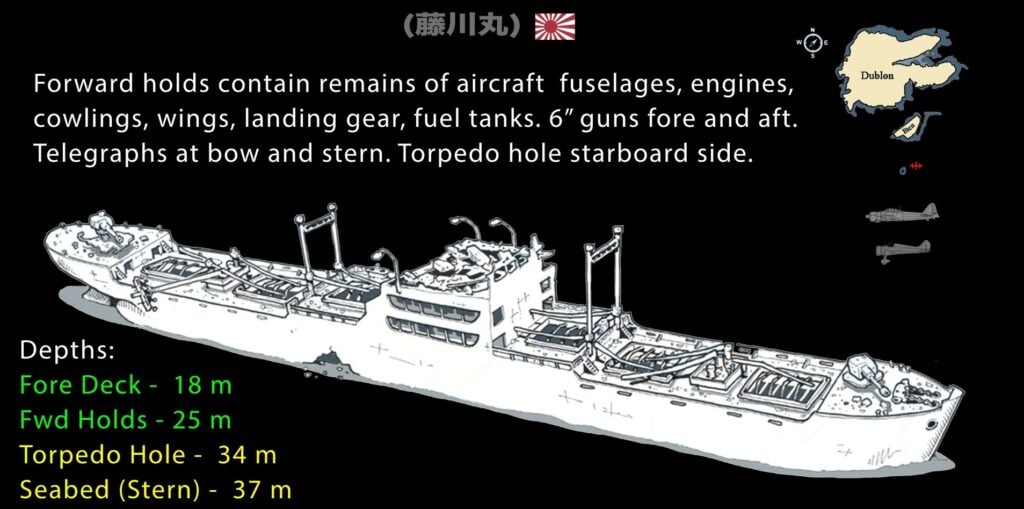
| PROFUNDIDAD EN EL FONDO | 34 metros |
| PROFUNDIDAD CUBIERTA PRINCIPAL | 18 metros |
| PROFUNDIDAD EN EL PUNTO MÁS SOMERO | 9 metros |
| ACCESIBILIDAD | Buceadores de todos los niveles |
El origen del Fujikawa Maru
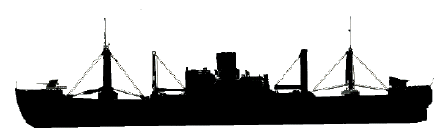
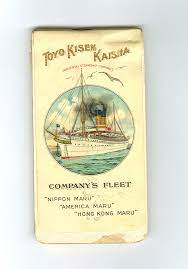
El barco se construyó originalmente en 1938 para la compañía Toyo Kaiun Kisen Kaisha con sede en Japón. Esta compañía prestaba servicios de carga y pasajeros por todo el Pacífico. Cubría rutas entre Norteamérica, Sudamérica y la India.
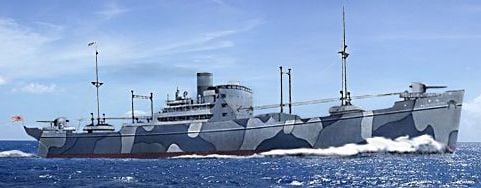
En 1940, el gobierno japonés requisó y se apoderó de la mayoría de las embarcaciones que pudo conseguir para el esfuerzo bélico. La Armada Imperial Japonesa reconvirtió esta embarcación en concreto, una de las 10, como embarcación de transporte, tanto de material como de personal.
War-time
Fujikawa Maru was based under the command of the 11th Fleet as part of the Air Flotilla 22. Her main task was transportation duty, including the delivery of planes and aircraft parts to island bases. During her conversion to a military vessel, the navy fitted her with six inch bow and stern guns cannibalised from old cruisers which had last seen action during the Russian Japanese war. She also had anti aircraft guns mounted on her boat decks close to the bridge wings.
A lo largo de la guerra, participó en la operación de Midway y también operó en las Aleutianas, Rabaul, Tarawa, las islas Marshall y Yokosuka.
On 12th September 1943, a torpedo fired by the United States submarine ‘Permit’ hit the Fujikawa Maru as she was on her way from Truk Lagoon to Kwajelein. She managed to head back to Truk before returning to Japan for her proper repair. Torpedo bombers from the aircraft carrier USS Yorktown hit her again on 5th December 1943. She suffered minor damages this time and so the navy decided to take her to Truk Lagoon to undergo repairs once again. She was back in service in January 1944 and continued her missions of ferrying aircraft all around the Pacific.
Los días 17 y 18 de febrero de 1944 fue alcanzada repetidamente por bombarderos y aviones torpederos estadounidenses como parte de la Operación Hailstone. Primero la alcanzó un torpedo lanzado por un avión del USS Bunker Hill. Quedó dañada, pero aún no de forma mortal. Las fotografías muestran que el barco seguía a flote a la mañana siguiente.
Los bombarderos en picado del USS Essex lograron un impacto directo con una bomba de 1.000 libras en la aleta de babor, y tres impactos cercanos antes de que se informara de que el barco estaba en llamas y echando humo. El ataque final lo realizaron dos aviones del USS Monterey, que informaron de una enorme explosión provocada por uno o dos de sus torpedos lanzados contra el barco. El Fujikawa Maru se hundió finalmente a primera hora del 18 de febrero, hacia las 7:15 de la mañana.
Bucear hoy en el Fujikawa Maru
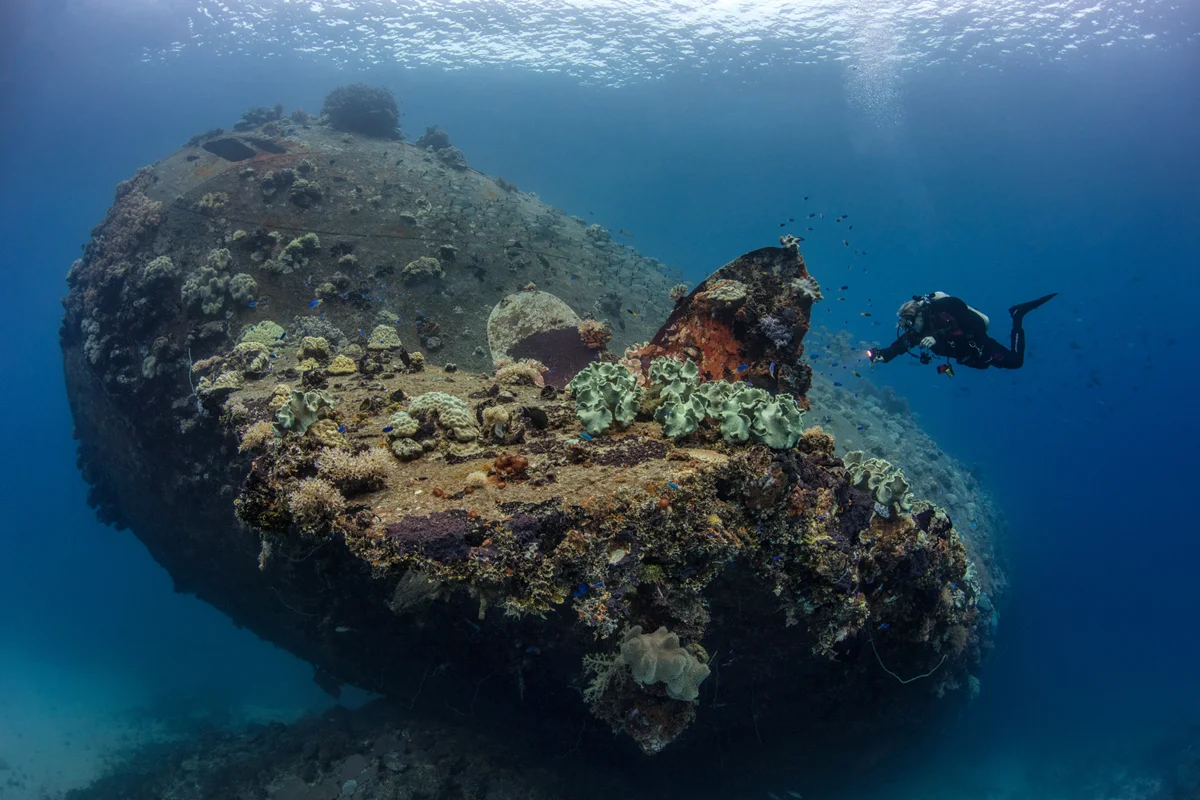
The Fujikawa Maru lies close to Eten Island. Es «el pecio» de la laguna de Truk y es un punto de buceo imprescindible. Reposa adrizado sobre su quilla en el fondo marino a 30 m/110 ft. Su cubierta está a 18 m/60 ft y la parte superior de la superestructura a 9 m/30 ft.
As you descend, very often the first sight will be the large six inch gun at the bow. This deck gun was produced by the British manufacturer, Elswick Ordnance Company for the Japanese Navy following the 1895 Sino-Japanese war. The builder’s plaque on the gun is still visible indicating its British manufacturer, serial number (12469) and the date of production – 1899.
Las bodegas
Right behind the gun, you will find the forward hold. And this is definitely worth a visit! It contains huge amounts of ammunition and disassembled Zero fighter planes. There is also a rare A5M “Claude” fighter plane in pieces; there are very few examples of that model in the world nowadays. The planes are all in pieces but it is very easy to see how they would all fit together: fuselages, propellers blades, wheels, wings, nose cones and tails assemblies.
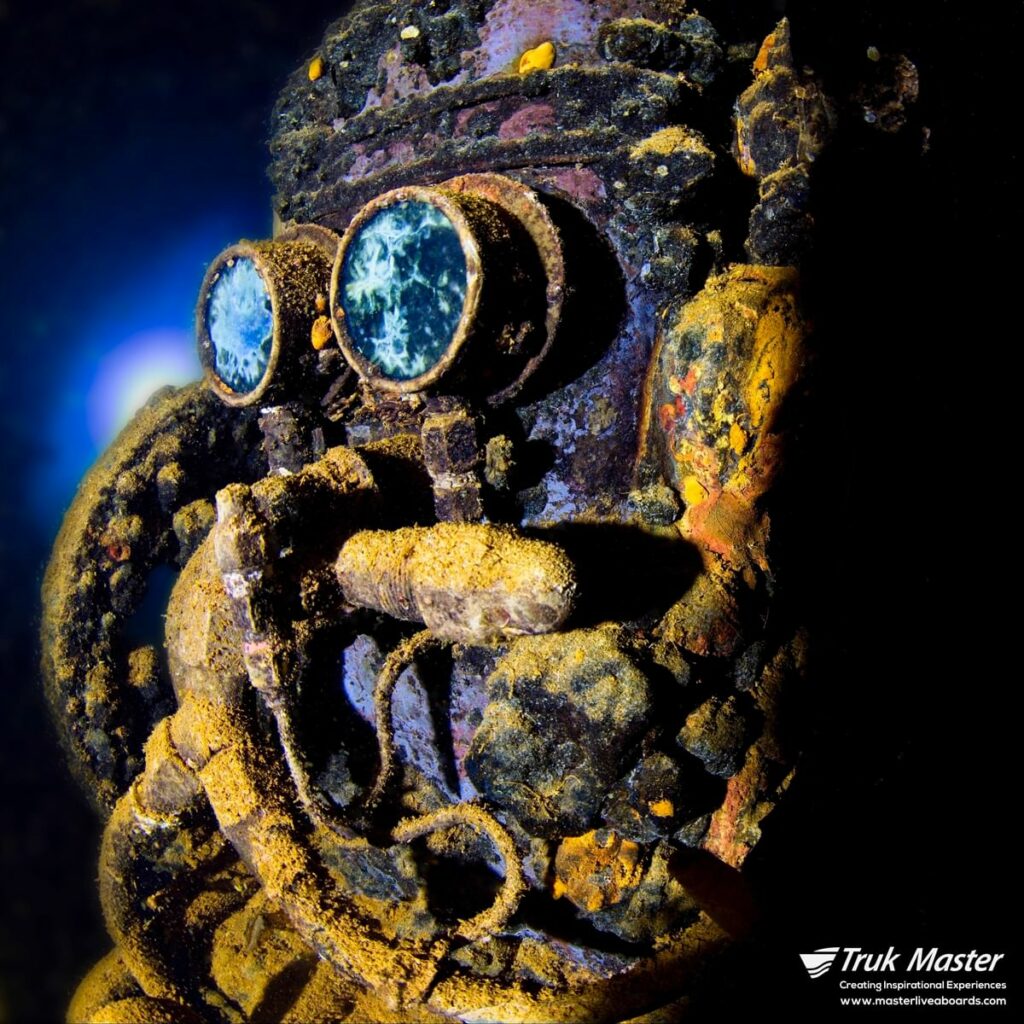
There is excellent access to the engine room and storage and work areas. The engine room is a very complete and surprising part of this wreck. You can swim along the metal companionways and go up and down the ladders: it feels very real. All the gauges and instruments are still there, tools lie all or are neatly hanging on the bulkhead. Most of the machinery still looks intact and one machine shop contains one of the most iconic “characters” of Truk Lagoon; R2D2. He is actually an air compressor.
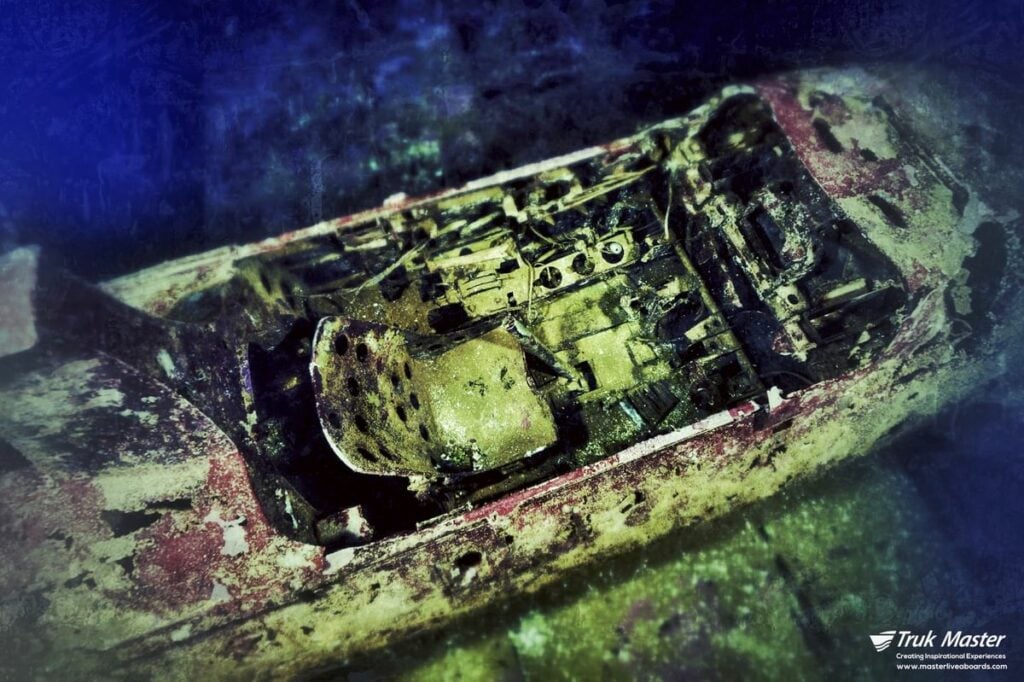
La segunda bodega contiene tanto tesoro como la primera. Hay una cabina de un caza Zero lista para montar, completa con sus indicadores e interruptores. Y, por supuesto: ¡toneladas de munición!
Objetos y mucho más
Working your way towards the stern, the superstructure is readily accessible with pilothouse, baths, staterooms, and galley. The bridge has been partially blown away but the order telegraph is still waiting for its instructions. Around this area, you will also be able to explore the galley which has a large coal burning cooking hob with various pots and pans lying around. Further along the passage is a bath house with tiled baths built up from the deck. There is also a row of urinals.
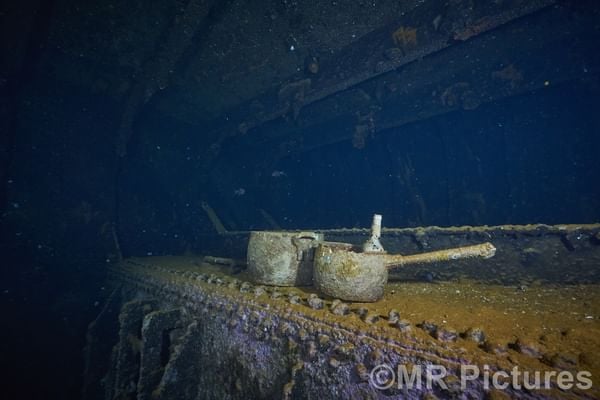
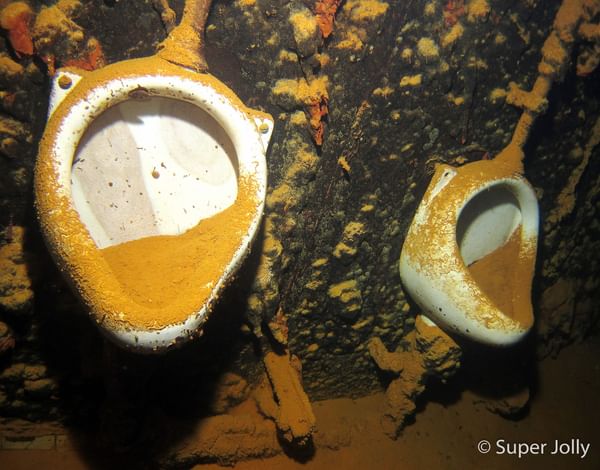
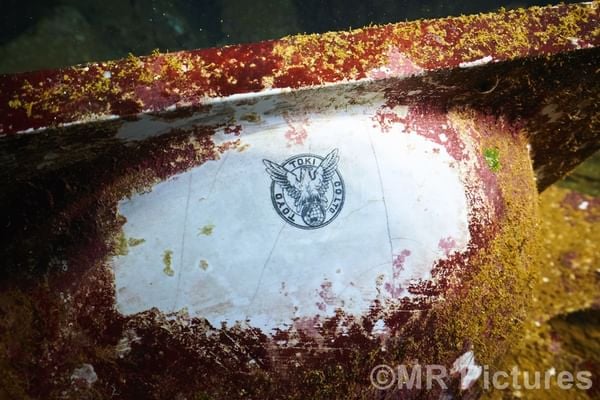
También es un pecio donde puedes encontrar montones de objetos: botellas antiguas y pequeños platos con las iniciales T.K. (Toyo Kien), cuencos, viejas máscaras de gas, botas y lámparas de latón.
¿Y más?
Para colmo, el coral y la vida marina del pecio son impresionantes. Corales blandos y esponjas rosas y blancas cubren el Fujikawa Maru. Bancos de atunes y peces más pequeños rodean el pecio, y una gran barracuda a menudo parece montar guardia sobre el cañón de proa. En conjunto, hay una abundancia de corales ricos y coloridos y bancos de peces de arrecife que puedes ver mientras buceas en este pecio.
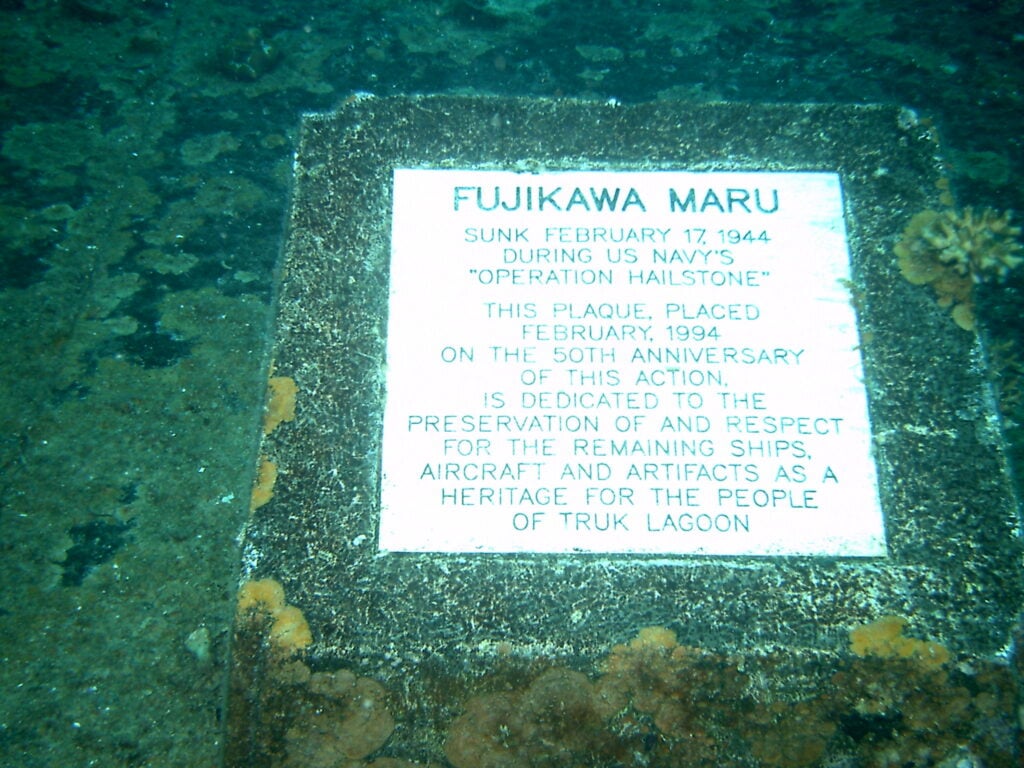
En la cubierta, una placa dedica la conservación y el respeto del Fujikawa y otros pecios de la laguna.
Aunque otros pecios puedan ser más grandes o tener más elementos bélicos, muy pocos pueden igualar la belleza de este deslumbrante pecio.
Para más información sobre el buceo en el Fujikawa Maru y otros pecios de la laguna de Truk, por favor contáctanos.
About the Author