
SEA-son’s greetings from us to you! We wish you all the best for the festive period and hope that these seasonal underwater critters will help you celebrate in a true scuba diver style!
Christmas Tree Worm
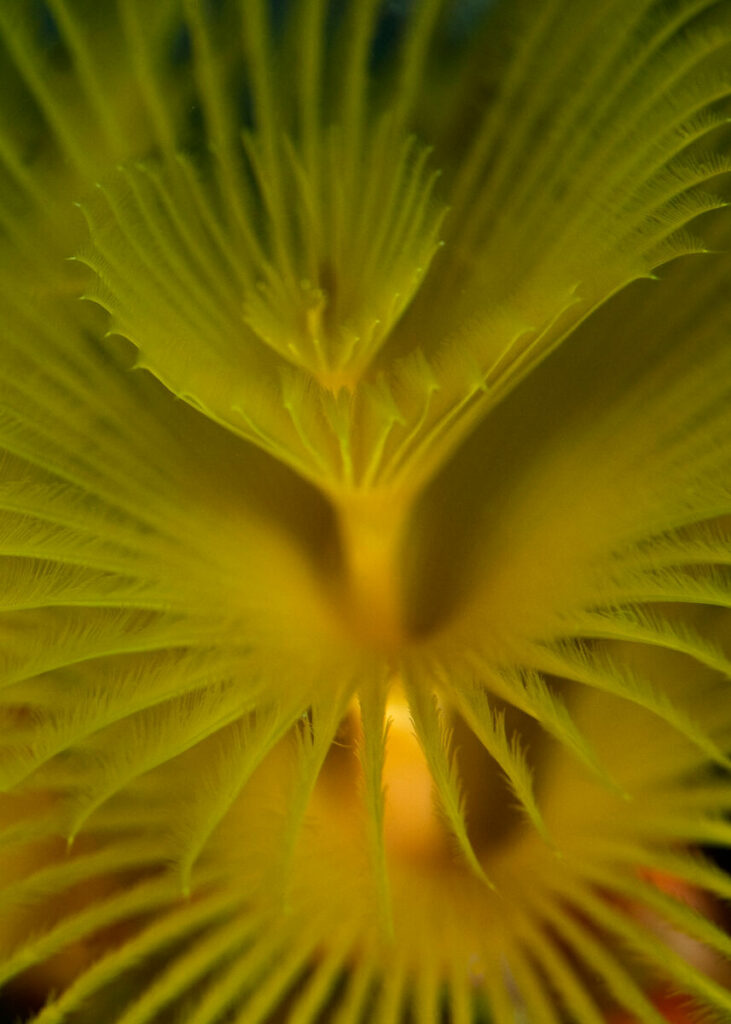
Credit: Jane Morgan
There is no better embodiment of the SEA-son’s spirit than a Christmas tree worm.
Christmas tree worms are part of the family of bristle worms and are widely distributed throughout the world’s tropical oceans. They are very common and you will know when you see one. They cannot be confused with anything else.
The reason for the name is fairly obvious, but why do they look like they do? Their branch-like appendages actually allow the worm to breathe and also catch prey floating by.
They embed themselves in hard corals, digging a hole to protect their sensitive parts. Their colours vary and to date, we still do not why, but you will see multicoloured Christmas Tree forests.
What we do know Christmas tree worms is that they are perfect underwater subjects and that divers often use them on their SEA-son’s greetings cards.
Starfish
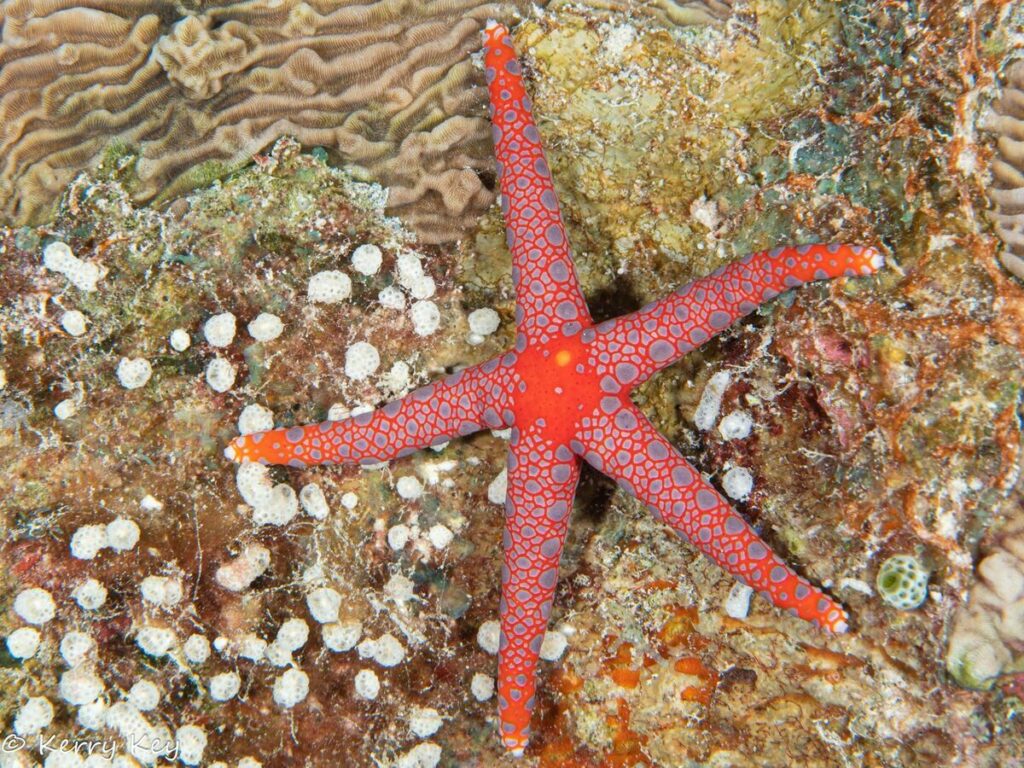
Most of us tend to add a star at the top of our Christmas tree. As such, we could not do this article without mentioning the starfish (also commonly called sea stars)! We saw this as rather fitting for this edition of SEA-son’s greetings from the underwater world.
Starfishes delight divers from the day they enter the underwater world. With over 1900 species, you have plenty of choice for a favourite! Thin or fat, small or big, and in all the colours of the rainbow, we are sure everyone secretly has a favourite one.
Snowflake Moray Eel
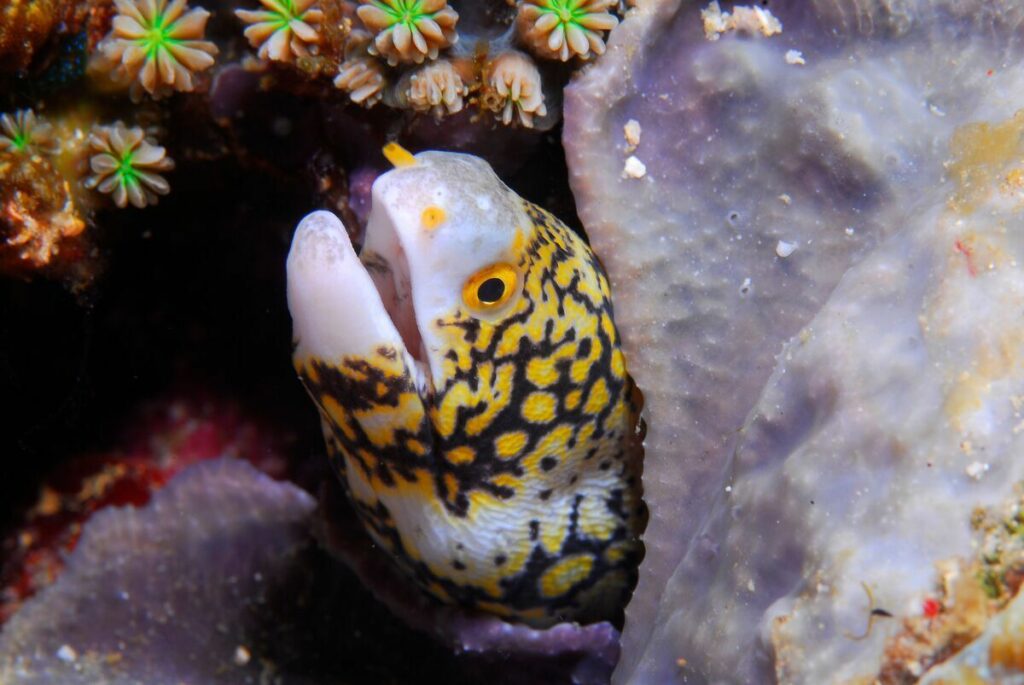
Snowflake moray eels have white, black and yellow splotches all over their bodies. This means that their colours and markings blend to look like snowflakes, hence the name of this amazing moray. Its Latin name (Echidna nebulosa) actually gave it its other common name of “clouded moray”. We prefer the festive name that reminds us of an amazing winter wonderland.
Snow flake morays inhabit reefs pretty much everywhere around the world and often seen by divers just sticking their heads out from hard coral heads. In fact, they are a very shy species but can grow up to 1m and are generally found from about 5m to 30m.
Angelfish
There is nothing more fitting for SEA-son’s greetings than an angel.
Underwater they are represented by the family of Angelfish. These fishes are found on shallow reefs in most tropical areas. The family has over 80 species – all angels are different!
They are normally brightly coloured fishes and really bring an underwater photo together. There is nothing else that screams dream diving! Their electric blues (present in many species of angelfishes and particularly in their juvenile form) is said to warn potential predators by making them think they are toxic.
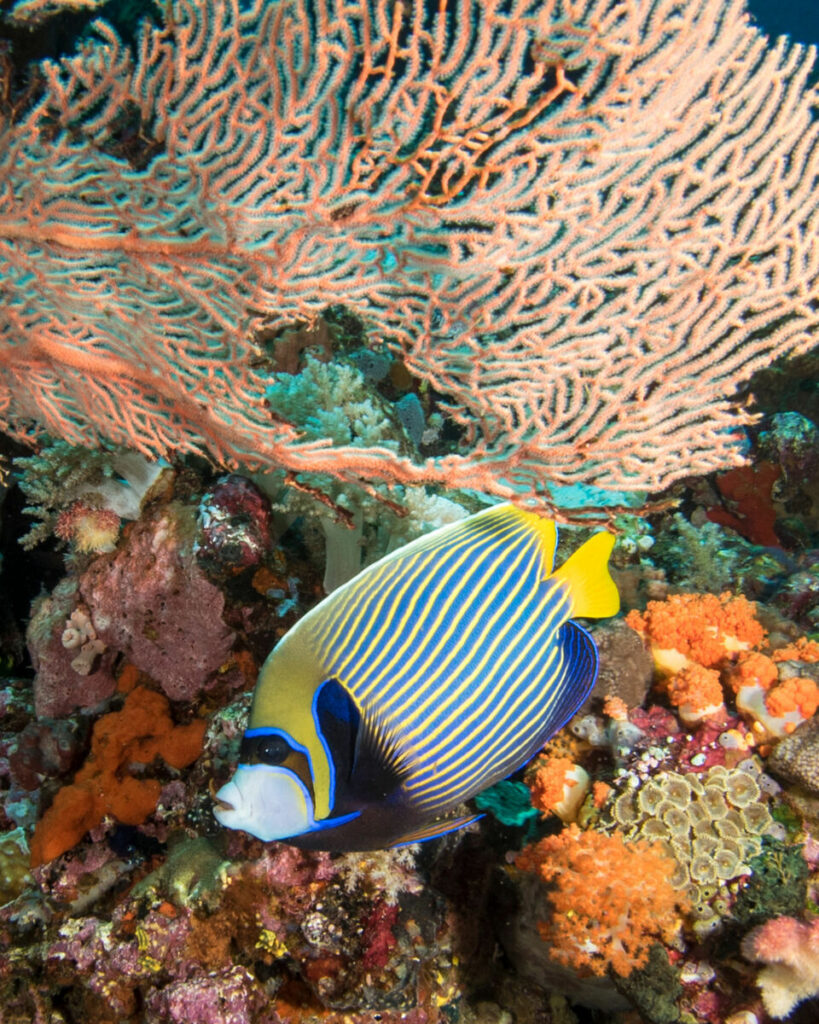
They range in size and are normally keen and curious fish – to our delight
Candy Cane Shrimp
Candy cane shrimps are a species of snapping shrimps that live in parts of the Pacific and Indian oceans. When you look at them, there is no doubt why they got their name.
These shrimps share their living space with goby fishes. They help the fish dig and maintain the burrow that they share on the seafloor. In turn the small, and mostly blind, shrimp get protection from predators from the fish. Because of this, you could say they are the housekeeper while the goby is the guard dog
Jingle shells
Saddle oysters, mermaids’ toenails, or Jingle shells have extremely thin, translucent, paper-like shells. You will normally find them around the Atlantic. Their flesh is unpleasant to eat, but their shells are really beautiful.
This makes them a favourite for beachcombers and means that you will often see them in jewelry or wind chimes. When several shells are strung together as a chime (or necklace), the sound directly makes you think of a jingle. The jingle sound is also heard when waves beat down upon beaches strewn with shells.
Treat yourself during this SEA-son and contáctanos to book your next liveaboard.
About the Author