
Antes de nada, queremos desearte unas felices Pascuas y esperamos que tu búsqueda de huevos sea fructífera.
Aunque en esta época del año todos solemos pensar en esos dulces de chocolate con forma de huevo, qué mejor ocasión para hablar de nuestros amigos submarinos y su particular comportamiento a la hora de poner huevos.
Como algunos sabréis, la mayoría de los peces emplean la técnica de la oviparidad. Es decir, ponen sus huevos con poco o ningún desarrollo embrionario dentro de la madre. Pero este método de reproducción se divide a su vez en opciones con y sin cuidado de la puesta.
Sin cuidado - Desove
desove normalmente significa que las hembras producen enormes cantidades de huevos, hasta 6 millones de huevos sin fecundar por individuo. Los huevos se liberan en la columna de agua para ser fecundados externamente por los machos.
Estos episodios están regulados por la naturaleza, a menudo por el ciclo lunar, lo que hace que sean bastante predecibles y relativamente fáciles de localizar.
Por lo general, solo tienes que estar atento a grandes concentraciones de una especie de pez concreta en un mismo lugar. ¡En esencia, es la versión pescadora de cuando todo el mundo sale de fiesta un sábado por la noche!
Uno de los mejores lugares para presenciar estos episodios es Palau. Puedes unirte a nuestros itinerarios especiales basados en las fases de luna llena y luna nueva para ver estos increíbles espectáculos en el momento en que ocurren.
Desove de luna llena
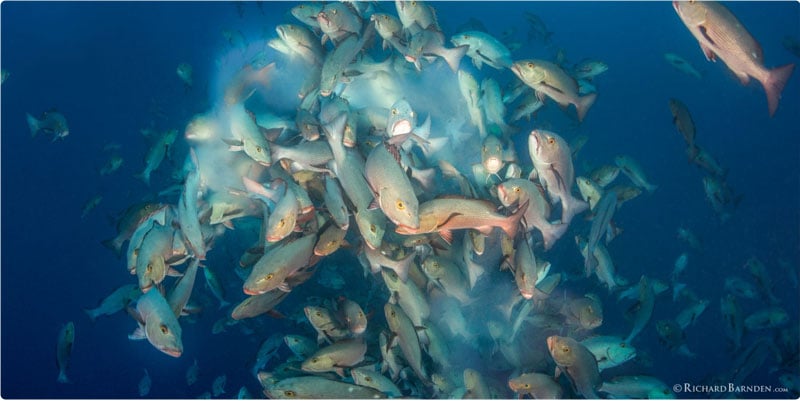
Durante itinerarios de buceo de luna llena, hasta 10.000 pargos rojos se reúnen para este evento mensual. Al amanecer, cuando la corriente aumenta, serás testigo de un espectáculo asombroso en el que las hembras suben disparadas a la superficie perseguidas por los machos, liberando huevos y esperma en una danza frenética.
Como los pargos están totalmente concentrados en el desove, estos eventos suelen atraer a varias especies de tiburones que lo ven como un bufé de desayuno perfecto.
Desove de luna nueva
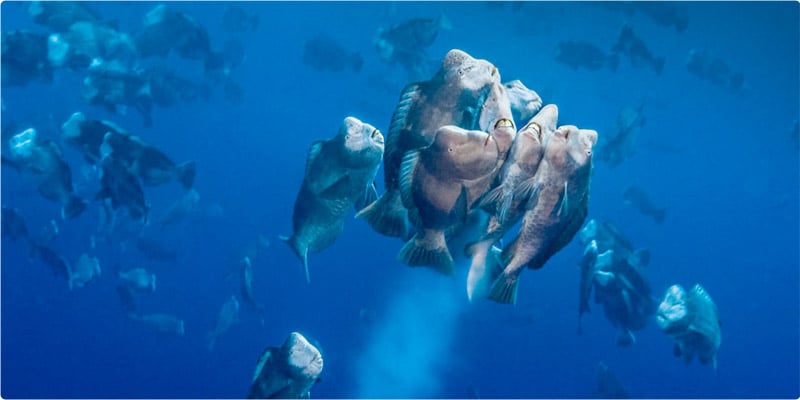
Durante itinerarios de luna nueva, los peces loro cabezón se reúnen en lo que se cree que es la mayor agregación de peces loro cabezón conocida hasta ahora en el planeta.
Todos sabemos lo raro que es ver a estos imponentes peces, pero ver cientos de ellos juntos es un espectáculo que realmente quita el aliento. Este desove también tiene lugar temprano por la mañana, justo al amanecer, cuando se alinean todos los elementos de luz, corriente y mareas.
The bumpheads change colour and after a gentle, and sometimes slightly manic, mating dance the females will shoot into the water column. They are chased by the males and they all release clouds of eggs and sperm in the hopes of starting life’s great dance.
Discreto
Aunque los desoves son espectaculares, con acción por todas partes, hay algunas especies que son un poco más tímidas y prefieren mantener un perfil bajo. Pero si abres bien los ojos, los huevos siguen ahí para que los busques. Algunas especies para empezar son:
Pez payaso
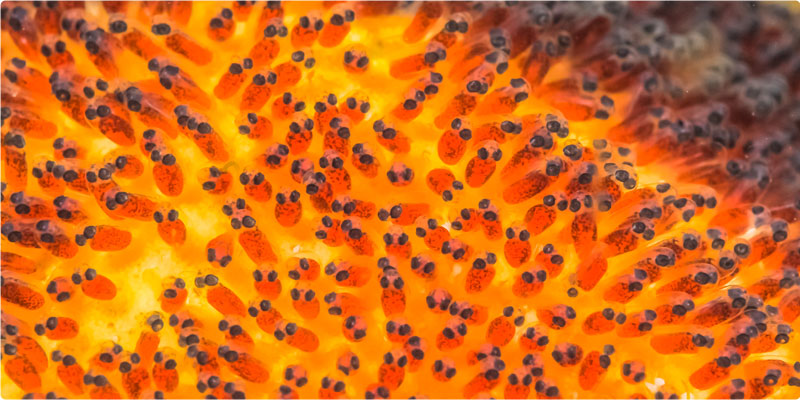
Clownfish eggs are some of the easier eggs to find! Mainly because they are right by the anemones the fish are living in. You know where to start looking! The eggs are laid on a rock under or next to their anemones. The laying tends to occur on the waxing gibbous (between full and half) moon. The young are normally ready to hatch around the full moon. If you happen to pass an anemone during these times, spend a few minutes searching. But be aware…clownfishes might be small but they are feisty and will defend their eggs tooth and nail. If you are patient enough and the fishes accept you, then you may witness them tending to their eggs. The dotting parents blow on them and brush them with their fins.
Pez cardenal
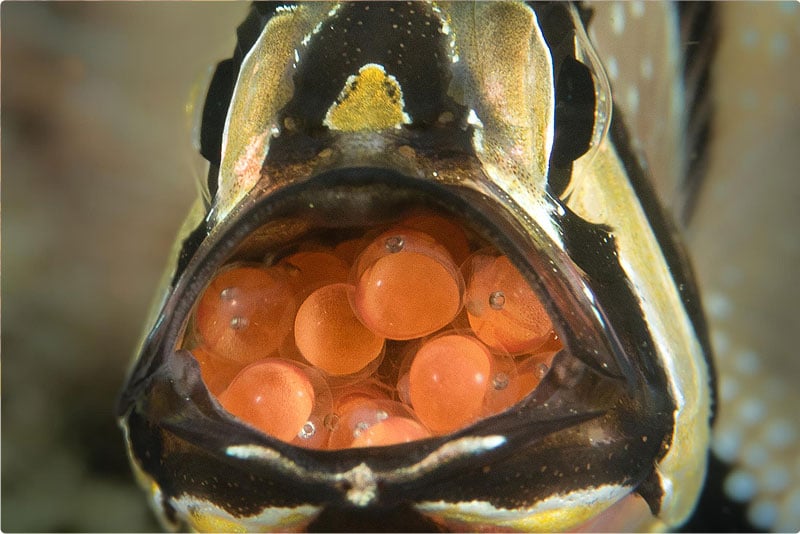
These are quite spectacular and somewhat unusual! The male actually incubates the eggs inside its mouth. That’s right…they keep them in their mouths from laying to hatching. The eggs are normally deposited around the new moon and hatch around the full moon. In order to find a male carrying eggs, just look at their extended and distended jaws. You need to be patient and allow the fish to accept you. If you’re lucky then you will be rewarded with a sight of the eggs! Every few minutes, a male cardinal fish will partially open its mouth to rotate the eggs. This is so they all grow to the same size. This process also allows to evacuate waste and renew aeration.
Pez fantasma y aguja
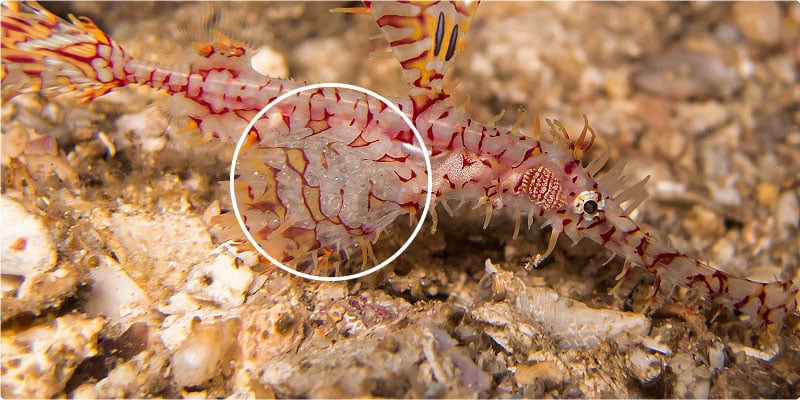
Both these species (similarly to their cousins seahorses) have a clearly full egg pouch. It is quite easy to spot a “pregnant one”. They both tend to start their cycle around the waxing moon to hatch at full moon. The species though are a little different. In the pipefish, the males carry the eggs while in the ghost pipefish, it is the female’s role. The way they carry their eggs is also rather different. The pipefish will attach them in a line under their belly and you can see the eggs straight away. Whereas for the ghost pipefish, only patience will reward you! As with the cardinal fish, the female will open her pouch at intervals to aerate the eggs. With luck, you will be able to see the eggs inside the pouch.
Esperamos que estos consejos te ayuden a encontrar los huevos de Pascua del mundo submarino.
¡Felices Pascuas!
About the Author