
Todos los que bucean en un crucero de buceo con Master Liveaboards han hecho un curso de aguas abiertas. Y si no de aguas abiertas, algo similar. La mayoría de los buceadores a bordo también habrán hecho al menos un curso de buceo adicional, si no más. Así que todos sabemos la respuesta a la pregunta básica de qué tamaño tiene nuestra botella, ¿verdad?
Pues no.
Pero ¿las botellas no son de un tamaño estándar? ¿Cómo puede ser?
The very short version is that tank designations and sizes is a very boring subject. People switch off when someone tries to explain it. We currently see the same phenomenon when people try to explain Bitcoin to others. We’re sort of interested. We know it could be good for us to know. But it’s so boring that we start thinking about what we are having for dinner instead.
There’s also the fact that people try to avoid conversations about standard tank sizes as they often break down into verbal and physical altercations. I can almost guarantee that some readers will argue out loud with their mobile devices as they read this article. Possibly, even while they are surrounded by people on a work commute. On the plus side, if you are a person that does this, you should at least get a seat to yourself.
En fin, relájate mientras nos adentramos valientemente en explicar por qué probablemente estás equivocado sobre las botellas.
¿Qué es una botella estándar?
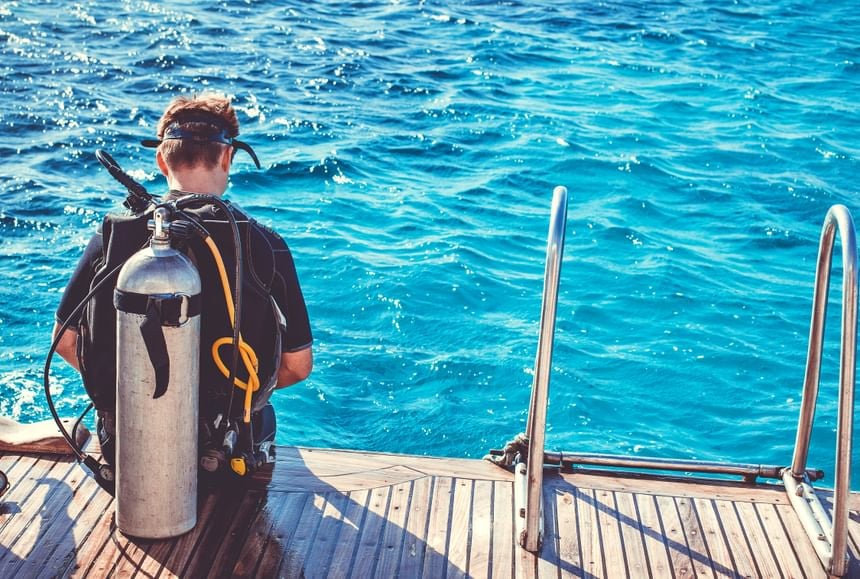
We’ll try and keep this interesting, but the first thing to know is that there is no ‘standard’ tank. There are many standardised sizes and many of them are in common use. But, even in single tank recreational diving, there is a confusing array of choice. To add to the confusion, depending where you are in the world, divers are likely to use the same designations differently.
Many of us will be aware of the very common liveaboard tank sizes of “12 litres” and “15 litres”. The “10 litre” tank is also pretty well used. In all cases though, the litre designations are, at best, misleading. At worst they are flat out wrong and prone to starting the aforementioned arguments. In fact this is why customer designations have almost become the norm. Any self respecting member of the dive crew will tell you that, which is why they tend to refer to these tanks as “small tank”, “normal tank”, and “big tank” when talking to customers.
Entonces, ¿me van a dar una botella estándar?
La mayoría (aunque no todos) de los cruceros de buceo recreativo usan botellas de aluminio. Pero incluso aquí, lo que te den puede variar ligeramente según la embarcación, la ubicación y, a veces, el fabricante. Aun así, la siguiente tabla te muestra lo que probablemente estés usando en los cruceros de buceo, basándose en un único fabricante:
| Designación | Tipo | Capacidad (litros) |
|---|---|---|
| Botella pequeña | C60 | 7.9 |
| Botella normal 1 | S80 | 11.1 |
| Botella normal 2 | C80 | 10.3 |
| Botella grande | C100 | 13.2 |
Entonces, ¿qué estás viendo aquí? Bueno, lo primero que notarás es que hay dos «botellas normales». No solo eso, sino que te costaría mucho distinguirlas en una fila. Un poco como Kylie y Kendall Jenner. Si sabes del tema, podrás diferenciarlas; pero, para la mayoría de la gente, son básicamente iguales. Pero ten por seguro que son son diferentes. Lo segundo que nota la mayoría es que los 12 y 15 litros faltan por completo de la lista y el 10 está en el lugar equivocado.
Todo lo anterior es cierto. Pero es la realidad. Ni siquiera hemos incluido la (diferente) cantidad de aire que contienen estas botellas. Los fabricantes no lo hacen, así que puedes estar muy pero que muy seguro de que no vamos a pisar ese hielo tan fino.
Entonces, ¿cómo de grande es mi botella? ¿Es esto realmente importante?
At the risk of being lynched by the tech diving community, not really. To avoid the lynching, it’s worth pointing out the large caveats to this answer. We are presuming that you are diving on a liveaboard, that you are being guided by a professional, that you have always dived on similar tanks, and most importantly: you are not engaged in any kind of technical diving. This is the vast majority of recreational divers. This is who this article is aimed at. In fact, this is quite likely to be you.
Obviously, we don’t need to be completely laissez faire about this. It’s good to know the tank that you are using. Knowing your tank will give you a good idea on how much weight you should use. It will also give you a fair idea on roughly how long your dive will last if you’ve been diving for a while. But the reality is that there are many many factors that will affect both of these things from one day to the next, much less from one holiday to another.
¿Y qué hago ahora?
Pretty much nothing. Keep diving. Just be aware that not all tanks are made equal. The simple fact is that most operators will use the above tanks, or very similar. If you use a “normal tank” and last an hour, then that will be the case everywhere. If you need a “big tank” to get you that extra boost in dive time, then it will still give you that boost even if you now know it’s technically a 13 litre tank and not 15.
Por último, confía en tu guía o instructor. En la mayoría de los casos.
It’s good to know your stuff. But nobody is trying to con you, you are getting what you are paying for. If you ask for a big tank and they drop a tank that looks like a normal tank in front of you telling you it’s a 15 litre; chances are, it most likely is what you asked for. It’s just that it’s a steel one. Which is a whole other article!
Confused?
En palabras de los Inspiral Carpets, nadie dijo nunca que fuera a ser fácil. Lee cualquier hilo sobre tamaños de botellas en un foro de buceo si no nos crees. Esa conversación no termina nunca.
Puedes reservar botellas adicionales y alquiler de equipo con Master Liveaboards directamente en línea o añadirlo a tu reserva más adelante.