Había pasado menos de un año desde que se propuso por primera vez realizar pruebas nucleares sobre una flota naval. En ese tiempo, se evacuó a la población del atolón Bikini y noventa y cuatro embarcaciones estaban ya ancladas en la laguna. Unas 40.000 personas se trasladaron a la zona y el mundo estaba listo para que la Operación Crossroads comenzara. Era el momento de la prueba Able.
Comienzan las pruebas
El 1 de julio, un B-29 Superfortress, “Dave's Dream”, left Kwajalein airfield and arrived over Bikini Atoll a little after 8.00am. She wasn’t the only aircraft in the vicinity. In fact, you may be surprised to know that there were more than 80 aircraft in the air at the time. Some were for support, some for documenting the event, some for carrying VIP’s. But only Dave's Dream transportaba el arma nuclear "Fat Man" "Gilda“.

Esta no fue Dave's Dreamla única participación en el uso de armas nucleares. El año anterior, con su nombre previo "Big Stink", fue la nave de cámara designada para filmar el bombardeo de Nagasaki. Esta vez, sin embargo, fue el centro de atención. Tras varias pasadas de prueba, unos segundos antes de las 9:00 h, se soltó "Gilda" desde 28.000 pies (8.530 m). Tras 48 segundos detonó a 520 pies (158 m) sobre la flota objetivo, con una potencia de 23 kilotones.
La explosión
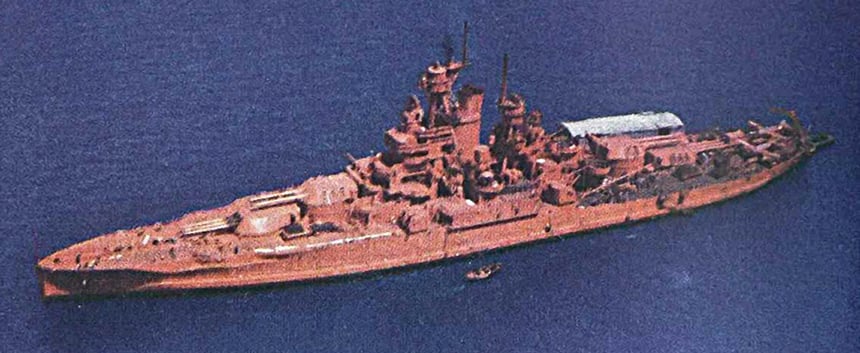
El objetivo declarado para la primera prueba era el USS Nevada. Las condiciones eran despejadas y estaba claramente marcado con una capa de pintura naranja brillante. Para facilitarlo aún más, una luz brillante iluminaba desde su cubierta. De algún modo, sin embargo, probablemente porque el Fat Boy el diseño era célebremente inestable en vuelo, Gilda se desvió considerablemente de su objetivo. El informe oficial indica entre 1.500 y 2.000 pies (457-61 m) al oeste.
La prueba Able se diseñó como una detonación aérea, similar a los bombardeos de Hiroshima y Nagasaki (aunque a menor altitud). Esto significa que la bomba explotaría a suficiente altura como para evitar que los materiales de la superficie fueran absorbidos por la bola de fuego. Los productos radiactivos de la fisión se elevaron hasta la estratosfera y pasaron a formar parte del entorno global, en lugar del local.
In the early part of the explosion, there was an intense transitory burst of fireball radiation. Many of the closer ships received doses of neutron and gamma radiation that would have been lethal to anyone on the ship. However, the ships themselves did not actually become radioactive.

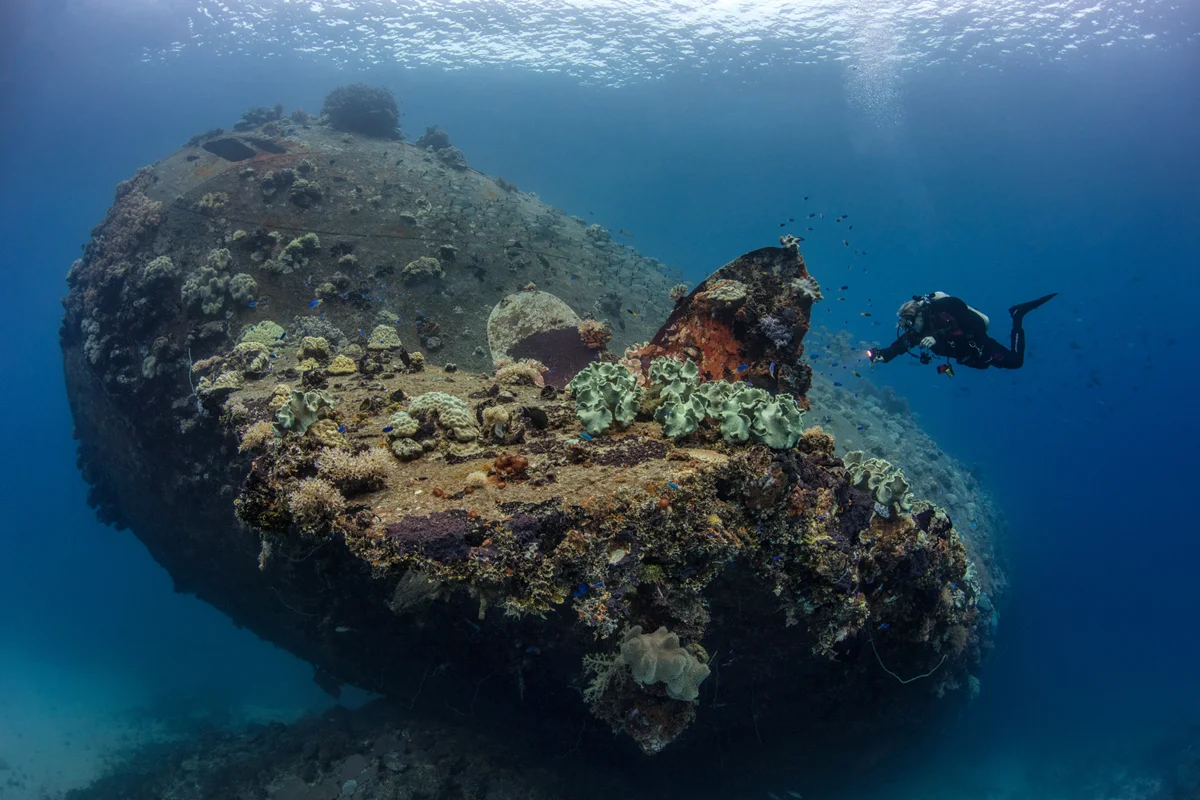
La explosión, aunque falló el objetivo, también causó menos daños de lo esperado. Solo se hundieron cinco barcos. Los transportes Gilliam y Carlisle se hundieron de inmediato, seguidos unas horas después por los destructores Lamson y Anderson. Al día siguiente, un crucero japonés, el Sakawa, también se fue al fondo de la laguna.
Las consecuencias de la prueba Able
There was much hype surrounding Operation Crossroads. For various reasons, it seems that expectations weren’t met. Goggles provided to watch the blast were described by many too dark. Observers were also 15 miles away and more, making the blast seem a little small. Add to this the fact that very few ships actually went down and the press were not exactly over the moon with excitement. But that doesn’t tell the real story.

Personnel began moving into the target area only two hours after the blast. Within a day, crews boarded almost all surviving ships for inspection and to begin preparations for the second test. They were also retrieving testing equipment so that measurements could be collated. The official report states that six ships were seriously damaged, while 8 more suffered seriously impaired efficiency. In fact, as the air force pointed out, around 40 vessels would have been put out of action in a real world scenario.
While the different branches of the armed forces were busy trying to score points, the reality for any crew that would have been aboard could not be ignored. Animals used in the Able Test told their own story. 57 guinea pigs, 109 mice, 146 pigs, 176 goats, and 3,030 white rats were placed around the fleet in stations normally occupied by people. 35% of the animals died, or were euthanised, in the three months following the explosion. Another 10% were killed by the air blast and another 15% were killed by initial radiation. Regardless of how badly the ships were damaged, it was clear that they could not have been operated after the event.
El USS Nevada: el objetivo
As the official target in the Able Test, USS Nevada was loaded with animals and recording equipment. As she didn’t sink, she told a very clear story. Goat #119, tethered inside a gun turret and shielded by armor plate, received enough radiation to die of radiation sickness, four days after the test. This was two days longer than than goat #53, which was on the deck, unshielded. Every unprotected location on the ship received around 10,000 rems (100 Sv) of initial nuclear radiation from the fireball. anyone deep enough inside the ship to experience a 90% radiation reduction would still have received a lethal dose of 1,000 rems.
La valoración del Bulletin of the Atomic Scientists fue bastante clara.
“…un barco grande, a cosa de una milla de la explosión, no llegaría a hundirse, pero la tripulación moriría por la mortal ráfaga de radiaciones de la bomba, y solo quedaría un barco fantasma, flotando sin tripulación en las vastas aguas del océano.”
Y así comenzaron doce años de intensas pruebas de armas nucleares. Entre 1946 y 1958, el ejército estadounidense llevaría a cabo veintidós pruebas nucleares más en el atolón Bikini. Las Islas Marshall en su conjunto verían un total de sesenta y siete pruebas.
Este cerdito fue a la prueba Able
One of the most famous characters to come out of Operation crossroads was one of it’s test subjects. Pig #311. There has been much discussion over the years as to the full story, but #311 was locked in the officers’ bathroom on the Japanese light cruiser Sakawa. As you may remember, Sakawa went down the day after the test…but #311 was not aboard. She was found casually paddling in the lagoon and was recovered for examination. It seems that she was not exactly happy about the situation and had a low blood count, but otherwise seemed quite healthy. Within a month she was fully recovered and returned to the US where she was poked and prodded for several years by the Navy.

En 1949, tras lo que probablemente fue el conjunto de pruebas más exhaustivo al que se haya sometido un cerdo, la n.º 311 fue trasladada al Parque Zoológico Nacional de Washington. Había engordado bastante, pasando de sus relativamente esbeltas 50 libras (22 kg) a unas más bien rechonchas 600 libras (272 kg). Pero vivió el año que le quedaba, más o menos, con relativa comodidad y lujo.
Haz clic aquí para leer más sobre el 75 aniversario de la Operación Crossroads o la posterior prueba Baker. Si lo prefieres, para reservar tu plaza y ver la flota nuclear, visita nuestra página del atolón Bikini.
About the Author