Al unirte a un itinerario de buceo en el atolón Bikini, el Prinz Eugen suele ser la primera inmersión del viaje. Al fin y al cabo, está ahí mismo, en el atolón Kwajalein, a poca profundidad, la inmersión de comprobación perfecta antes del viaje que te espera. Pero ¿cómo llegó hasta aquí y cómo es bucearlo?
Datos del pecio
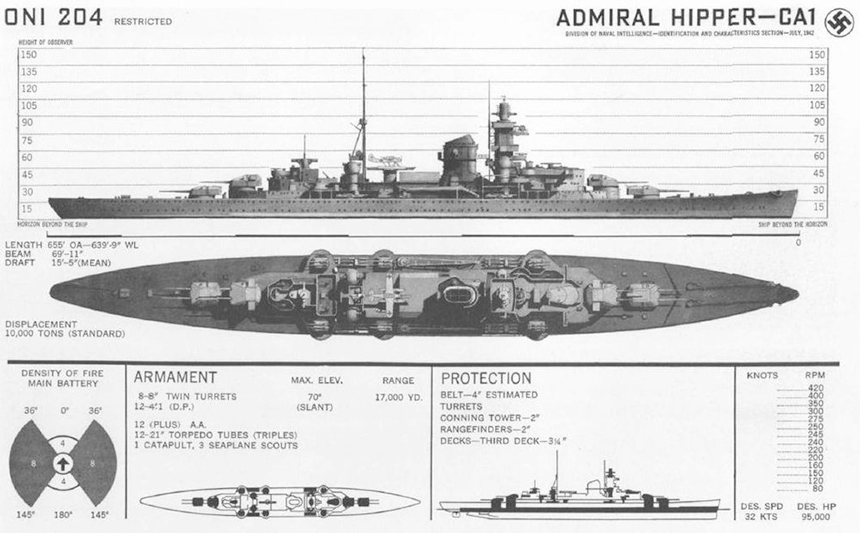
El Prinz Eugen es un crucero pesado de la clase Admiral Hipper. Su quilla se puso en Kiel en abril de 1936, fue botado en agosto de 1938 y entró en servicio en agosto de 1940. Presentaba unos datos bastante impresionantes...
- eslora: 697 pies
- manga: 77 pies
- calado: 21 pies
- velocidad: 33 nudos
- desplazamiento: 18 000 toneladas
- tripulación de 2065
- 8 × cañones de 20,3 cm (8 pulgadas)
- 12 × cañones de 10.5 cm (4.1 in) SK C/33
- 12 × cañones de 3.7 cm (1.5 in) SK C/30
- 8 × cañones de 2 cm (0.79 in) C/30
- 12 × tubos lanzatorpedos de 53.3 cm (21 in)
Eugen ya estaba en acción antes incluso de estar terminada, cuando aún se encontraba en el astillero de Kiel. Durante un ataque aéreo británico fue alcanzada por una bomba lanzada por la RAF, pero solo sufrió daños menores.
El Prinz Eugen y la Operación Rheinübung
El Prinz Eugen es quizá más conocido por su primer gran combate naval en la Segunda Guerra Mundial; Operación Rheinübung. Tras las pruebas de mar, varios ejercicios de entrenamiento y pequeñas reparaciones después de chocar con una mina, el barco estaba listo para entrar en acción. El plan era que se adentrara en el Atlántico, junto con el Bismark, para detener el tráfico marítimo aliado. Si Alemania lograba cortar los suministros británicos, perjudicaría gravemente su esfuerzo bélico.
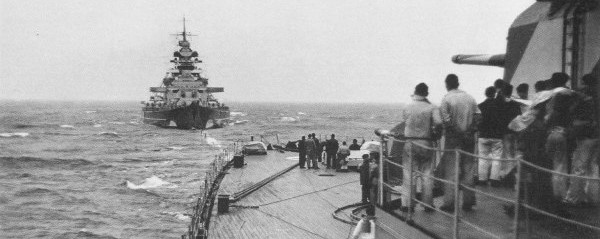
On the 21st May 1941 the mighty battleships left Bergen, bound for the Denmark Strait north of Iceland. The plan was to make a dash through the strait, in order to break into the Atlantic and cause havoc. The problem was, the code breakers of Bletchley Park knew that an operation was imminent. Reports of ‘two large vessels’ made by both friendly Swedish and Norwegians also helped. The Royal Navy was watching.
La batalla del estrecho de Dinamarca
Los barcos fueron avistados por primera vez por la Marina el día 23 y, a partir de entonces, seguidos a distancia a través del estrecho de Dinamarca. Se dieron órdenes y tanto el HMS Hood como el HMS Prince of Wales made a beeline to intercept. At 5:52 am on the 24th, the battle began and Eugen started using her guns in anger for the first time. Within minutes one of her shells hit Hood causing fire to spread through the middle of the huge battleship. Only a few minutes after this, a shell from Bismark pierced one of her magazines causing an enormous explosion that broke Hood’s back. She sank with the loss of all but 3 men within 3 minutes. All 3 remaining vessels continued fighting, but by 6:09 am everything went quiet as contact was broken. La batalla del estrecho de Dinamarca había terminado.
What followed was one of the most famous engagements of World War II: the chase and subsequent sinking of the Bismarck. Following the initial battle, Prinz Eugen departed into the Atlantic in order to carry out the planned raids. However, over the following week, she didn’t sight any convoy ships and after developing engine trouble departed to Brest for repairs, signalling the end of Operation Rheinübung.
Prinz Eugen 1942 - 1945
Tras el ignominioso fracaso de Rheinübung, el Prinz Eugen pasó el resto de la guerra, en su mayor parte, alrededor de Noruega y en el mar Báltico. Esto fue después de un periodo de reparaciones en Brest por el impacto de una bomba que mató a 60 de sus tripulantes. Para llegar al Báltico, llevó a cabo una atrevida carrera a través del canal de la Mancha con los acorazados Scharnhorst and Gneisenau, junto con 6 destructores de apoyo.
Durante este periodo, mientras estaba en Trondheim, un torpedo la alcanzó cuando se encontraba fondeada. El torpedo causó graves daños en su timón y también mató a 50 tripulantes. Posteriormente, estuvo fuera de servicio durante bastantes meses. Cuando volvió al servicio, tras un intento fallido de llegar a Noruega, fue utilizada como buque de entrenamiento durante la mayor parte de 1943.
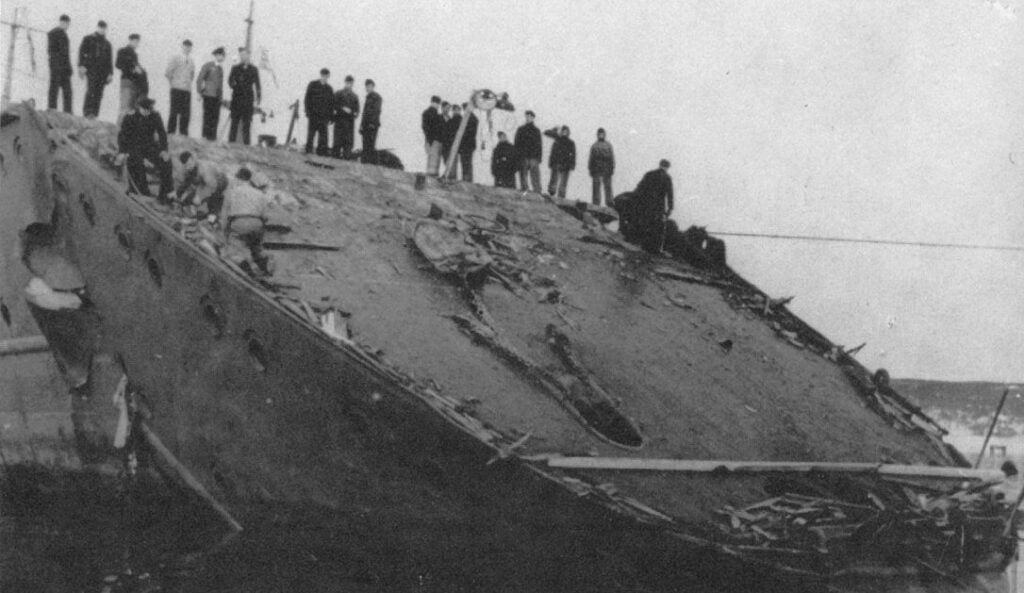

This changed in 1944 when, from August of that year until May 1945, Eugen deployed in multiple land bombardments. This was to both slow Soviet advances as well as covering retreating German troops. In this period alone she fired over 10,000 shells from her main battery. Following her final engagement she sailed to Copenhagen where, on the 8th May 1945, she was surrendered to the British.
Post war and to Bikini
After US forces won ‘the draw’ to take ownership, USS Prinz Eugen entered service with the US Navy on 5th January 1946. She then sailed to Boston, where the Navy removed her sonar array and fitted it to the submarine USS Flying Fish for testing. The Navy also heavily investigated her firing systems and removed the guns from her forward gun turret. German crew members were released on the 1st of May and returned to Germany. Almost immediately the US crew began having trouble keeping her propulsion systems running and 11 of her 12 boilers failed.
The problems the Navy had keeping her engines running, likely influenced the decision to use Prinz Eugen as part of the fleet of target ships for la Operación Crossroads. The ongoing problems were also the reason she had to be towed to Bikini, via the Panama Canal, a journey that took almost 2 months.
Prince Eugen survived both Able y Baker tests of Operation Crossroads without heavy damage. She was, though, heavily contaminated. She was towed back to Kwajalein with the intention of dealing with the contamination properly.
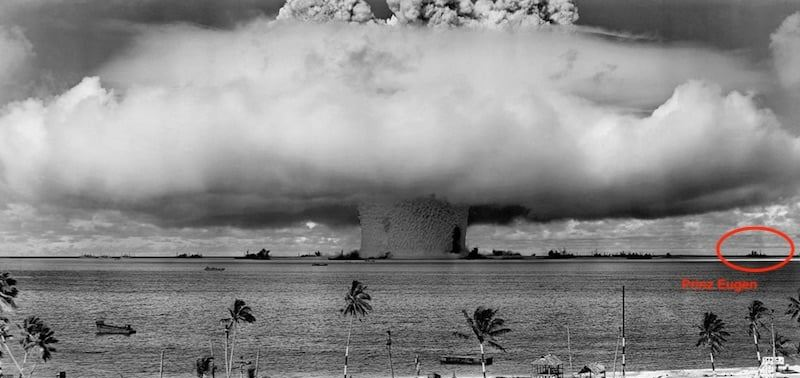
However, deciding how this should happen took some time. This wasn’t an ideal situation as a ‘small’ leak under the waterline went unrepaired, due to her contamination. On the back of this, in December of 1946 she developed a heavy list and, though the Navy tried to beach her to keep her afloat, she capsized on the 22nd of December.
Diving Prinz Eugen
Prinz Eugen has laid in her current position undisturbed since 1946, except by intrepid divers and a few notable events. Firstly, in August 1979, one of her propellers was removed. This prop is now outside the Laboe Naval Memorial in Kiel. Then, in February 2018, authorities began the project of removing 250,000 US gallons (950,000 litres) of fuel from her bunkers.
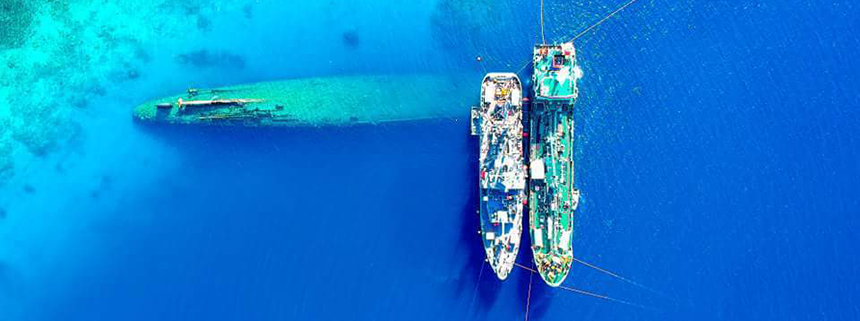
In October 2018 her tanks we all but emptied, leaving us with the wreck we have today.
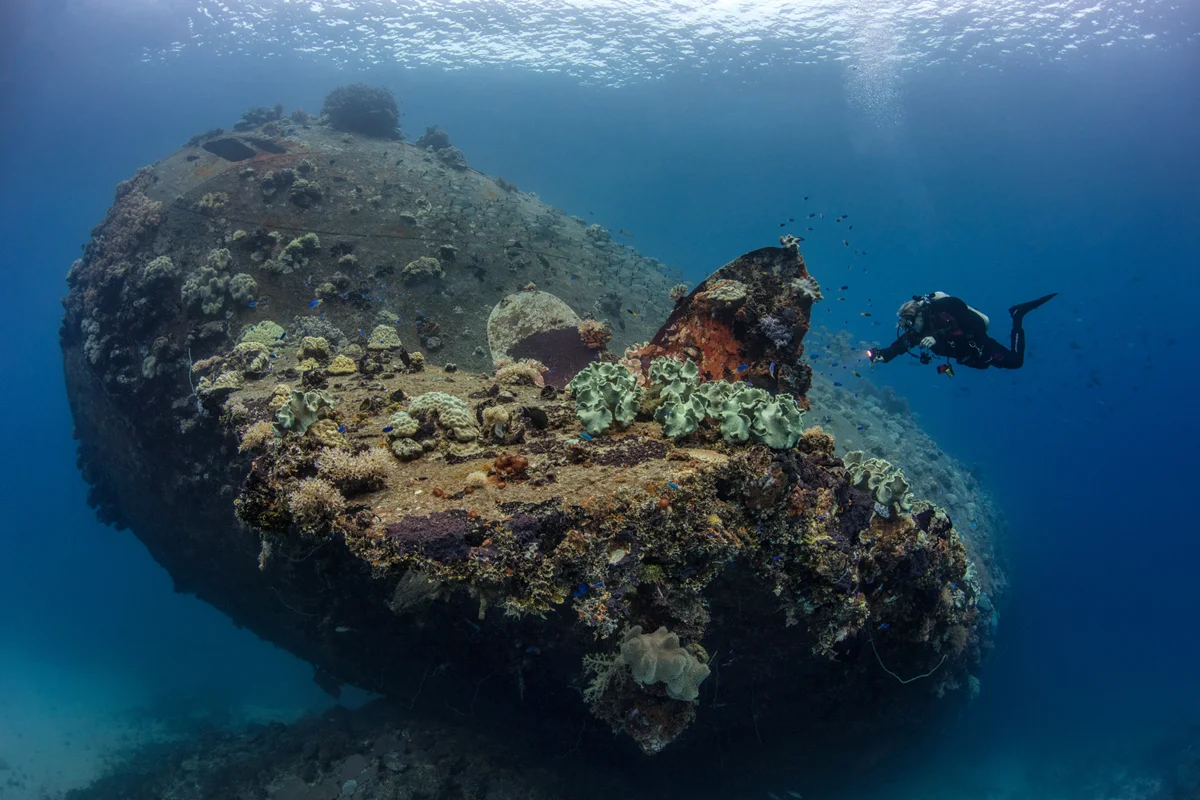
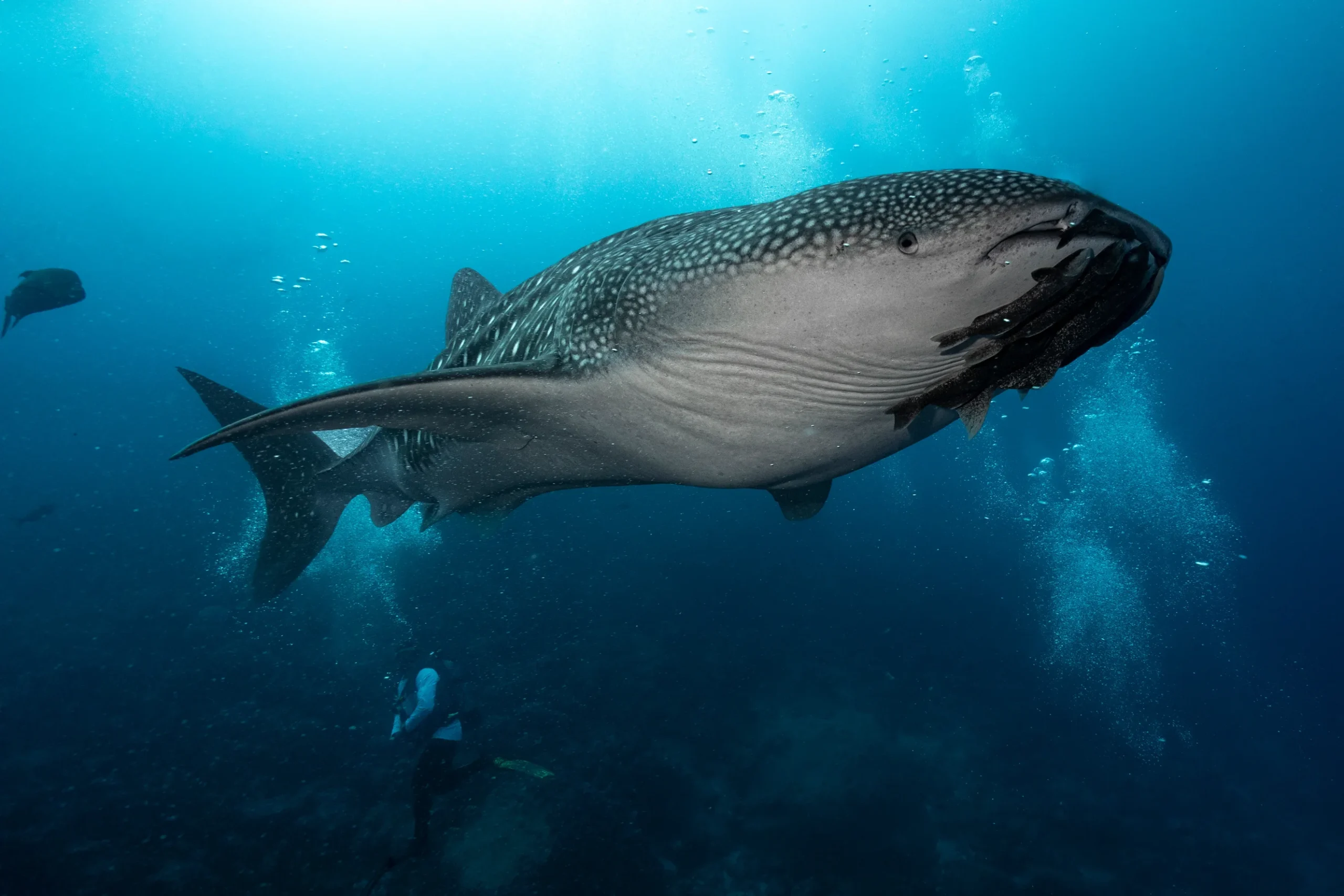
The upturned wreck lies just off the island of Enubuj in Kwajalein Atoll. She is in relatively good condition, considering she survived WW2, 2 nuclear tests, and has been in shallow water for over 70 years. As you enter the water over the wreck you see the bottom of the hull and realize this is not a small wreck. The bow touches the seabed at 36m (118ft). Under the bow deck you can often spot nurse sharks resting on the bottom.
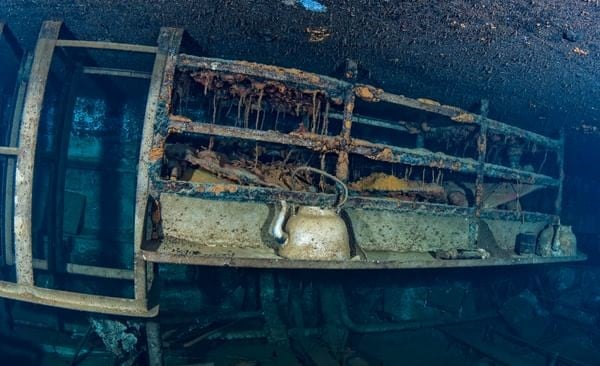


There are several entry points through the wreck where you can see crew quarters, galleys, bathrooms, and loads of sinks. During a dive on the Prinz Eugen, you can also see torpedoes, gun barbettes, and the seaplane crane, among other interesting features. These include the huge rudders and two of the props, which at low tide are mostly visible.
Prinz Eugen is often underrated as a wreck dive, as she is not in Bikini Atoll itself. But be under no illusions, anywhere else she would be talked of as a world-class wreck.
Dive now!
Dive Prinz Eugen along with the rest of the Nuclear Fleet with our Bikini Atoll trips a bordo Pacific Master.
About the Author