
Palau is one of the lesser-known countries in the world. Ask your friends and see if they can point to it on a map…or even if they have heard of it. For us, it’s one of the best diving destinations in the world. So it’s time for you discover its secrets and surprising facts.
Pequeño pero bonito
Palau is the world’s third-smallest sovereign country, with a population of less than 20,000. It comes in 3rd position after Tuvalu and Nauru. Technically, the Vatican City is also smaller but it is not a UN member state.
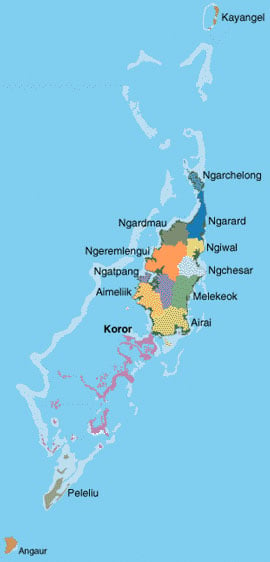
A pesar de estar menos poblado, ¡tiene 16 estados!
- Aimeliik
- Airai
- Anguar
- Hatohobei
- Kayangel
- Koror
- Melekeok
- Ngaraard
- Ngarchelong
- Ngardmau
- Ngaremlengui
- Ngatpang
- Ngchesar
- Ngiwal
- Peleliu
- Sonsoral
Según el censo de 2015, Koror tiene la mayor población, con 11 444 habitantes, y Hatohobei la menor, con 25.
Todo sobre una bandera
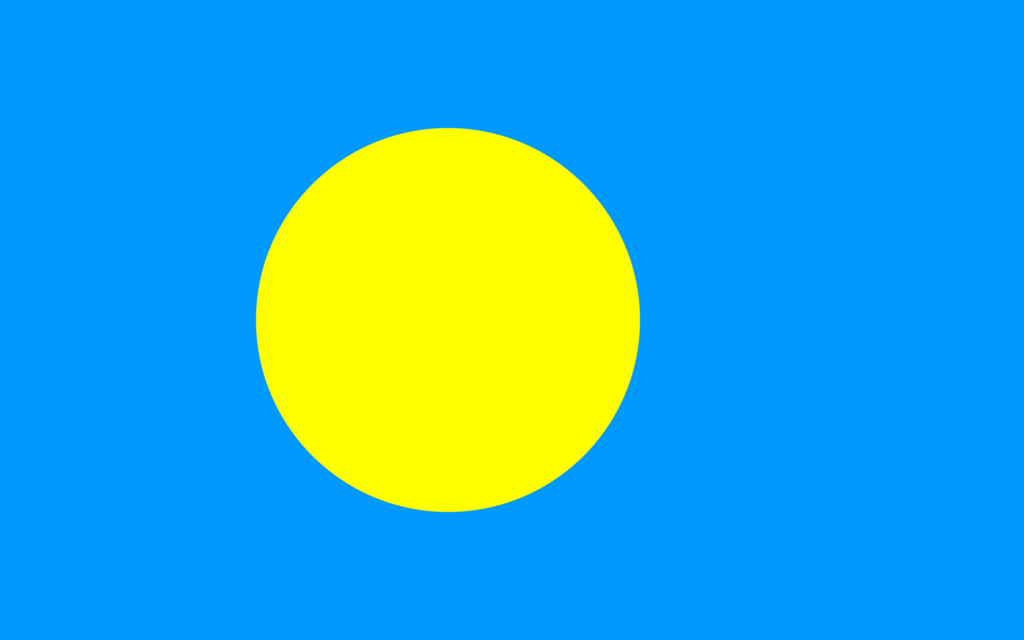
Palau’s has a simple flag composed of a blue background with an off-centre golden disk. The disk represents the moon, which has special meaning in Palauan culture. The full moon is traditionally considered the best time for fishing, planting, and other activities – such as diving! The blue background in the flag is not, as some might assume, a symbol of the Pacific Ocean. Instead, it relates to “the final passage of the foreign administering authority from our land” – a reference to the country’s time as a United Nations’ trust territory.
Descubre otra cara de Palaos: campeones de la ecología
En Palaos descubrirás que conservar lo que se tiene forma parte de la cultura, ¡y los palauanos nos muestran el camino!
Palau created the world’s first “shark sanctuary” on September 25, 2009. The country forbids all commercial shark fishing within its Exclusive Economic Zone (EEZ) waters. The sanctuary protects about 600,000 square kilometres (230,000 sq mi) of ocean, an area similar to the country of France. President Johnson Toribiong made the announcement at a meeting of the United Nations where he also requested a worldwide ban on shark fishing. Palau is home to 135 endangered or vulnerable shark and ray species.
Con un sitio declarado Patrimonio de la Humanidad por la UNESCO, la Laguna Sur de las Islas Roca, un santuario marino que abarca el 80 % de sus aguas, el 20 % de sus bosques protegidos y el 30 % de sus costas protegidas, no se puede negar el fuerte espíritu de Palaos. También lideran el Desafío de Micronesia.
En 2017, Palaos se convirtió en el primer país del mundo en exigir a los turistas que firmaran un 'Eco-Pledge’ upon arrival. You have the pledge stamped in your passport and every incoming visitor must then sign it. This will bind you to act in an ecologically and culturally responsible way on the island, for the sake of Palau’s children and future generations of Palauans.
In 2019, Palau declared that 80% of its territorial waters will become non-fishing zone. Then, in January 2020, the country banned all sunscreens which contain ingredients that are toxic to reefs. It is illegal to sell reef-toxic sunscreen products in the Republic of Palau and illegal to bring any into the country; any prohibited reef-toxic sunscreen shall be confiscated upon entry into Palau. So make sure you pack a reef-friendly sunscreen and, if you don’t have, we have amazing locally made products available onboard.
A rough journey…
The first traces of a settlement on Palau date back to approximately 3,000 years ago. Europeans first took notice of the islands in the 16th century and Spain claimed Palau as part of the Spanish East Indies in 1574. Then in 1898, when Spain needed funding for the Spanish-American war, they sold Palau to Germany. At the end of WWII, the League of Nations handed control of Palau to Japan, who developed Palau extensively. Koror carried the nickname of “Little Tokyo.”
Las islas también sufrieron enormes penurias durante la Segunda Guerra Mundial, cuando se convirtieron en campo de batalla. La Operación Stalemate fue una de las batallas más sangrientas de todo el Teatro del Pacífico y tuvo lugar en Peleliu. Más de 2000 estadounidenses y 10 000 japoneses murieron durante esta costosa batalla.
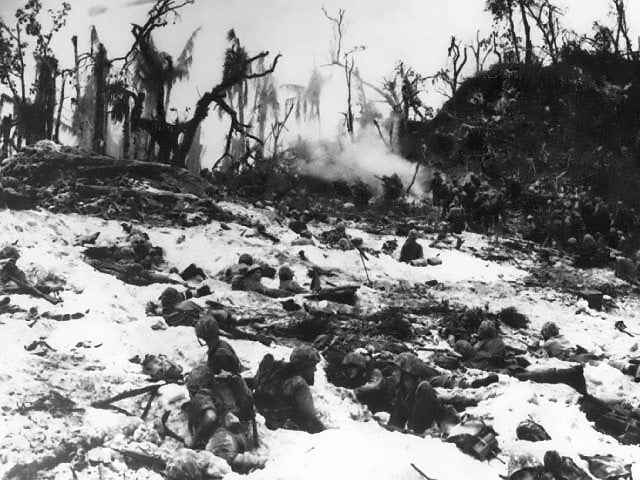
At the end of WWII, along with other Pacific islands, the United Nations took control of Palau from Japan and created the Trust Territories of the Pacific in 1947.
Palau votó en contra de unirse a los Estados Federados de Micronesia en 1979; sin embargo, el voto para convertirse en una república democrática no se finalizó hasta 1994. Por tanto, geográficamente Palau forma parte de Micronesia, pero políticamente no. Palau estuvo gobernado por EE. UU. hasta su independencia en 1994, y el Pacto de Libre Asociación con Estados Unidos sigue vigente, algo de lo que ambos países se benefician.
Puede que sea un país pequeño, ¡pero tiene una historia larga y fascinante!
... Que conduce a la paz
Palau es uno de los solo 22 países que no tienen ejército. Como antiguo territorio administrado por EE. UU., Palau no creó un ejército tras conseguir su independencia. En su lugar, EE. UU. es responsable de su defensa.
La única prisión de Palau es también una tienda de regalos. Los reclusos con buen comportamiento están autorizados a tallar storyboards (paneles de madera tallados con leyendas palauanas) y venderlos al público.
Capital del desove
Palau es uno de los únicos dos lugares conocidos del mundo donde los buceadores pueden presenciar el desove masivo del pez loro cototo verde (también conocido como Bolbometopon muricatum). Estas agregaciones de desove solo se conocen actualmente en Palaos y el atolón Wake. Sin embargo, solo podemos ver este desove en Palaos, ya que el atolón Wake está bajo jurisdicción militar