
If you head to Truk Lagoon, there is wreck you cannot miss! Her history might not be the most exciting in the lagoon, but the dive on the Kensho Maru wreck is what Truk is about.
Quick facts
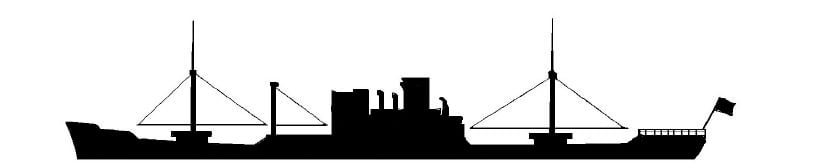
| LENGTH | 116 meters |
| GROSS TONNAGE | 4862 tons |
| DEPTH AT THE BOTTOM | 40 meters |
| DEPTH MAIN DECK | 24 meters |
| DEPTH AT SHALLOWEST POINT | 12 meters |
| ACCESSIBILITY | All levels of divers |
Where it all started
Tama Zosensho K.K. shipyard started the construction of the Kensho Maru in February 1938 in Japan on behalf of Inui Kisen K.K. She was launched in June of the same year as a medium sized 5-hold transport ship.
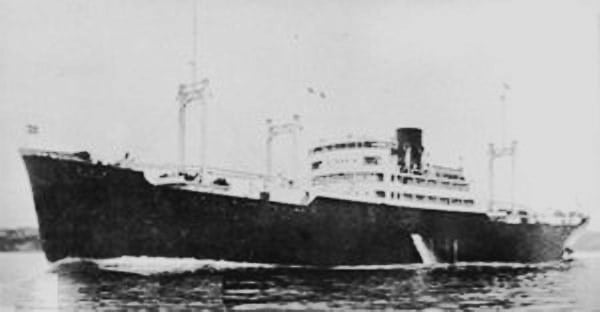
There is often a bit of confusion on her name and you will find several spellings throughout her life: Kansho Maru or Kensyo Maru. This is understandable as her name was translated from Japanese. For example, here in the register of Llyod’s in 1939-140, her name is spelt as Kensyo Maru.
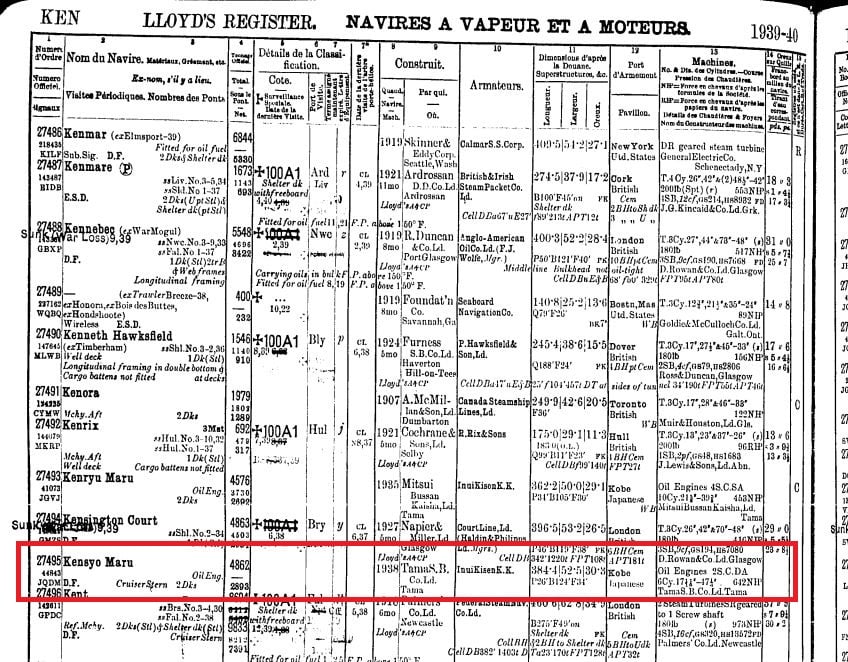
Other than a few entries in Llyod’s registers, there is not much information on the vessel or her movements. That is until September 1940….
World War II
On 14th September 1940, the Imperial Japanese Navy requestioned the Kensho Maru as a general transport ship. She mainly stayed around Japan until October 1941. The Kensho Maru was then “upgraded” to an auxiliary transport and attached to the navy.
Just a few days before the Pearl Harbor attack, early December 1941, she left for the South Pacific. She made frequent voyages forth and back between Japan and the Marshall Islands. Of course, she also brought supplies in Papua New Guinea, Micronesia and the Northern Marianas. But the Marshall Islands seemed to have been her main supply port.
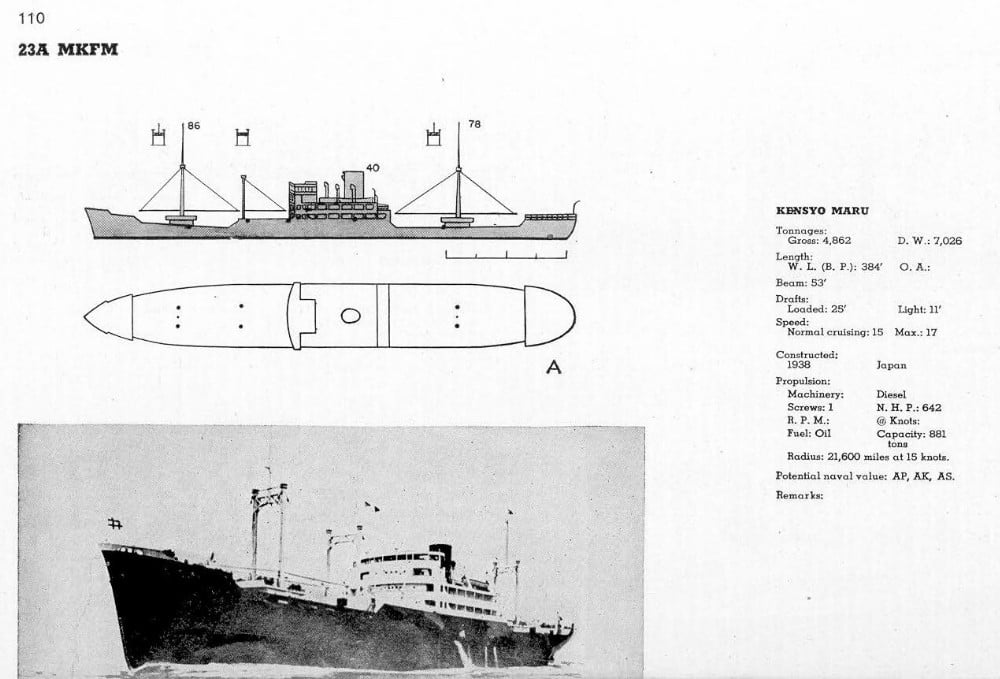
On 20th December 1943, she sustained heavy damage in Kwajelein during an airstrike. These airstrikes were the advanced attacks on the Marshall Islands as part of Operation Flintlock. As a result, she was unnavigable and the IJN decided to bring her back for repairs to Truk. The Momakawa Maru towed her all the way back to Chuuk and arrived there on 4th February 1944.
Unfortunately for the Kensho Maru, Operation Hailstone started on 17th February 1944 in Truk. Still under repairs, she was hit by torpedoes and bombs. She sank off Dublon and Fefan Islands, taking down six of her crew.
Dive the Kensho Maru wreck
The Kensho Maru is an incredible wreck dive. We almost always visit her during our cruises in Truk Lagoon. Not only is she very interesting, but the wreck is sheltered and relatively shallow. She is therefore accessible by all level of divers. Our guests often tell us this was their favourite dive of the trip.
The wreck of the Kensho Maru was re-discovered in 1980 by Klaus Lindermann (Author of “Hailstorm Over Truk Lagoon”). However, some records argue that the Cousteau expedition in 1969 was the first to locate the wreckage. Whoever did find her is irrelevant and the important fact is that she is here now for us to dive on.
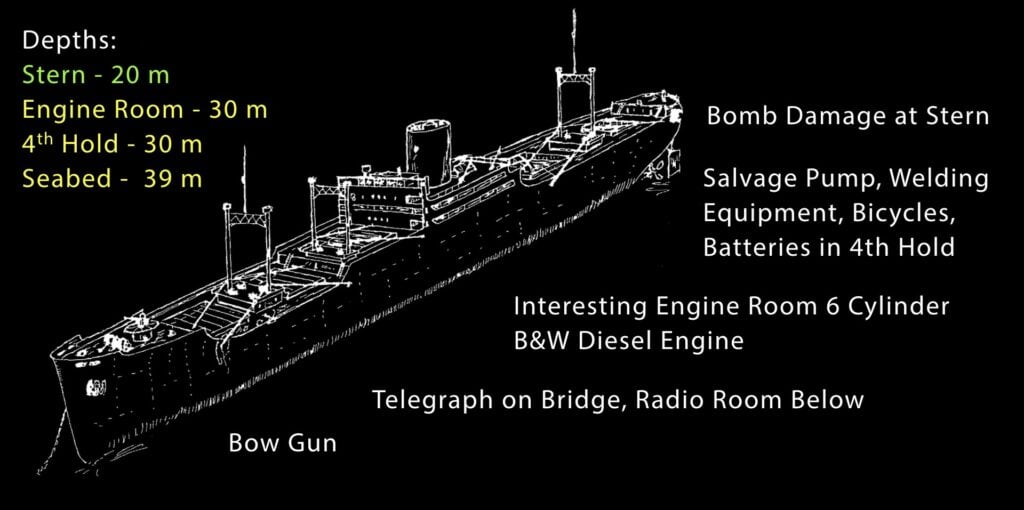
Nowadays, she sits upright at the bottom of the lagoon with a slight list to port. She is mostly intact except for some damages at the stern. At the stern, it’s possible to swim past the steering equipment and out through a bomb hole.
Given that she spent over 75 years under the water, you can say that she is in excellent condition.
The engine room
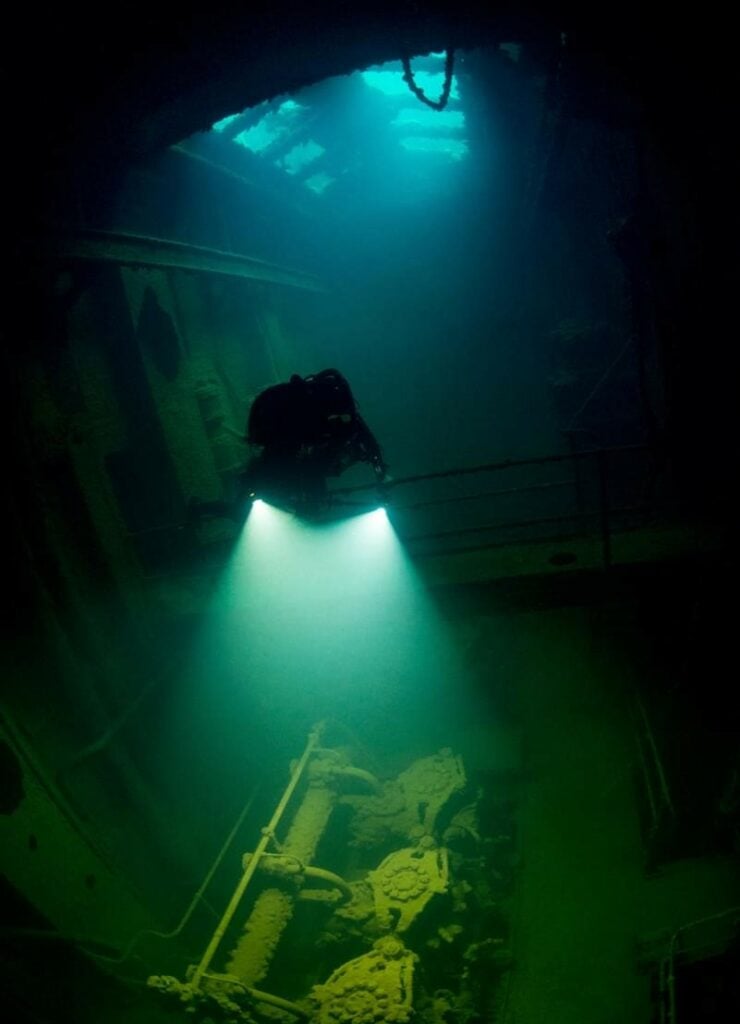
The main attraction of the Kensho Maru is the easily accessible and photogenic engine room. It is considered as one of the best to explore and photograph of all the shipwrecks in the whole lagoon.
You do not need extensive training to get in there and it is very roomy. It reaches a maximum of 27 meters so perfectly within recreational limits. It also has plenty of ambient light. The height, width and the skylight makes it a very photogenic place. All the engines and boilers are still in pretty good condition.
However, penetrating the lower part requires more advanced wreck training. But there, you can find wrench and spanner sets, mounted on both the fore and aft bulkheads.
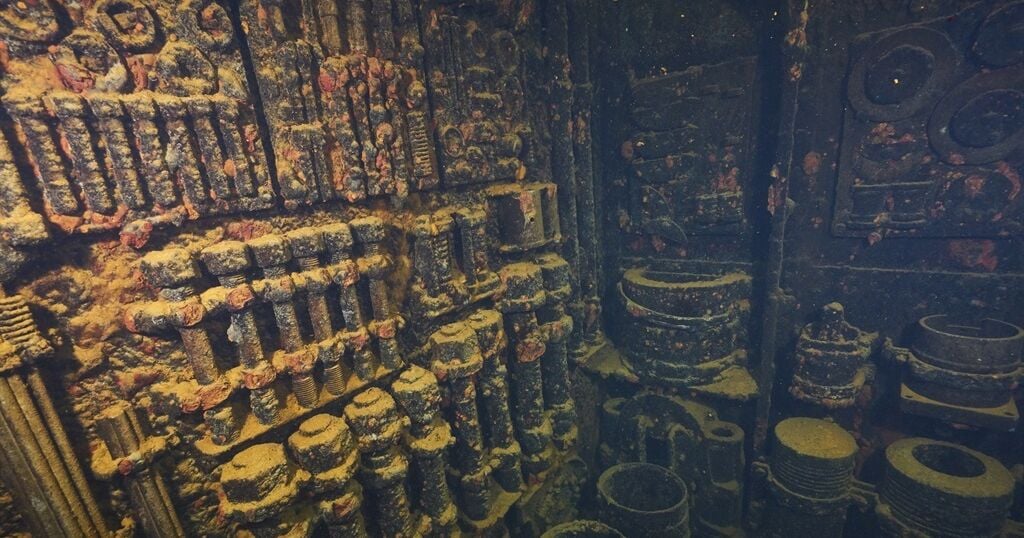
And what else can you see during your dive on the Kensho Maru wreck?
While the engine room should be the main focus, spend some time on the outside of the wreck. The superstructure is fairly intact. You can visit there the galley, bathrooms and toilets.
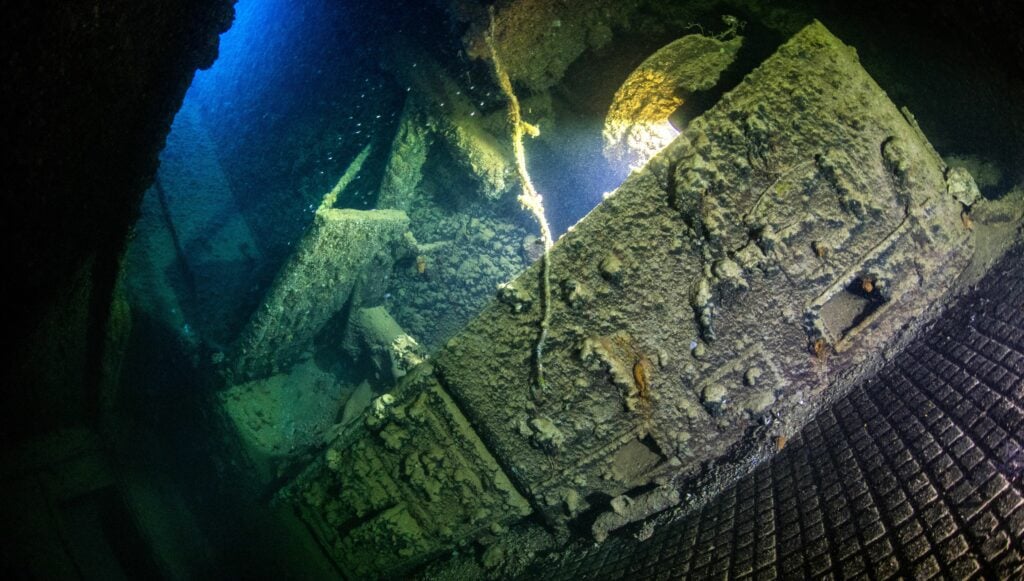
The bridge still has its engine order telegraph and you can also see the radio room right underneath.
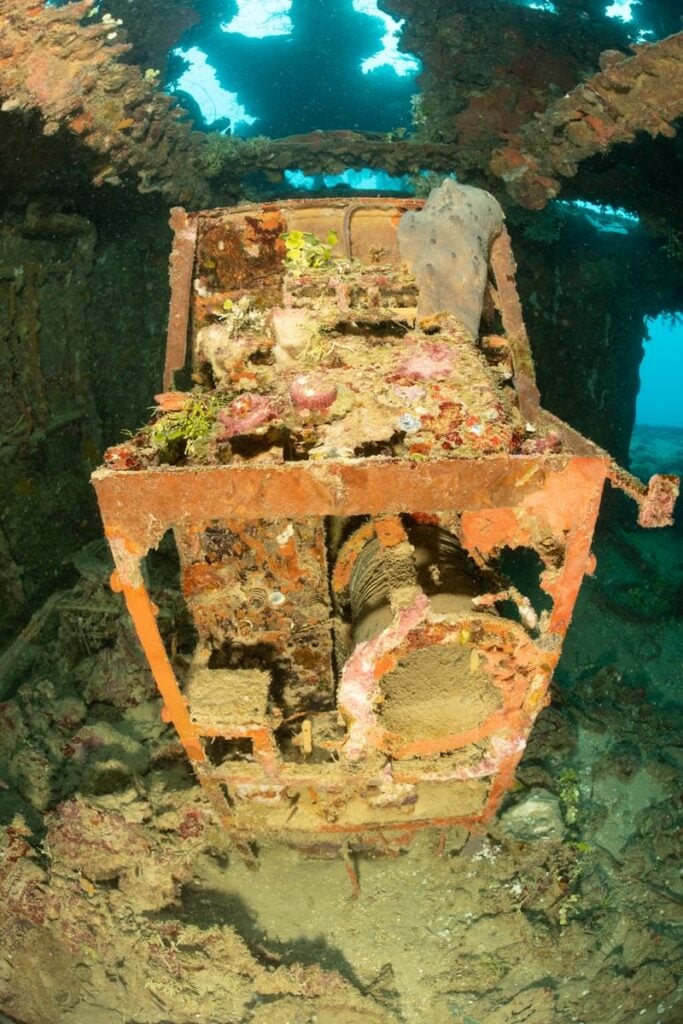
As the vessel was under repair at that time, there is not as much to see in the holds compared to other wrecks in Truk. The vessel had 5 holds, 3 of them forward and 2 aft. The best hold to see is the 4th hold as it is the one that contains most artifacts. You will still be able to find a salvage pump, gas bottles, welding equipment, bicycles and batteries.
Lastly, if you still have some air, do head to the the bow to see the interesting anti-aircraft gun
Thanks to its relatively shallow depth and its great exterior and interior exploration, the Kensho Maru is perfect for recreational and technical divers alike.
Pacific Master is waiting for you in Truk Lagoon. Explore the Kensho Maru and a lot more wrecks.
About the Author