
The Wildest Marine Crossroads on Earth
When on a Galápagos Islands diving liveaboard you’re at the world’s busiest underwater intersection, and if you’re planning your adventure, knowing the best time to dive Galápagos can make all the difference. You’ve got three major Pacific currents slamming into each other right here, which sounds like a mess, but it’s actually great news for us divers. These currents stir up a massive buffet of nutrients that attracts the heavyweights. It is mainly massive schools of hammerheads, whale sharks and rays, but we get to see other interesting visitors too. The catch? These animals don’t just hang around all year waiting for you to show up. They follow the food and the temperature, so if you show up at the wrong time, you’re mostly just looking at very expensive blue water.
If you want to be surrounded by a wall of hammerheads or to cruise next to a whale shark without it being a fluke, you need to get your timing right. This guide breaks down the calendar so you can book your spot on the Galápagos Master when the stuff you actually want to see is actually there.
Quick Summary:
- Why: The Humboldt, Panama, and Cromwell currents create a nutrient-rich “free buffet.”
- Sharks: Hammerhead walls and Whale Shark giants.
- Rays: Mantas and squadrons of Eagle Rays.
- Whales & Dolphins: Humpbacks and Orcas on the move.
- Month by Month: A seasonal guide to water temps and sightings.
- Liveaboards: The only way to reach the remote northern islands where the real action happens.
- The Vibe: Challenging diving and cold thermoclines with rewards that will ruin other dive sites for you forever.
- Choosing: Which season matches your goals?
- FAQ: Common questions answered.
Quick Links
When the Ocean Comes to Life
At certain times of the year, the Galápagos doesn’t just host marine life; it becomes a bustling transit hub for the ocean’s great migrations.
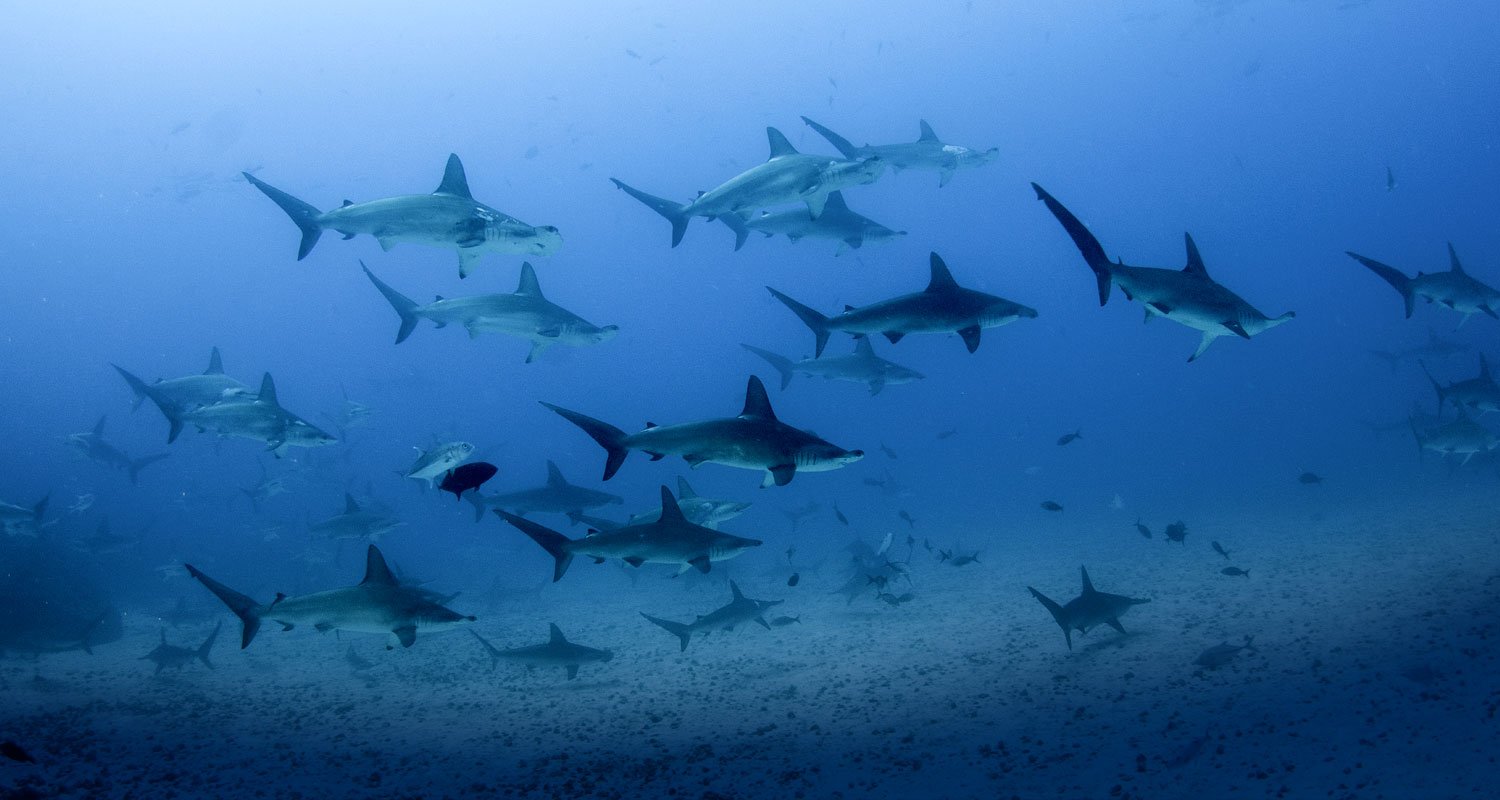
Imagine hooking up, your bubbles, your breath, the only sounds. Suddenly, you see a shadow in the blue. Then comes another, and another. Slowly, the silhouette of a lone scalloped hammerhead emerges from the gloom. And then, suddenly, boom. Hundreds of them. You aren’t just observing nature; you’re standing in the middle of the ocean’s busiest intersection. Which is exactly why understanding the best time to dive Galápagos matters.
Why the Galápagos Is a Migration Hotspot
So why here, and why now? It’s a bit of a geological fluke, really.
Powerful Ocean Currents Collide
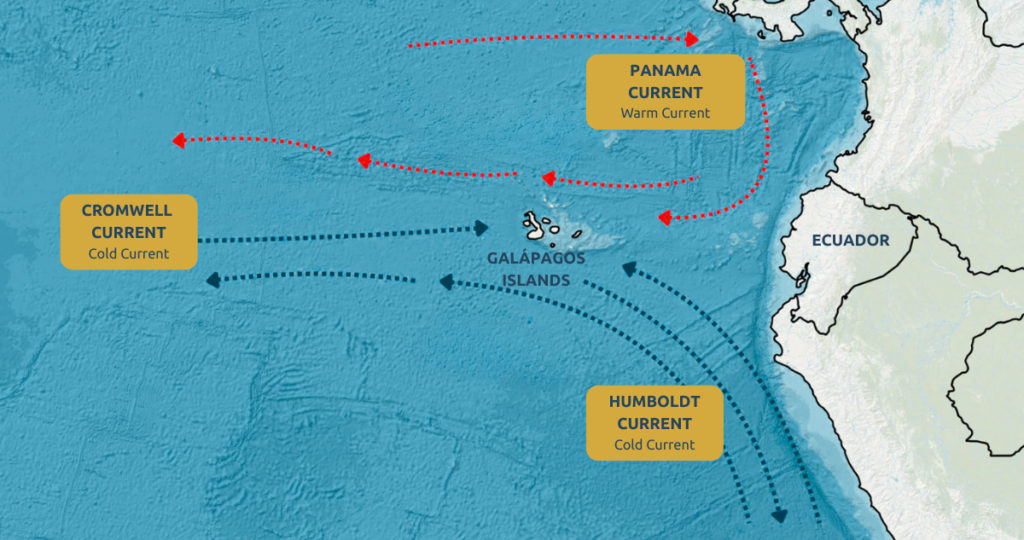
The islands sit at the confluence of three major currents. The Humboldt brings chilly, nutrient-dense water from the south; the Cromwell (Equatorial Undercurrent) slams into the islands from the west, forcing deep-sea nutrients to the surface; and the Panama Current keeps things slightly tropical in the north.
Cold Upwellings = Abundant Life
When those deep currents hit the archipelago’s underwater shelves, they create “upwellings.” Think of it as a free buffet for the ocean. Massive plankton blooms follow, which attract the small fish, which attract the big fish, which attract you. It’s the circle of life, just with more neoprene.
Isolation & Protection
Being 600 miles off the coast of Ecuador helps, but the Galápagos Marine Reserve status is the real hero. Many international organisations are working hard to protect this liquid sanctuary. Among them are the Charles Darwin Foundation and WildAid, which work to improve the capacity of the Parque Nacional de Galápagos staff to protect the reserve from overfishing and other threats.
Safe Passage: The “No-Fishing” Zone
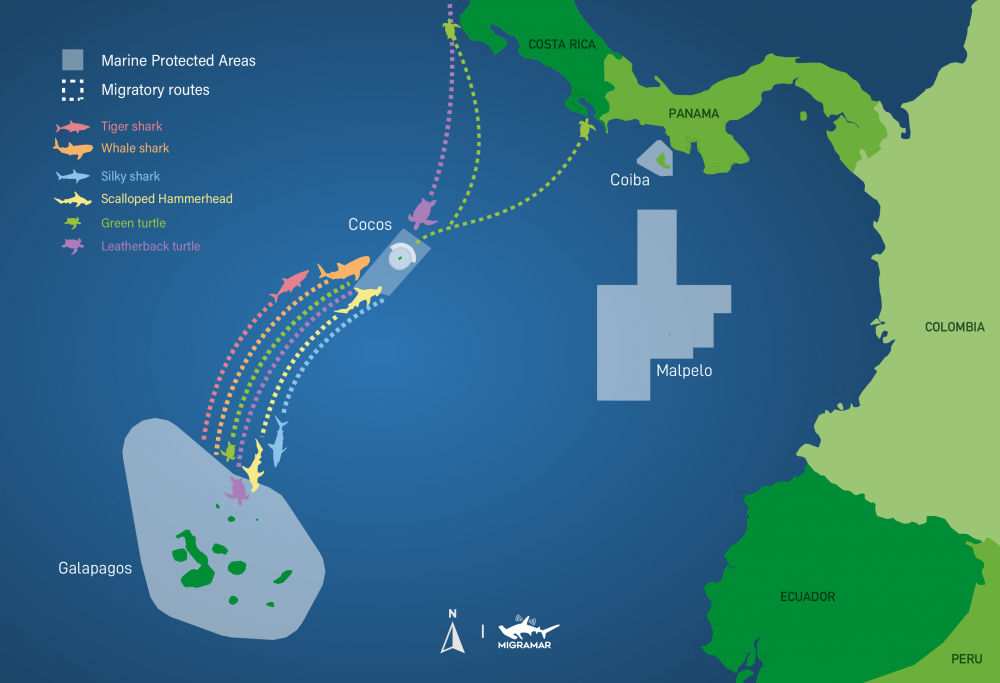
Conservation finally got a win with the Hermandad Marine Reserve. It’s a massive 60,000 km2 patch of protected ocean that acts as the starting block for the Cocos-Galápagos Swimway. By adding this to the existing Galápagos protections, authorities have essentially created a massive, hook-free lane that connects the islands to Cocos Island.
Because fishing is strictly banned in the Cocos-Galápagos Swimway, the animals can migrate between islands without running into a longline or a net. When they show up in front of your mask, they’re finding a sanctuary instead of a hook. It’s better for the sharks, and honestly, a lot better for your photos.
Shark Migrations: The Greatest Spectacle
If you’re here, you’re probably here for the “men in grey suits.”
Scalloped Hammerheads (Year-Round Icons)
While you can see them year-round, the sheer density at Darwin and Wolf is staggering. Large aggregations tend to occur during the cooler season. The cooler, nutrient‑rich period (roughly June–November) enhances shark densities.
Galápagos Sharks & Silky Sharks
These guys are the locals. You’ll find Galápagos sharks patrolling the rocky reefs, while Silky sharks often hang out in the blue, curious about your safety stops.
Whale Sharks (The Seasonal Giants)
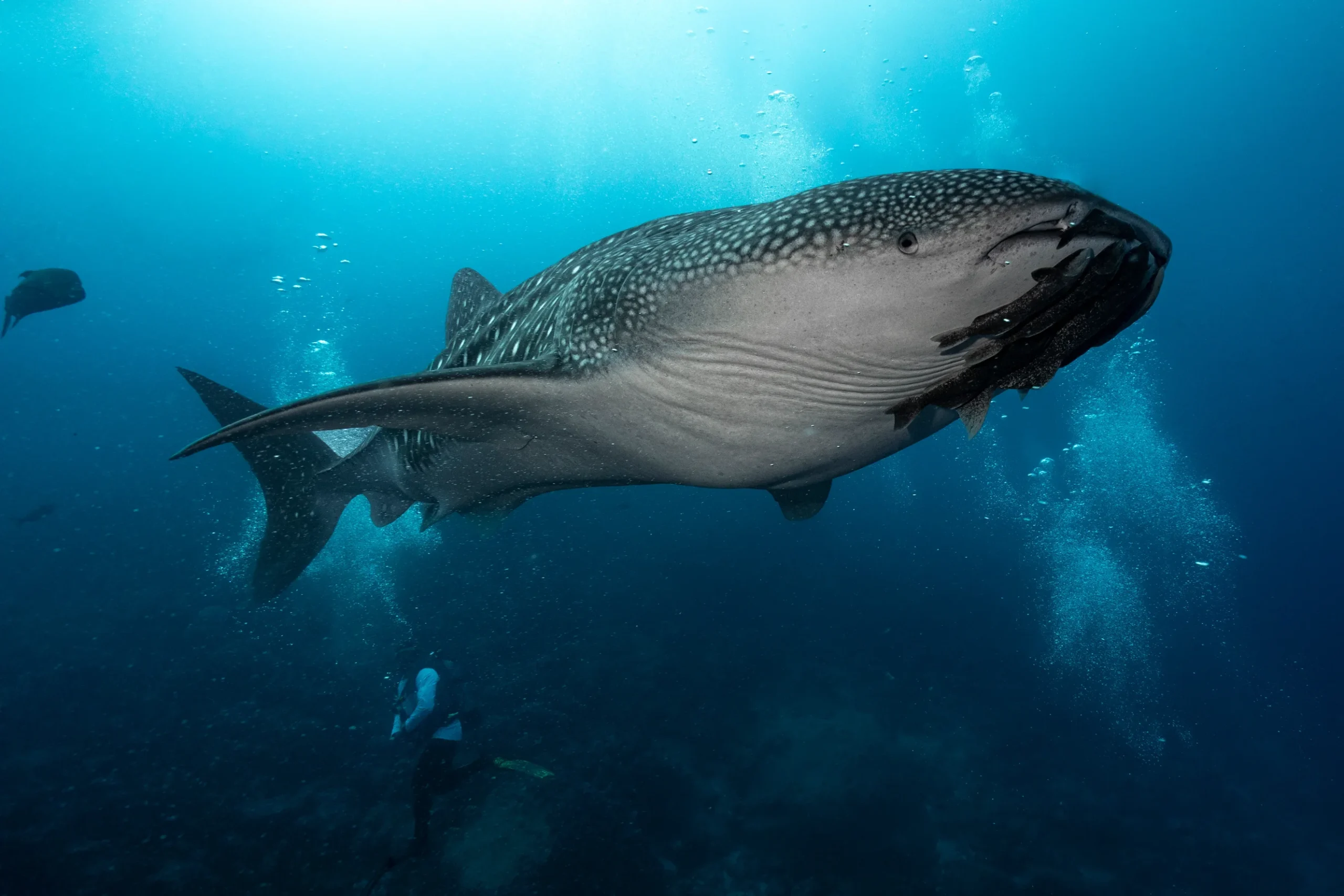
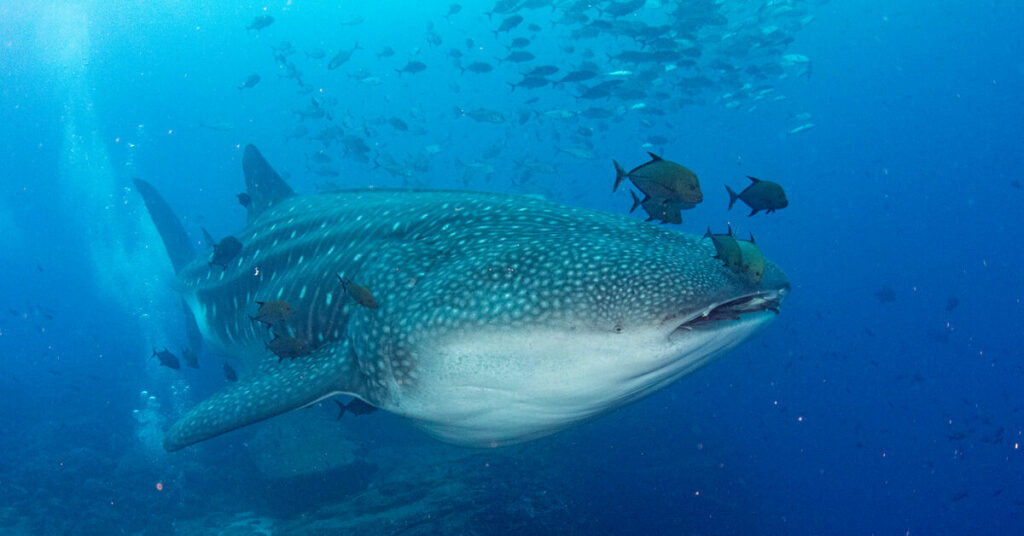
From July to October, the behemoths, “The Big Girls”, arrive. These aren’t the juveniles you often see elsewhere; these are massive, mature, likely-pregnant females, studied by scientists through the Galápagos Whale Shark Project and ongoing research by the Galápagos Conservancy. They cruise past Darwin’s Arch like slow-moving planets, offering a rare and unforgettable sight for divers.
Wait, what’s with the “Big Girls”?
In most of the world (like Mexico or Thailand), you typically see juvenile and/or male whale sharks. In the Galápagos, it’s the opposite. Over 90% of the whale sharks seen at Darwin are massive, mature females, often measuring over 12 metres (40ft). Most appear to be pregnant, making the Galápagos a critical (and still mysterious) piece of the puzzle in their life cycle.
Rays on the Move: Grace in the Currents
Manta Rays
The giant oceanic mantas tend to show up more frequently between December and May. They love the cleaning stations at sites like Cabo Marshall or Cousin´s Rock, where they’ll hover over you, seemingly enjoying your bubbles. Timing is key here too. Choosing the best time to dive Galápagos can mean the difference between spotting a few rays or seeing an entire squadron.
Eagle Rays & Mobula Rays
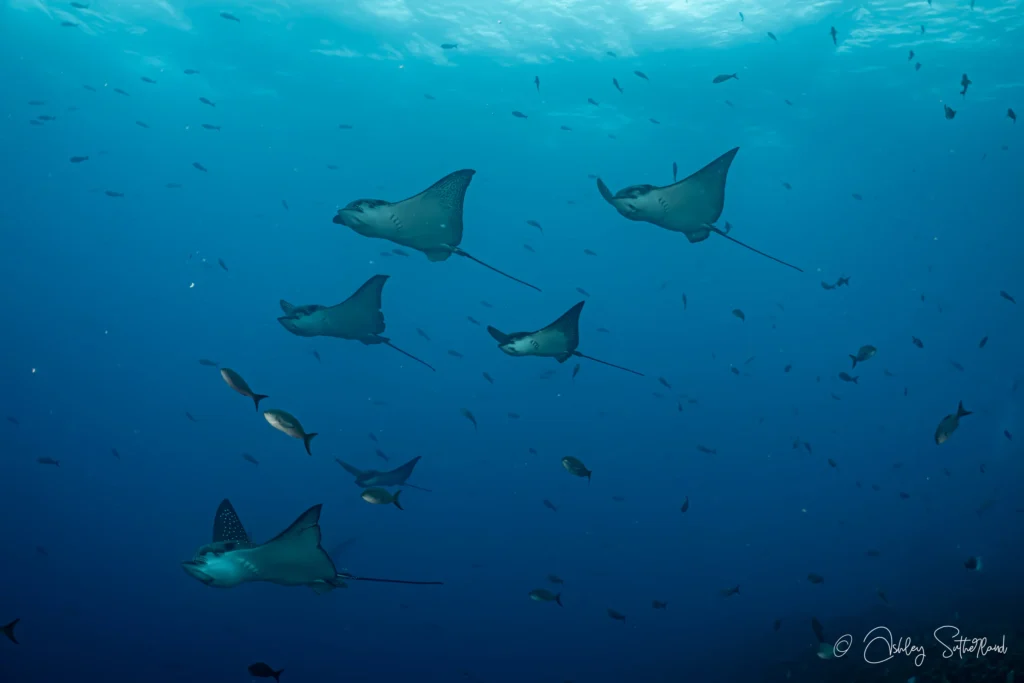
It’s not uncommon to see “squadrons” of spotted eagle rays flying in formation against the current. Mobulas, or Devil Rays, are more elusive but often seen in massive schools near the surface during seasonal shifts.
Whales & Dolphins: Giants Above and Below
Humpback Whales (June–September)
While you’re unlikely to dive with them (they’re a bit shy for that), you can have the chance to see them breaching during our crossings, as humpbacks are migrating nearby. Their haunting songs can sometimes be heard underwater. It is really a surreal soundtrack to your dive.
Dolphins & Orcas
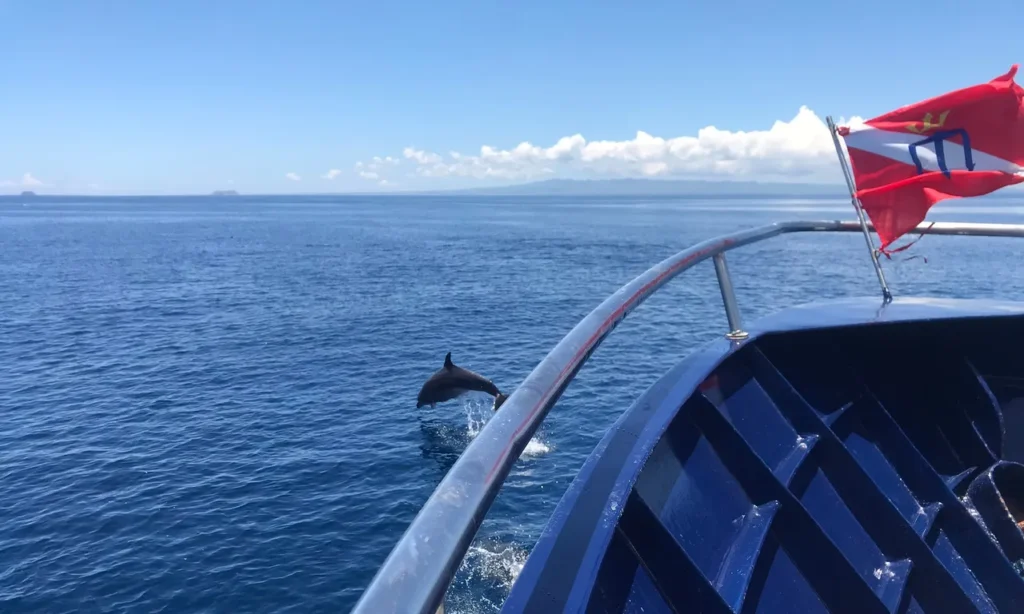
Bottlenose and common dolphins love to bow-ride the Galápagos Master. If you’re incredibly lucky, you might also spot an Orca (or two). They are rare, but they do patrol these waters looking for a sea lion snack.
Pro tip: If you’re at Darwin or Wolf and wondering where those hammers that are supposed to be here are… keep an eye open for orca.

Pilot Whales & Bryde’s Whales
Keep your eyes peeled during transit! Pilot whales are also frequently spotted in large pods, often displaying curious behaviour near the boat. Bryde’s whales (pronounced “broodus”) are also year-round residents, often seen lunging through bait balls near the central islands.
Did you know? The deep-sea residents
Beyond the whales we see at the surface, the Galápagos is a stronghold for Sperm Whales. They love the deep, nutrient-rich waters between the islands where they hunt for giant squid. While sightings were rare for a few decades, they are increasingly being spotted again by lucky divers during long navigations.
Month-by-Month Galápagos Diving Guide
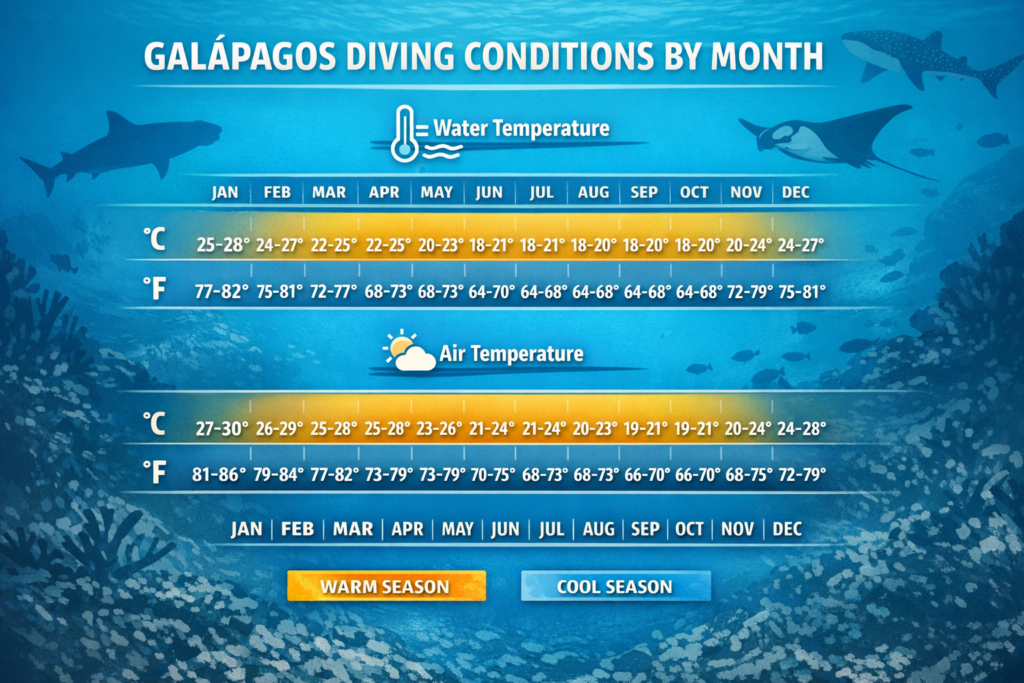
| Months | Water Temp (°C) | Water Temp (°F) | Seas | Key Highlights |
| Jan–Mar | 24–28°C | 75–82°F | Calm | Warm water, Mantas and Hammerheads |
| Apr–Jun | 22–25°C | 71–77°F | Moderate | Transition period; incredible variety of life. |
| Jul–Oct | 18–23°C | 64–73°F | Choppy | Whale Shark Peak. Cold but worth every shiver. |
| Nov–Dec | 21–24°C | 70–75°F | Moderate | Warming up, great balance of sharks and comfort. |
Why Liveaboards Are Essential
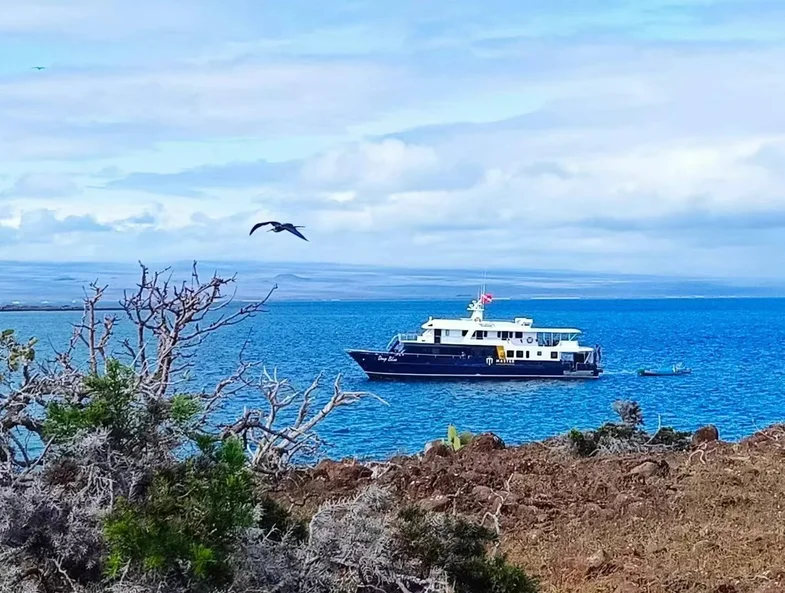
You could stay on land, but you’d be missing the main event. The “Holy Grail” of Galápagos diving, Darwin and Wolf, is over 100 miles from the main hubs. A liveaboard is your only ticket to these remote outposts. It allows us to wake up at the dive site, hit the water before anyone else, and follow the migration patterns as they happen.
What It’s Like to Dive During Migration Season
Let’s be real: this isn’t a “piña colada on the beach” kind of trip. It’s expedition diving. You’ll face surging currents, thermoclines that make you question your life choices, and blue-water entries.
But when you’re hanging onto a rock and a school of 200 hammerheads passes by, you won’t care that your hood is a bit more restrictive than you’re used to.
For a more in-depth look at handling these conditions, check out our guide on how to master diving at Darwin’s Arch.
What is a “Galápagos Washing Machine”?
You’ll hear this term on the dive deck. It refers to the swirling, unpredictable currents where horizontal flows meet vertical upwellings. One moment you’re drifting left, the next you’re feeling a slight down-current. It’s exactly why we use reef hooks and why your dive guide’s briefing is the most important part of your morning!
Choosing your Best Time to Dive Galápagos
- For the “Shark Addict”: July–October. Bring a thick wetsuit and your thickest skin.
- For the Photographer: January–May. Better light, clearer water, and calmer surface conditions for those topside shots.
- For the First-Timer: The “shoulder” months (May/June or November/December) offer a “best of both worlds” experience.
Time Your Galápagos Adventure Perfectly
Understanding the best time to dive Galápagos and hopping on the right liveaboard puts you right in the heart of the migration. Don’t just watch the documentaries, be part of the action.”
Ready to drop in?
FAQs
Nothing in nature is guaranteed, but in the Galápagos, the odds are about as high as they get on Earth.
We recommend at least a 7mm wetsuit with a hood and gloves for the “cool” season. It’s not “ice diving,” but that Humboldt current has some bite!
We require at least 50 logged dives and an Advanced certification, plus we recommend experience in currents. This is “big boy/girl” diving.
About the Author