
If you’re serious about big-animal diving, Darwin’s Arch is probably on your list already, and for good reason. Out here, 1000km offshore, the blue water is alive with hammerheads, mobulas, and, in season, whale sharks. The arch above water may have collapsed in 2021, but don’t worry: the underwater terrain is exactly the same, and the diving? Still world-class.
The only way to get here is by liveaboard, such as Galápagos Master, and that’s actually a good thing: it means you get expert guides, safe crossings, and plenty of time to enjoy the wildlife. Check out our Galápagos diving liveaboards to find out more and view the full Galápagos Master itinerary.
Jump right in:
- Why Dive Darwin’s Arch
- What Makes the Site Unique
- Marine Life Highlights
- Conditions & Currents
- Seasonality & Best Time to Dive
- What Diving at Darwin Is Like
- Who Can Dive Here
- Liveaboards & Galápagos Master
- Pro Tips for Diving Darwin
- FAQs
The Moment the Blue Comes Alive
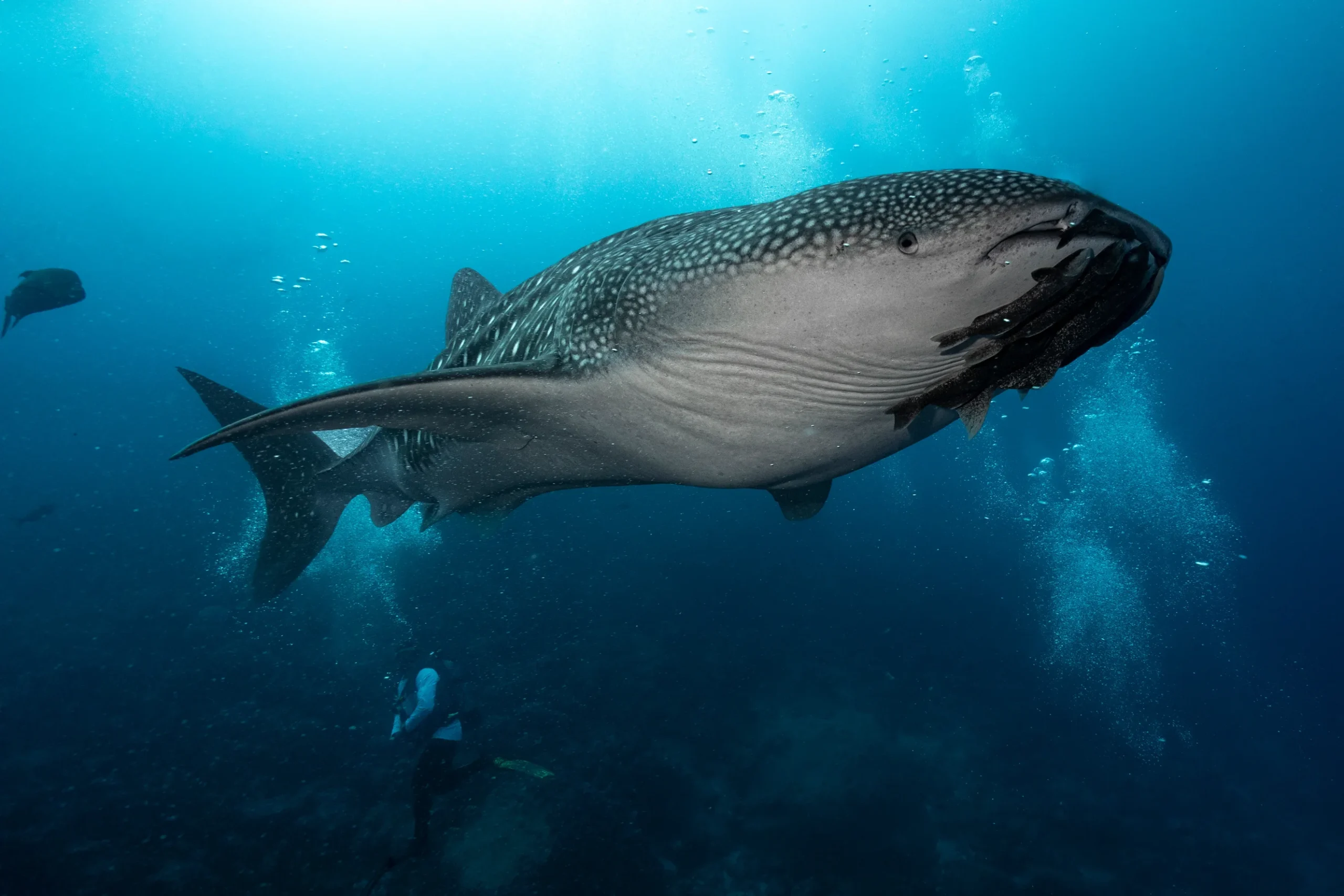
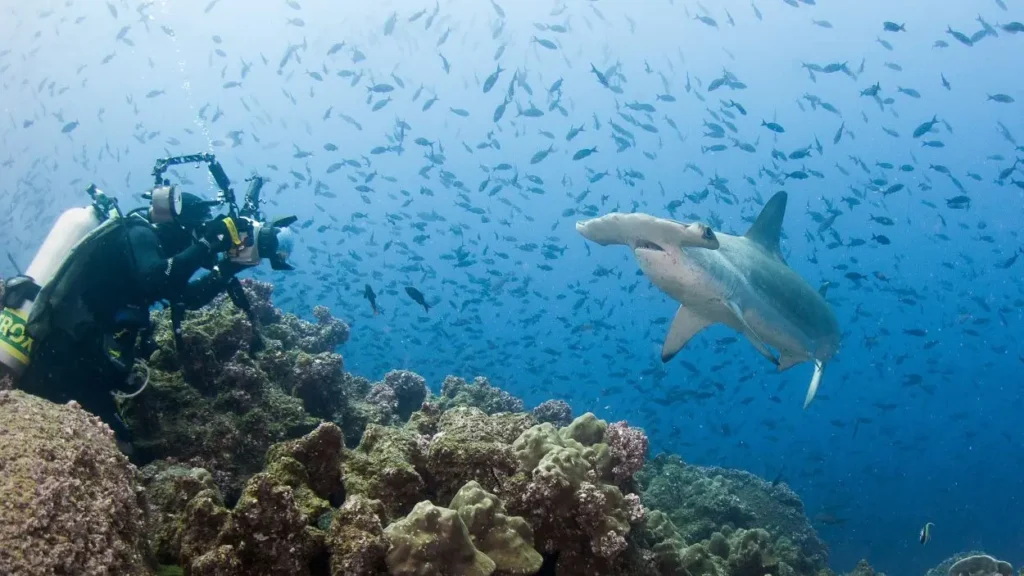
Picture this: you hold your position, steady in the current, and suddenly the blue opens up. Hundreds of hammerheads fill the water around you. Mobulas sweep past. A Galápagos shark glides by. And somewhere above, a whale shark drifts into view.
At Darwin’s Arch, you never know what will come next or from which direction. Every dive is front-row access to the ocean’s wildest show.
What Makes Darwin’s Arch the Best Dive Site in the Galápagos
Darwin’s Arch isn’t just a spot on a map. It’s one of the world’s most famous dive sites, and for good reason. It’s a dive site where big animals appear almost like clockwork, and the conditions are tailor-made for pelagic encounters. Its location, currents, and underwater topography mean you’re very likely to see schools of hammerheads, whale sharks, and other apex predators.
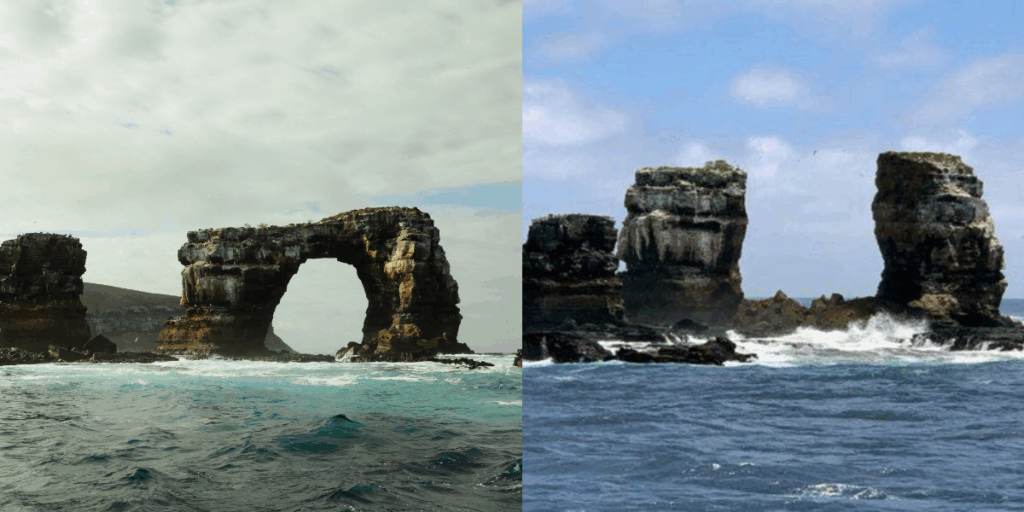
A quick history note: the site was named after Charles Darwin, the naturalist who famously visited the Galápagos in the 1830s. Since the 2021 collapse, many divers now call it Darwin’s Towers, after the two remaining rock pillars above the surface. The silhouette may have changed, but the underwater environment—the part that really matters—remains exactly the same.
The combination of location, strong currents, and underwater topography creates ideal conditions for pelagic life. Divers come here for the reliability of big-animal encounters, the clarity of the water, and the sense of being far out in a truly wild ocean. Below, we break down exactly what makes this site so remarkable.
Credit: Pelayo Salinas-de-Leon
The Marine Life
Here’s what you might see on any given dive:
- Large schools of scalloped hammerheads
- Mature whale sharks (July–October)
- Blacktip, silky, tiger, and Galápagos sharks
- Eagle rays, dolphins, and tuna
If you’re a fan of pelagic life, this is your playground. These encounters are why experienced divers travel from around the world just to drop into this blue.
Remote Location, Strong Ecosystem
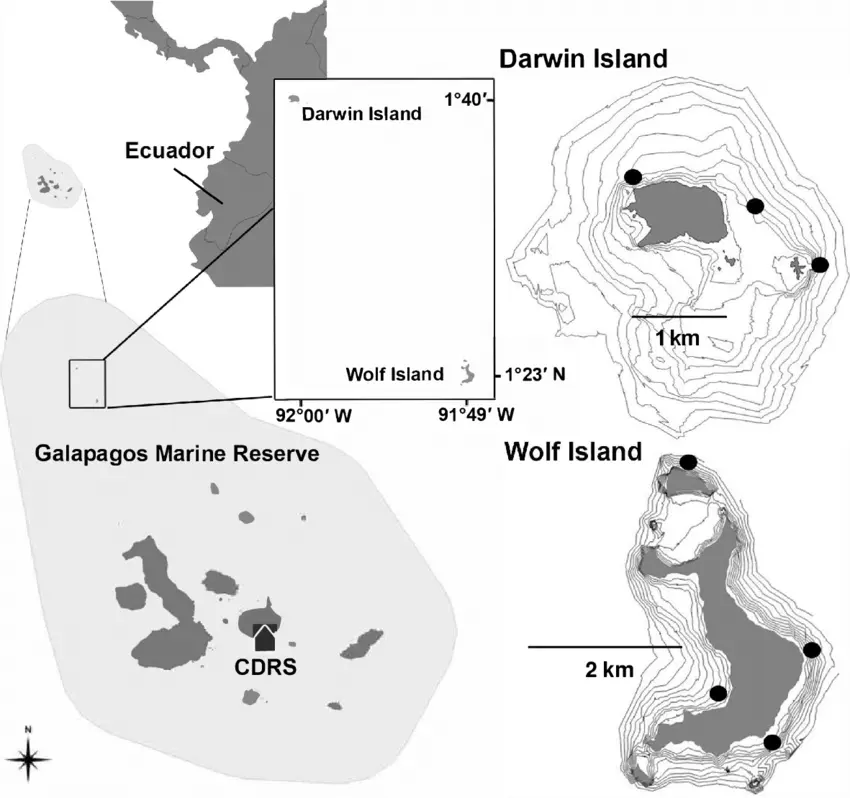
Darwin Island sits about 1000km offshore from Ecuador in the Humboldt Current, a cold, nutrient-rich current flowing up the west coast of South America. This brings plankton and nutrients to the surface, feeding fish and attracting predators.
Being so far north in the Galápagos means fewer visitors, and the isolation combined with the currents makes Darwin one of the most reliable big-animal dive sites in the world.
| What Is the Humboldt Current? The Humboldt Current is a cold, nutrient-rich ocean current flowing north along the west coast of South America. It brings deep-water nutrients to the surface, fueling plankton blooms that attract huge schools of fish and apex predators like sharks, rays, and whale sharks. This current supports some of the world’s most famous big-animal dive sites, including of course Darwin (& Wolf) in the Galápagos, Cocos Island (Costa Rica), Malpelo Island (Colombia) and the Revillagigedo Archipelago (Mexico). All very big names! |
Reliable Big-Animal Conditions
Darwin is not just about chance—you can plan your dives around consistent conditions:
- Strong upwellings
- Regular shark aggregations
- Good visibility during the key months
Basically, if you time it right and hold your position in the current, the big animals usually show up.
The Loss of the Arch & Why the Diving Is Still Excellent
Yes, the arch above water collapsed in 2021. But here’s the thing—the underwater playground where all the magic happens didn’t change. The currents, the cleaning stations, and the structures that hammerheads and whale sharks use are all still there.
And if you’re wondering whether that affects the diving: don’t worry! This happened over four years ago. You would have heard about it by now if the diving was bad… Our guests keep coming back, year after year, and the wildlife encounters remain as spectacular as ever. Darwin is still the #1 pelagic dive site in the world. And now, we get to call it “Darwin’s Towers”
Seasonality: When to Dive at Darwin’s Arch
Whale Shark Season (July–October)
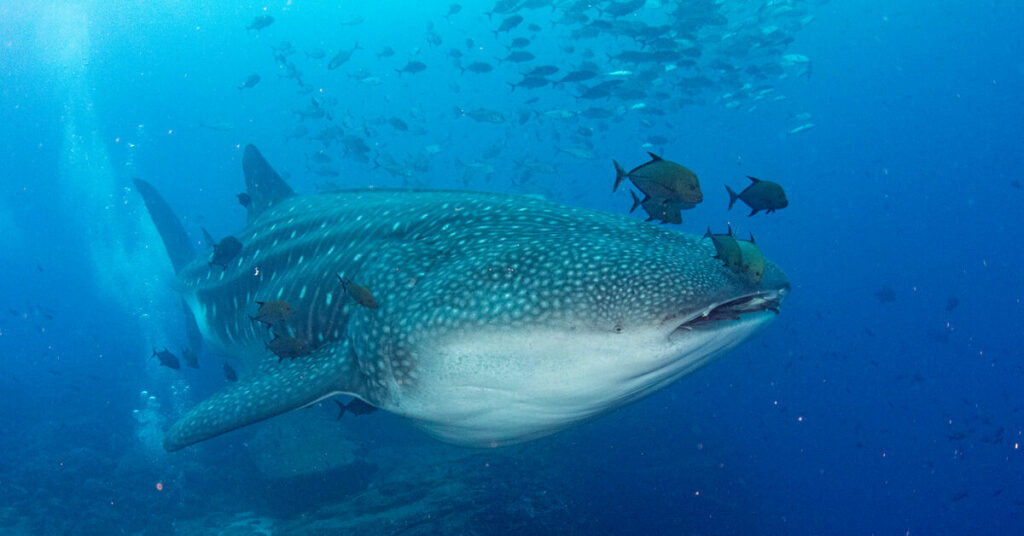
If you’re hoping to see a whale shark, plan your dive for July through October. Most of the sharks you encounter are mature females, often pregnant, cruising slowly through the blue. And don’t forget—surface intervals can be just as exciting. Keep your camera ready; you never know when one might swim by your boat..
Hammerhead Hotspots (Year-Round)
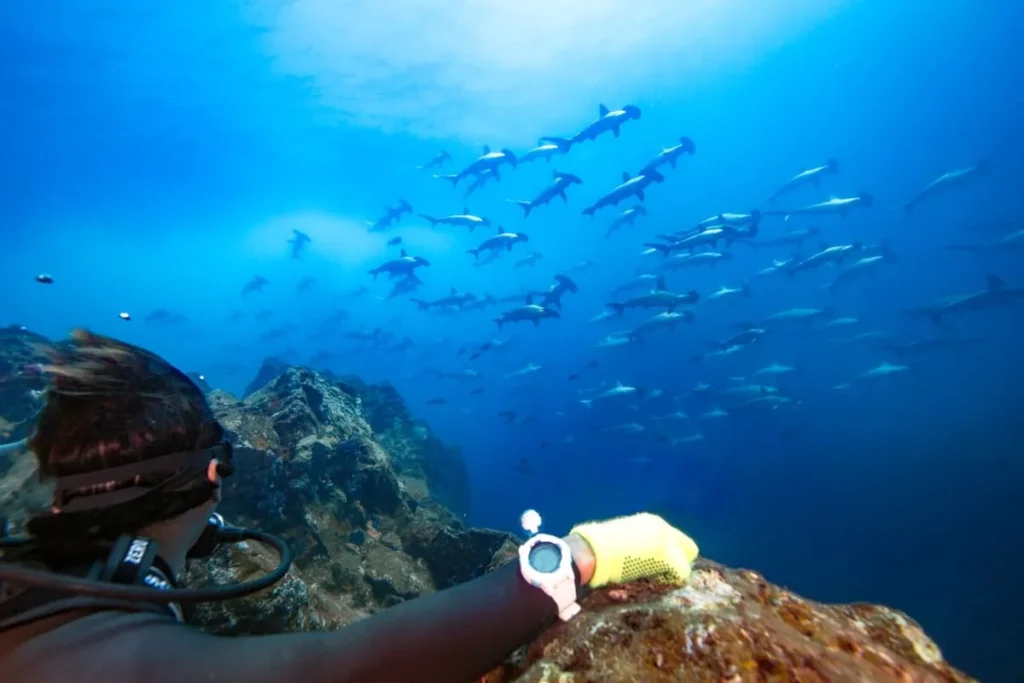
Hammerheads are the real stars here, and they hang around all year. They aggregate because of currents and cleaning stations, and when you hold your position, you’ll often see walls of 50–200+ hammerheads gliding by. It’s mesmerising and totally different from any dive you’ve done.
Best Conditions for Sightings
Visibility varies but generally ranges from 10–30 meters. Water temperatures are typically 21–27°C, but thermoclines can appear suddenly. Expect strong currents, and plan your dive with timing and positioning in mind to get the best encounters.
What It’s Like to Dive Darwin’s Arch
The Drift, the Current, and the Blue
At Darwin, the ocean sets the pace. You’ll descend quickly into blue water and ride the current along the ledges. Good buoyancy and calm nerves are essential. Fight the current, and you’ll exhaust yourself; go with it, and the experience becomes effortless.
Hanging on the Rock With the Crew at Your Side
Your guides are invaluable here. They’ll show you where to position yourself on the ledges so hammerheads pass closest. They also monitor your depth, current, and gas. Following their advice makes the dive safer—and far more enjoyable.
Surface Intervals in the Middle of Nowhere
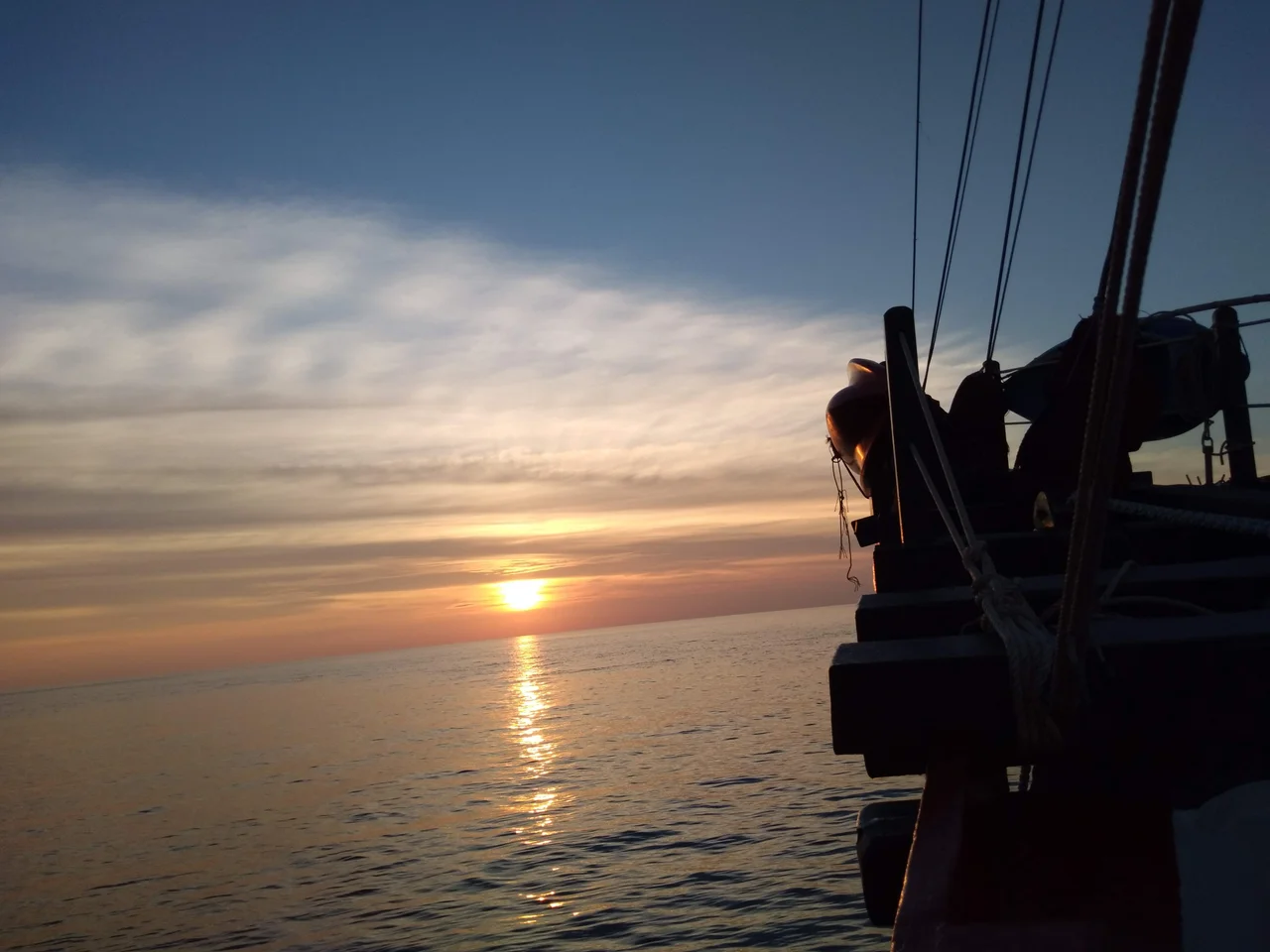
Between dives, you really feel what makes Darwin unique. The boat cuts through open blue water, far from any coast, and the horizon stretches endlessly in every direction. Dolphins often ride the bow, frigatebirds and boobies circle overhead, and there’s a profound sense of solitude: you’re truly out in the middle of nowhere. It’s quiet, raw, and completely untouched. Moments like these stick with you long after your last dive.
Who Can Dive Darwin’s Arch?
Darwin isn’t for beginners. You should:
- Be Advanced Open Water certified (or equivalent)
- Have a minimum of 50–100 logged dives
- Be comfortable in blue-water environments and strong currents
- Dive Nitrox if possible
If that describes you, then you’re ready. If not, spend some time building experience before taking on Darwin—it’s demanding but worth every bit of effort.
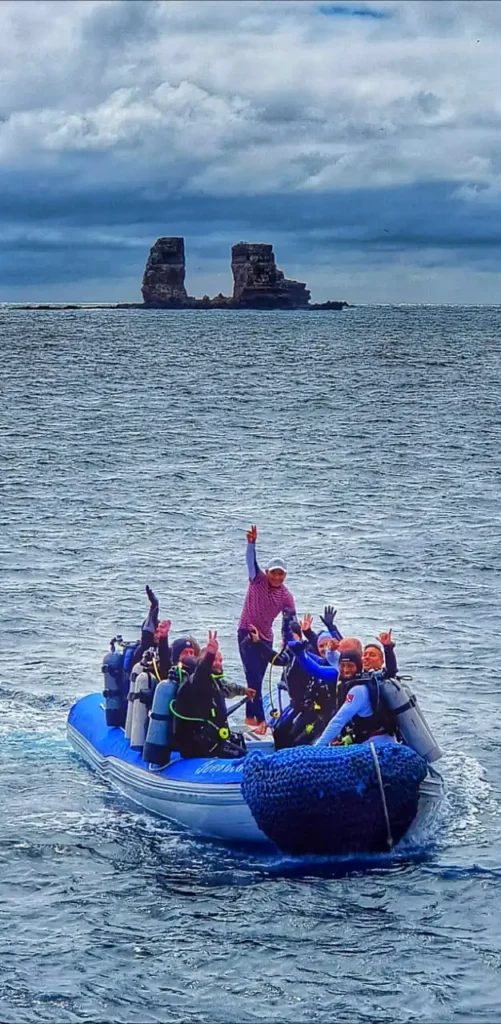
The Only Way to Dive Darwin: Liveaboards
There’s no day-trip option to Darwin: you’re out in the middle of the Pacific, 100 miles from Isabela, and the only way to get there safely is on a sturdy, ocean-going liveaboard. Multi-day stays at Wolf and Darwin give you the best chance to dive at peak times, with proper rest and planning between dives.
Liveaboards also let you maximise your time on-site, which means more opportunities to see hammerheads, mobulas, whale sharks, and all the pelagic life that makes this place legendary.
Galápagos Master is one of the few vessels authorised by the Galápagos National Park to stay for three days at Darwin & Wolf Islands. This gives you extended access to these remote, world-class sites that most divers can only dream about.
How Master Liveaboards Enhances the Darwin Experience
The only way to dive Darwin safely and effectively is on a liveaboard. With Master Liveaboards, you get:
- Expert guides who know the waters and wildlife inside out
- Safety-focused briefings designed for strong currents and advanced dives
- A welcoming, community-like onboard atmosphere
- Camera-friendly setups for wide-angle shots
- Itineraries built around the best times for hammerheads and whale sharks
Basically, they take care of the logistics and safety so you can focus on diving.
Tips for Diving Darwin’s Arch
We love sharing insider tips so you can get the most out of your dives. And stay safe while doing it. Follow these pointers, and you’ll have a much better chance of getting close to hammerheads, staying relaxed in the current, and capturing the perfect shot.
- Position low and still on the ledges to let hammerheads glide past at eye level. Don’t chase them—they’ll come to you.
- Follow the drift—the current is part of the ride. Fighting it only wears you out.
- Watch your buoyancy through thermoclines. Sudden density changes can make you sink or float unexpectedly.
- Use wide-angle lenses for sharks and mobula rays. The bigger the shot, the more of the scene you capture.
- Monitor your air closely; the current can be stronger than it looks.
- Time your entry with the current—entering just as the current shifts or starts can make a big difference in positioning.
- Watch the shadows in the blue—often the first sign that a school of hammerheads or mobulas is approaching.
- Relax and enjoy the moment—it’s easy to get caught up in the photography or the excitement, but some of the best memories happen when you just sit and watch the wildlife pass by.
These details might seem small, but they make a huge difference in both your safety and the overall experience. At Darwin, every dive is an opportunity for an unforgettable encounter, so follow the tips and let the ocean do the rest.
Dive Galápagos With the Experts
Galápagos Master provides safe, well-planned itineraries designed for the region’s demanding conditions. With experienced guides and a supportive team, it’s the most reliable way to experience Darwin’s Arch at its best. Explore itineraries and book your Galápagos liveaboard.
FAQs
Yes. The collapse affected only the surface rock.
No. It requires advanced skills and comfort in strong currents.
Around 100km north from Isabela Island, accessible only by liveaboard.
Nothing is guaranteed, but hammerheads are common and whale sharks are frequent July–October.
21–27°C (70–91°F) with thermoclines.
About the Author