
Packing for a scuba diving liveaboard trip is no easy task. Scuba diving itself comes with a pretty hefty list of equipment requirements. It also seems that the more you dive, the more scuba gear you need. Obviously, by ‘need’ we mean ‘want’. Either way, you can only fit so much into a suitcase, and that’s before you start thinking about pesky things like clothes.
So, what should you pack for your liveaboard trip? To help, here are some tips to focus on getting the best from the gear bag.
The Essentials
Let’s face it, if you’re going on a diving liveaboard with Master Liveaboards, you’re probably travelling internationally, and international travel these days comes with a bit more admin than it used to.
On the plus side, these items tend to take very little space in your travel bags. Sure, you will need passports, visas, tickets, dive certifications, logbook(s), dive insurance and travel insurance. But increasingly you will also need to complete some form of digital arrival registration before you even board your flight, which often now combines a health declaration and, in some countries, a customs declaration as well.
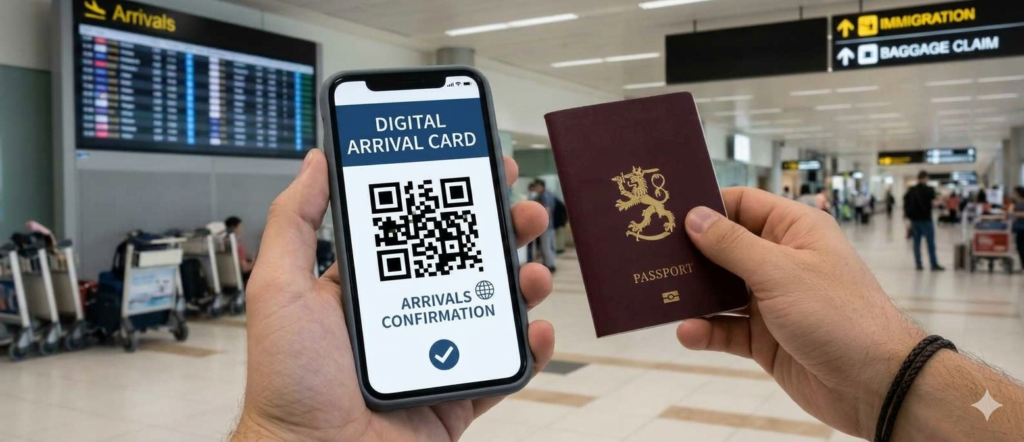
Thailand, for example, requires every foreign visitor to submit a Digital Arrival Card (TDAC) online up to 72 hours before arrival. This covers health as well as travel details, and produces a QR code which needs to be shown to immigration officials on landing. Indonesia’s equivalent folds in customs declarations on top. More countries are moving the same way, and what’s needed varies and changes often. So, get your prep started early to make sure you don’t miss anything. Also, a lot of airlines, airports, and immigration require the use of an app, so don’t forget to organise your mobile roaming or an eSIM before you leave.
Finally, if you are on prescription medication, take it with you in its original packaging, and be sure to keep it in your hand luggage.
TOP TIP – Check the current requirements for wherever you’re headed; don’t assume last trip’s rules and procedures still apply. Digital arrival cards, e-visas and similar systems are being introduced and updated all the time, and requirements differ by nationality as well as destination. Check our destination entry requirements for general guidance, your destination’s official immigration site, and your home country’s travel advice before you go. Keeping your documents and QR codes saved on your phone (with a screenshot as backup in case of patchy or non-existent wifi) will save you a headache at the airport.
Scuba Diving Equipment
The clue is in the name. You’re probably packing for a scuba diving liveaboard so that you can dive. So the essentials could just as easily include dive gear. But do you need to take every piece of diving equipment you own? Sure, if you’re flying business class or don’t mind paying for extra luggage, then take all the gear you like. But, for those in economy travelling to our destinations, careful planning is required.
A lot of scuba diving equipment is heavy and bulky, but some equipment is often not available on diving liveaboards. Our advice is several-fold. Weigh off the cost of equipment rental against extra luggage charges. Check what kind of rental gear the boat you are joining has. Keep non-essentials back until you have everything else packed. For the writer here, the only personal essentials are my mask (and a spare), fins, dive computer, surface marker buoy and reel. But everyone has different needs.
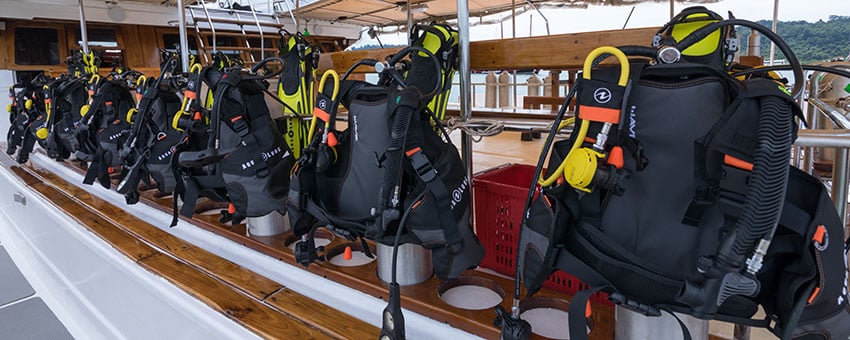
If you’re taking lots of equipment, ensure you book extra luggage early and don’t try to wing it at the airport. Also, check with your airline as they may not let you carry certain items (or carry them in certain cases). They may also include scuba diving equipment in ‘free’ sports equipment allocation.
TOP TIP – Why carry your entire reg set if the diving liveaboard you are joining carries similar rental gear? Just take your own second stage, or even just your personal mouthpiece (and a spare) that fits you like, well, a personal mouthpiece. And take hose and equipment clips. They take no space and are incredibly useful!
Miscellaneous
You would think this section might come last. Today, though, the reality is that ‘miscellaneous’ covers a lot of bases. Once upon a time it was sunglasses, your camera, and a book. But no, now you need to remember your phone (though this could be in essentials), your e-reader, Bluetooth headphones, pad? Laptop? Plus all the chargers, cables, multiplugs, and other wizardry that you might need to keep these things up and running for your trip.
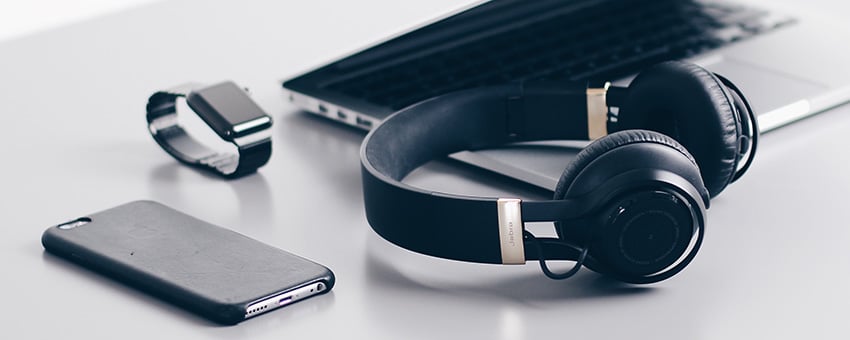
TOP TIP – Keep it minimal. The reality is that you still only really need your sunglasses, camera (OK, phone) and e-reader. Take two of each cable, just in case, and enjoy the moments of your trip without the outside world. As Depeche Mode say, Enjoy the Silence.
Clothes and Toiletries
Yes, this section is last because these are the least important things you will need. Most scuba diving liveaboards sit within the tropics, with a few exceptions. This means that you generally don’t need much in the way of clothing when packing for a scuba diving liveaboard. A few bathing costumes or boardshorts, a few t-shirts, some underwear, some sleeping attire, maybe a light jacket, and you’re sorted for most of what the trip will throw at you.
High on the list should also be two hats (a cap for the sun and a beanie for after the night dives) and a warm evening sweater or hoodie to keep off the chill. In the toiletries department… sunscreen sunscreen sunscreen (reef-friendly, please). And mosquito spray. General toiletries are obviously useful, but check what the boat provides so you can save any space you can.
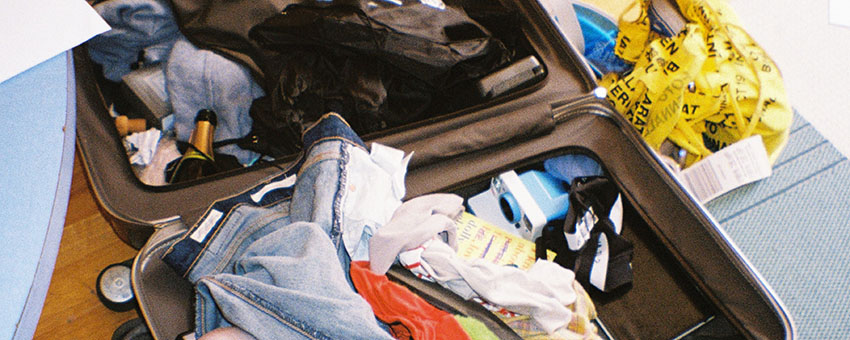
TOP TIP – You are on a diving liveaboard, and everyone is there to unwind and dive. That’s it. Keep your toiletries to the minimum required to keep you odour-free, with your hair vaguely under control. Even the hair thing is optional. Nobody really cares; just wear one of your two hats. Same with the clothes; ball gowns and tuxedos are very much not required. Anything that means you’re not naked is generally fairly acceptable.
And that’s it. You’re ready to go diving with Master Liveaboards. To help with your packing, feel free to use our handy packing list here.
About the Author