
The Maldives is one of the few places on Earth where encounters with whale sharks and manta rays are a year-round possibility. This archipelago of pristine atolls doesn’t just offer beautiful backdrops; it provides the ideal, plankton-rich conditions in which these magnificent, gentle giants thrive.
In this comprehensive guide, you’ll discover why liveaboard diving in the Maldives is the world’s premier destination for close encounters with large marine animals, how the natural environment sustains these populations, and how experiencing it all from a liveaboard provides the most intimate, ethical, and unforgettable dive trip of your life. Ready to meet the ocean’s biggest fish and its most graceful ray?
Quick Summary
- Whale Sharks: Year-round sightings, especially around South Ari Atoll.
- Manta Rays: Peak activity May–October (Southwest Monsoon), but year-round encounters are possible – spectacular aggregations at Hanifaru Bay (seasonal restrictions apply).
- Conditions: Warm, clear waters with predictable monsoon cycles creating ideal, plankton-rich conditions.
- Best Way to Dive: Liveaboards offer the best chance of close, ethical encounters with expert crews who know the cleaning stations and feeding routes.
- Diver Level: Suits intermediate and improving divers. Nitrox is highly recommended for extended bottom time.
- Top Routes: Central Atolls, Central Atolls & Baa, and Far South expeditions.
The Magic of Meeting the Ocean’s Giants
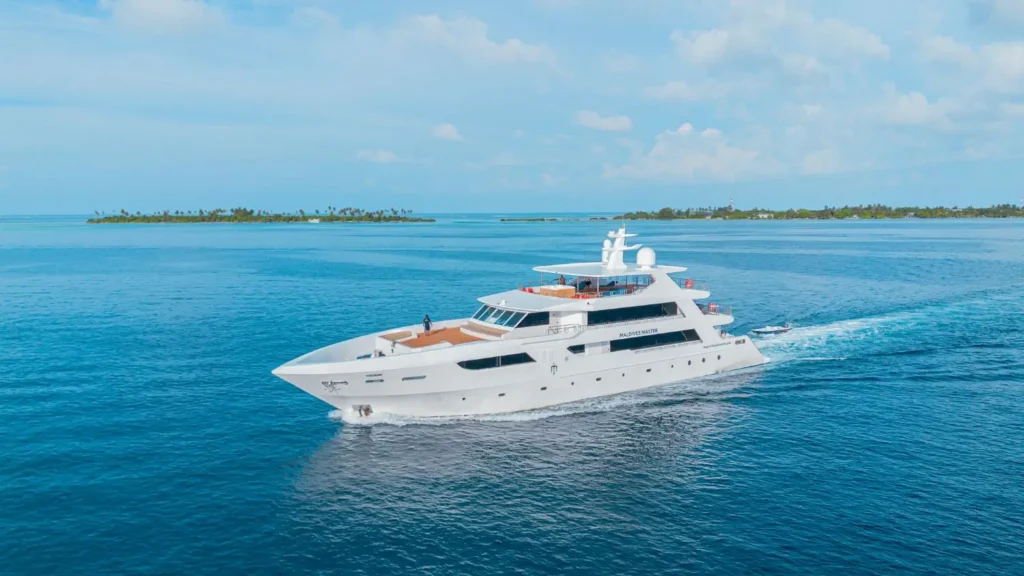
Imagine this: You roll back into the warm, turquoise water off the Maldives Master’s dive tender. Visibility is stretching beyond 30 metres. Seconds later, a shadow the size of a small bus glides out of the blue, its mouth an enormous, gentle arc. This isn’t just a dive; it’s a moment of profound connection with nature.
The expert crew around you only enhances the experience. Your Master Liveaboards guide, who has logged hundreds of hours in these specific channels, provides a quick, confident hand signal, directing you to the perfect, respectful position. Later, back on the deck, you and your fellow divers share stories, comparing photos and videos, united by a community experience few people ever get to share.
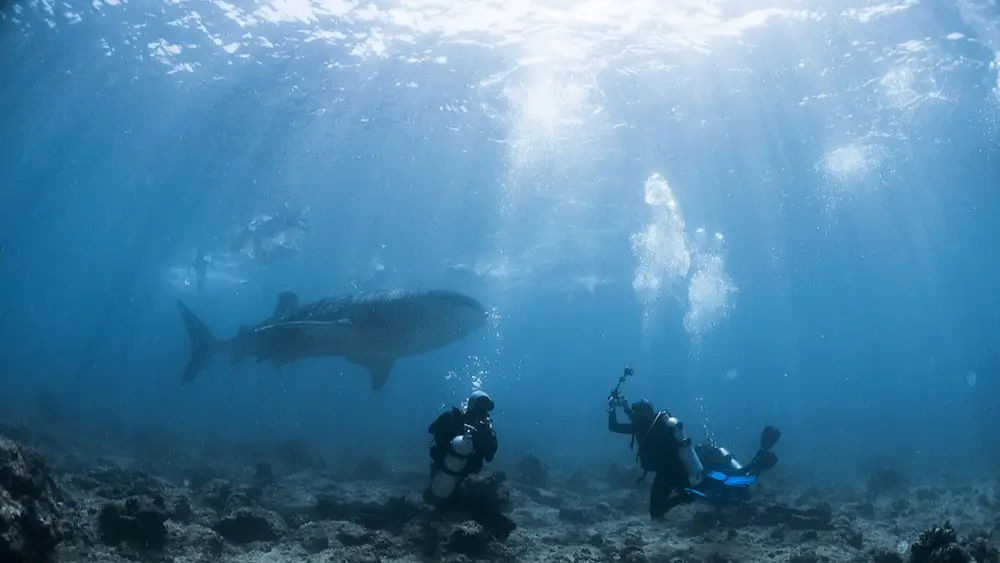
It’s this combination of unrivalled natural opportunity and expert guidance that makes Maldives liveaboard diving the ultimate way to encounter the whale shark and the manta ray.
Why the Maldives Is One of the Best Places on Earth to See Whale Sharks
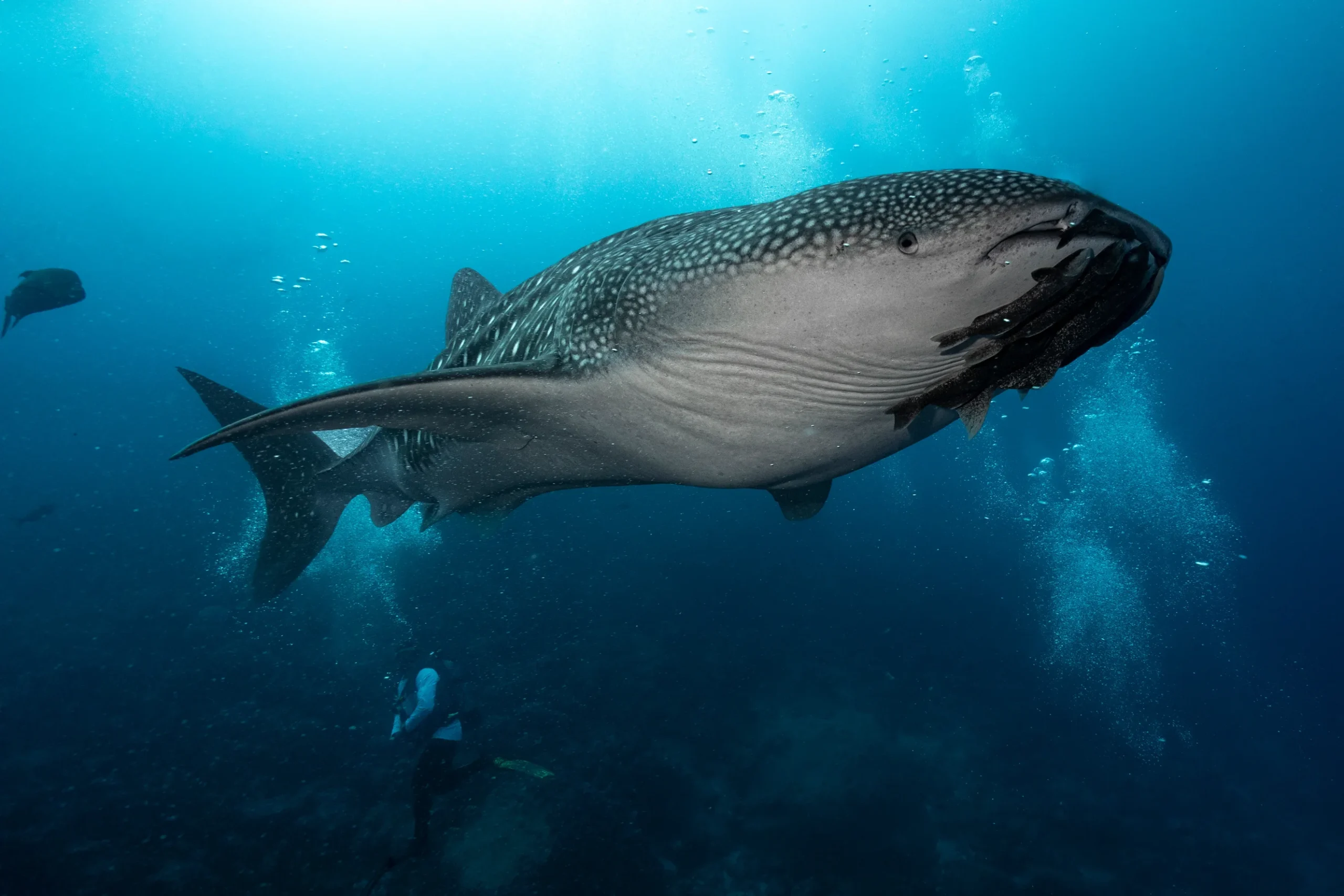
The whale shark (Rhincodon typus) is the world’s largest fish, a filter-feeding marvel that can grow up to 18 metres long. While they are found in tropical oceans worldwide, the Maldives provides a unique and predictable haven for them.
Year-Round Sightings (Rare in Most Destinations)
Unlike most other global hotspots, which tend to have a short, intensely seasonal window, the Maldives offers whale shark sightings throughout the year… though not throughout the region.
The secret lies in South Ari Atoll. Here, on the western edge of the atoll, a persistent aggregation of mostly juvenile male whale sharks feeds consistently. This area serves as a permanent feeding ground and nursery, allowing for reliable encounters throughout every month of the year.
Rich Plankton Blooms & Perfect Conditions
Whale sharks are drawn to the Maldives because of its rich, stable food source: plankton.
The archipelago’s location and geography, situated in the middle of the Indian Ocean, combined with the predictable monsoon currents, create deep water upwellings. This brings nutrient-rich water closer to the surface, triggering the massive plankton blooms that form the foundation of the marine food chain. For a filter-feeder that needs to consume vast amounts of food, the Maldives is a constant, year-round buffet.
Ideal for Both Experienced & Progressing Divers
Encountering a whale shark in the Maldives is generally a safe and manageable experience for a wide range of divers.
- Safe Depth Ranges: Encounters often occur close to the surface, making them accessible to both snorkellers and divers. Divers typically enjoy these sights in the top 15 meters.
- Predictable Routes: The crew is familiar with the predictable patrol routes of the animals, allowing for calculated and ethical entry points that minimise disturbance.
- Professional Crew Briefings: Our expert guides provide meticulous briefings, detailing the encounter rules, expected animal behaviour, and how to position yourself for the best view without interrupting the shark’s path. Trust us, it’s all about letting the animal come to you.
Manta Rays: The Maldives’ Other Superstars
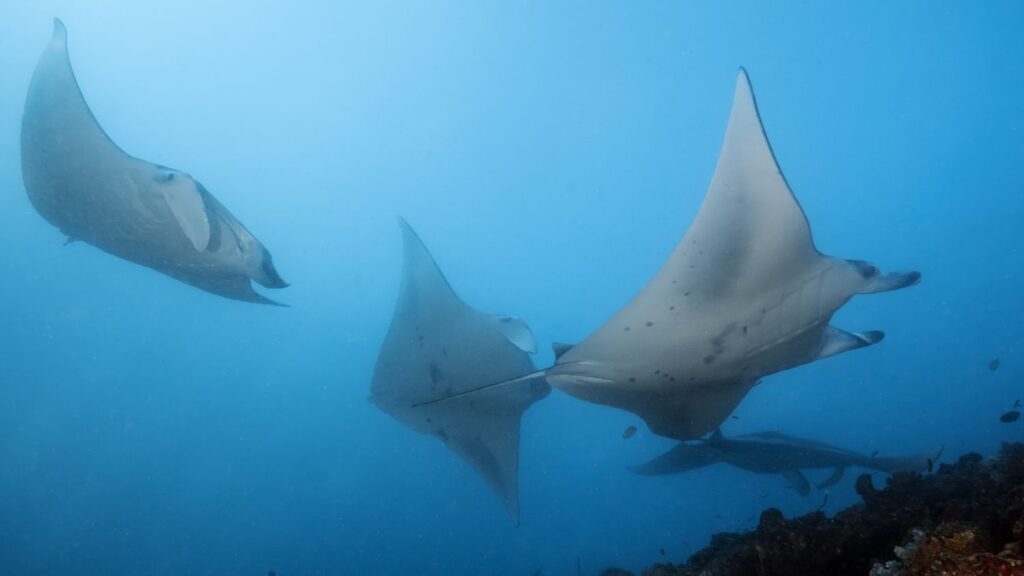
If the whale shark is the ocean’s gentle giant, the manta ray is its silent, graceful ballerina. The Maldives is home to the largest known population of reef manta rays (Mobula alfredi), and encounters with these rays are among the best in the world.
Cleaning Stations: The Show You’ll Never Forget
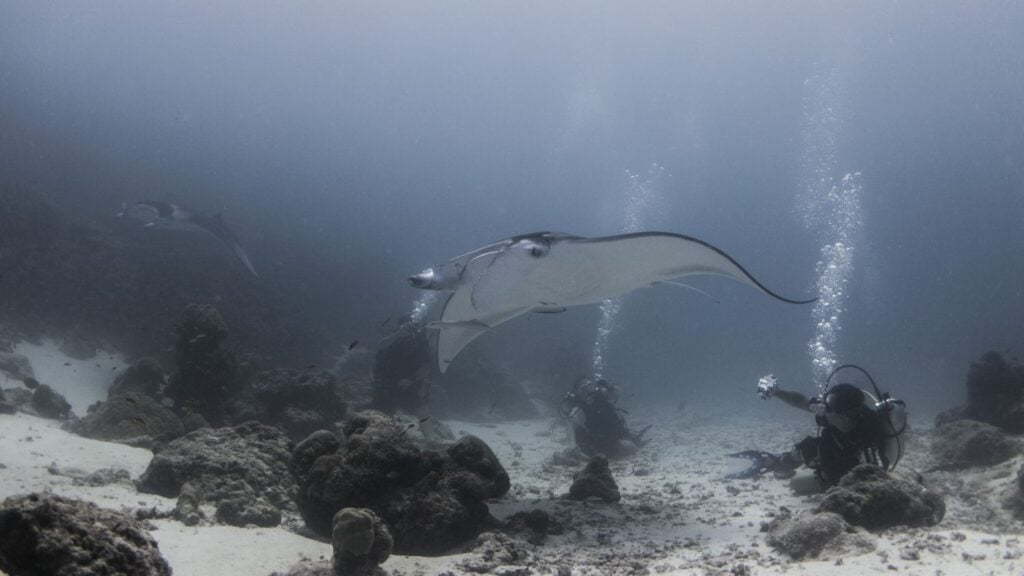
Manta rays have specific spots they visit regularly, known as cleaning stations. These are small coral heads or patches on the reef where tiny, specialised ‘cleaner’ fish congregate.
Divers at a cleaning station kneel or hover patiently on the seabed, waiting. Once the in and out traffic calms, the manta rays glide in, hovering almost motionless above the coral while the cleaner wrasse and other fish pick parasites and dead skin off their bodies.
It’s a mesmerising display of symbiotic behaviour, and because the mantas are focused on the cleaning, they often come within a few feet of respectful, stationary divers.
Key Locations for Manta Encounters
Manta rays are found throughout the Maldivian atolls, but a few locations stand out for their massive aggregations:
- Hanifaru Bay (Baa Atoll): This UNESCO Biosphere Reserve is world-famous. During the southwest monsoon (typically May to November), the unique funnel-shaped geography of the bay traps plankton, resulting in massive feeding aggregations of up to 100 manta rays at a time. (Note that encounters here are strictly regulated and only permitted for snorkellers.)
- North Malé & Ari Routes: Outside of Hanifaru, cleaning stations in these atolls offer consistent and predictable sightings for divers year-round. Liveaboard itineraries are strategically planned to hit these stations at the ideal tide and time of day.
Behaviour You Can Expect to See
Observing manta rays in the Maldives offers a variety of unforgettable behaviours:
- Barrel-Rolling: When feeding on dense plankton patches, mantas perform acrobatic, seemingly effortless loops, barrel-rolls, to stay within the feeding zone and maximise their intake.
- Feeding Trains: When plankton is less dense, mantas line up one behind the other, creating a graceful feeding train as they glide through the water, each one benefiting from the disturbed water column of the ray in front.
Cleaning Station Routines: The slow, almost hypnotic hovering described above, sometimes with mantas waiting in a ‘queue’ for their turn at the busiest coral heads.
The Science Behind the Giants: Why the Maldives Works
The consistent presence of whale sharks and manta rays in the Maldives isn’t a fluke; it’s a perfect scientific alignment of geography and oceanography.
- Monsoon Cycles & Currents: The Maldives experiences two main monsoon seasons. The Southwest Monsoon (May to October) pushes nutrient-rich water across the atolls from the west, concentrating plankton on the eastern atoll sides. The Northeast Monsoon (November to April) reverses this, concentrating plankton on the western sides. Our liveaboard routes adjust to these cycles to follow the food.
- Atoll Geography: The countless channels, passes, and inner lagoons of the atolls act like massive, natural funnels. The currents push water and plankton through these channels, creating high-density feeding areas such as the aforementioned Hanifaru Bay.
- Whale Shark/Manta Research Initiatives: The Maldivian government and NGOs, such as the Maldives Whale Shark Research Programme (MWSRP) and the Manta Trust, actively study these animals, providing invaluable data that our experienced guides use to predict the best encounter locations while ensuring ethical practices are maintained.
When to Go: Best Times for Encounters
While whale sharks are year-round in South Ari, manta rays and overall water conditions do vary:
- January to March: Best visibility. Clear water, perfect for photography. Manta encounters are good, typically on the western side of the atolls.
- May to October: The Southwest Monsoon brings plankton-rich, slightly lower-visibility water, but this is the prime time for manta aggregations on the eastern side of the atolls, including peak Hanifaru Bay activity.
- November to December: A transition period. Visibility improves, and mantas begin to move to the western sides as the monsoon shifts. This period is a great balance of good visibility and high encounter rates.
The take-home message is consistency: No matter when you book, your liveaboard itinerary will be designed to find the current hot spots for big animal action.
What the Experience Is Like on a Liveaboard
A liveaboard in the Maldives isn’t just a place to sleep; it’s a dedicated, purpose-built platform for maximising your diving experience. That includes your encounters with whale sharks and mantas.
Early Morning Briefings With Expert Guides
Your day begins with a cup of coffee and an in-depth briefing. Our guides are local experts, often working closely with research groups, and they use their daily intel and local knowledge, including currents and recent sightings, to plan the perfect dive.
Crew knowledge is a key differentiator for Master Liveaboards. We don’t just take you to a map location; we put you in the right spot at the right time.
Dive Practices for Ethical Encounters
Responsible tourism is at the heart of our operations. The best encounters are always ethical encounters.
- Maintaining Distance: We enforce minimum distances, typically 3 to 4 meters from both whale sharks and manta rays.
- No Chasing: Our protocol is to get in the water, wait quietly, and let the animals approach us on their own terms.
- Controlled Buoyancy: We ask all divers to maintain impeccable buoyancy to avoid disturbing the ecosystem, especially at sensitive cleaning stations.
At Master Liveaboards, we strive to uphold our commitment to being responsible, trustworthy operators dedicated to the well-being of animals and the environment.
Life Onboard Between Dives
Between your big animal dives, life on the Maldives Master revolves around relaxation and community. You’ll find fellow divers sharing their spectacular photos, discussing marine biology with the guides, and swapping stories from the day’s events.
The communal feeling onboard turns a group of strangers into a genuine diving community by the end of the week.
What Level of Diver Do You Need to Be?
The Maldives is an excellent destination for intermediate and improving divers.
- Perfect for Intermediate Divers: If you hold an Advanced Open Water certification, you’ll be able to enjoy virtually all the key dive sites, especially if you already have experience with strong currents.
- Nitrox Recommended: While not strictly required, Nitrox certification is highly recommended. The repeated, slightly deeper dives (around 20 to 30 metres) and the opportunity for extended bottom time at cleaning stations make Nitrox a definite advantage for maximising your time in the water.
- Calm Conditions vs. Cleaning Station Currents: The inner atolls offer generally quiet, easy diving. However, dives in the channels and near cleaning stations can involve moderate to strong currents. Your Master Liveaboards guide will manage these conditions, but comfort with drift diving is beneficial.
How to Get the Best Encounters
Our guides know how to turn a good sighting into an incredible, respectful encounter.
- Ideal Positioning in Water: When encountering a whale shark, swim to the side of the shark’s path and simply move parallel to it. Never swim directly in front of the mouth or directly behind the tail.
- Managing Expectations: While the Maldives offers the best chance, marine life is, by definition, wild. Our guides are experts, but they don’t have remote controls. Be patient, trust the process, and every sighting will feel like a gift.
- Best Lens/Focal Lengths for Photos: For whale sharks, a wide-angle lens is essential, sometimes even a fisheye, to capture the sheer size of the animal. For mantas at cleaning stations, you can often use a more standard wide-angle or even a macro lens to capture the cleaner fish in action.
- Specific Sites Where Our Guides Have Recorded Consistent Sightings: Dive sites like Maamigili Beru (South Ari) and Madivaru Manta Point (Rasdhoo Atoll) are routinely monitored and prioritised by our crew based on real-time data.
Maldives Itineraries for Big Animal Lovers
We have three distinct routes tailored to different levels of big-animal encounters.
- Central Atolls: Covering the classics of North/South Malé, Ari, and Rasdhoo; this route targets both the South Ari whale shark patrol area and the most famous manta cleaning stations.
- Central Arolls & Baa: A more focused route dedicated to the two atolls famous for guaranteed whale shark and consistent manta ray sightings. Ideal for those who want the highest concentration of gentle giants.
- Far South: This route is an adventure for those seeking pelagic sharks, including tiger sharks and thresher sharks, and also offers the chance to see oceanic manta rays as they patrol the offshore cleaning stations, providing a unique experience that differs from the reef manta encounters further north.
Ready to Dive In?
The Maldives is waiting to deliver on the ultimate promise: close, frequent, and utterly unforgettable encounters with the ocean’s gentle giants.
Don’t settle for day trips that offer a chance. Join a crew who know these waters inside out and a community of divers who love the ocean as much as you do. Come and experience the full magnificence of the Maldives’ underwater world from the best possible platform.
Frequently Asked Questions
No tour operator can guarantee a whale shark sighting, as these animals are wild and unpredictable in nature. However, the Maldives, particularly South Ari Atoll, offers the highest year-round probability of encounter in the world due to the stable population and permanent feeding conditions. Liveaboards maximise this probability by being able to move freely to the best spots.
The months of May through October (Southwest Monsoon) are statistically the best for high-volume manta ray aggregations, especially on the eastern atolls like Baa Atoll (Hanifaru Bay). Outside of this, November to April still offers excellent, consistent manta encounters at various cleaning stations.
While many cleaning stations are shallow and accessible to Open Water divers, the best, most consistent ones are often in areas with currents or slightly deeper water (up to 25 meters). For maximum access and safety, Advanced Open Water certification and comfort with drift/mild current diving are recommended. Master Liveaboards requires a minimum of 30 dives and a Deep Diving Specialty OR Advanced Open Water certification.
About the Author