
What to Expect: A Day on Board
A typical day on board a diving liveaboard is a unique blend of adrenaline and absolute tranquillity. It is a routine that we, as divers, quickly fall in love with: an early morning wake-up call followed by the thrill of multiple dives, interspersed with hearty meals, naps, and camaraderie. But life on liveaboards is more than just a convenient dive platform; it is a floating community where the rhythm of the ocean dictates our schedule.
From the first coffee at sunrise to shared stories over dinner, the experience is defined as much by the surface intervals as it is by the underwater encounters. Whether you are exploring the Master Liveaboard Fleet or reading our Indonesia Liveaboard Crew Diaries, you will find that the magic lies in the details.
It might be the luxury of a Maldives Luxury Liveaboard Experience or the raw nature of a Galapagos Liveaboard Experience; regardless of the destination, the lifestyle hook is the same.
Quick Summary:
- Early Mornings: The best action often happens at sunrise, making the early alarm clock worth the struggle.
- A Unique Rhythm: The day is structured around “Dive, Eat, Sleep, Repeat,” removing all decision fatigue.
- Surface Intervals: These aren’t just waiting periods; they are for socialising, gear tweaking, and napping. Or catching up on the podcast or book you never have time for.
- The Food: We eat more than we think is humanly possible (and we need the energy).
- Sunsets & Evenings: From sundowners on the deck to the magic of night dives, the day winds down with shared stories and starry skies.
- The Crew: The unsung heroes who make the logistics vanish so we can focus on the fish.
- FAQs: Everything you need to know about dive counts, skipping dives, and handling sea conditions.
Life on a Liveaboard Isn’t Just About the Dives
The dives, the destinations, the marine life… they might be the headline, but it’s everything that happens between them that turns a great trip into an unforgettable one.
There is a specific feeling we only get on a liveaboard. It’s the sensation of your hair being perpetually salty, the gentle rocking of the boat, and the realisation that you haven’t looked at your phone in six hours. And that you don’t care. While the marketing brochures show us the hammerheads and the mantas, they rarely capture the laughter on the dive deck as someone struggles to remove a wetsuit, or the peace of watching the ocean turn purple at dusk with a mug of tea in hand.
Early Mornings: The Day On Board Begins Before the First Dive
Waking Up at Sea
If you are usually not a morning person, prepare to be converted. On land, a 6am alarm is a punishment. On a liveaboard, it’s an invitation. You wake up not to the sound of traffic, but to the hum of the engine or the lap of waves against the hull.
Stepping out of your cabin, the sun is often just cresting the horizon. If you are in the tropics, the air is already warm; if you are somewhere wilder like the Galapagos, there’s a crispness to the breeze that wakes you up faster than caffeine. There is a quiet camaraderie at the coffee station: a few nods, some sleepy smiles, and the mutual understanding that something spectacular is about to happen.
The First Briefing of the Day
The ringing of the ship’s bell (or a polite knock on your door) signals the briefing. This is where the anticipation peaks. We gather in the lounge or on the sundeck, mugs in hand, staring at a whiteboard covered in colourful marker pen drawings.
Your dive guides will talk you through the topography, currents, and safety procedures. It’s a reassuring ritual. Whether they are sketching a complex pinnacle or explaining the thermoclines, this is where trust is built. We realise these guys and girls know this reef better than we know our own neighbourhoods.
Dive, Eat, Repeat: The Rhythm of the Day
Dive One: Fresh, Focused, Unforgettable
The first dive is often the most action-packed of the day. The reef is waking up, the predators are finishing their night shifts, and the light cutting through the water is sharp and dramatic.
There is a moment of chaos on the dive deck. Zipping up suits, checking nitrox mixes, finding that one missing bootie… but the second you roll from the tender, the noise vanishes. It’s just you and the blue.
Breakfast & Recovery
You will never be as hungry as you are after a morning dive. It is a scientific fact (probably… we think it is, at least). You climb back aboard, rinse off, and suddenly you are ravenous.
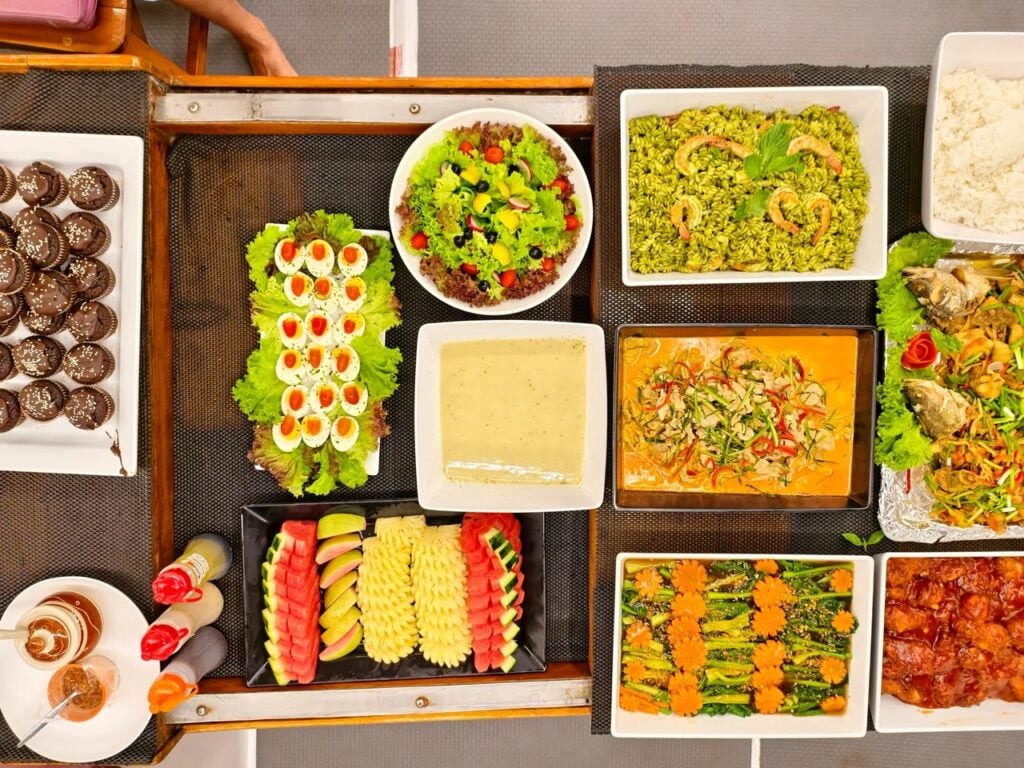
Breakfast on a liveaboard is a serious affair. We’re talking eggs, toast, fruit, cereal, noodles, rice and more. It is often all on the same plate. This is the time for the first debrief. “Did you see that turtle?” “My mask fogged up!” “How much air did you have left?” The energy is high, fuelled by endorphins and bacon.
Midday Dives & Changing Conditions
As the sun climbs higher, the boat might move to a new site. This is where the captain and cruise director earn their keep, reading the tides and weather. If the current is ripping at the main site or the wind is howling, they’ll pivot to a sheltered bay.
The midday dives are vibrant. The sun penetrates deeper, bringing out the true reds, pinks and oranges of the coral reef. This is often when the macro life comes out to play , especially in destinations like Indonesia, making it perfect for any photographer looking for critters in the sand.
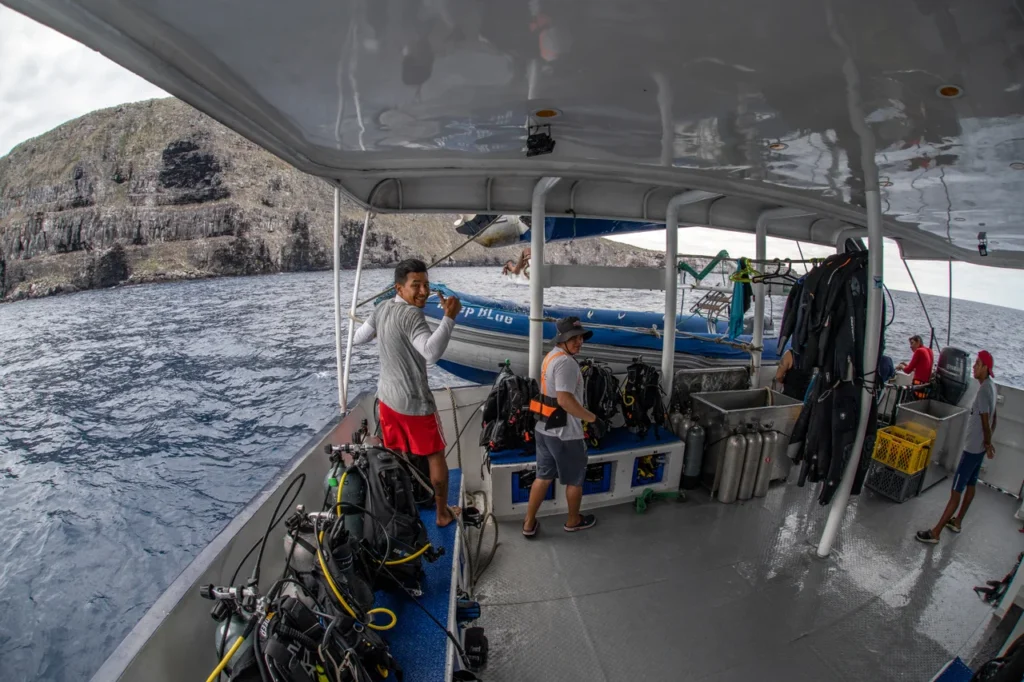
Surface Intervals: Where the Community Comes Alive
Gear Prep, Rinsing & Resetting
Between dives, the dive deck becomes a hive of efficiency. Wetsuits are hung to dry (in the vain hope they’ll be dry by the next dive. Spoiler: they won’t be), cameras are dunked in fresh water, and tanks are refilled.
It is a faff-free zone. Everyone knows their spot, everyone has their crate. It’s a satisfying bit of housekeeping that keeps the day running smoothly.
Stories, Screens & Shared Excitement
Head into the lounge during a surface interval. It is here that the boat’s distinct “tribes” begin to emerge.
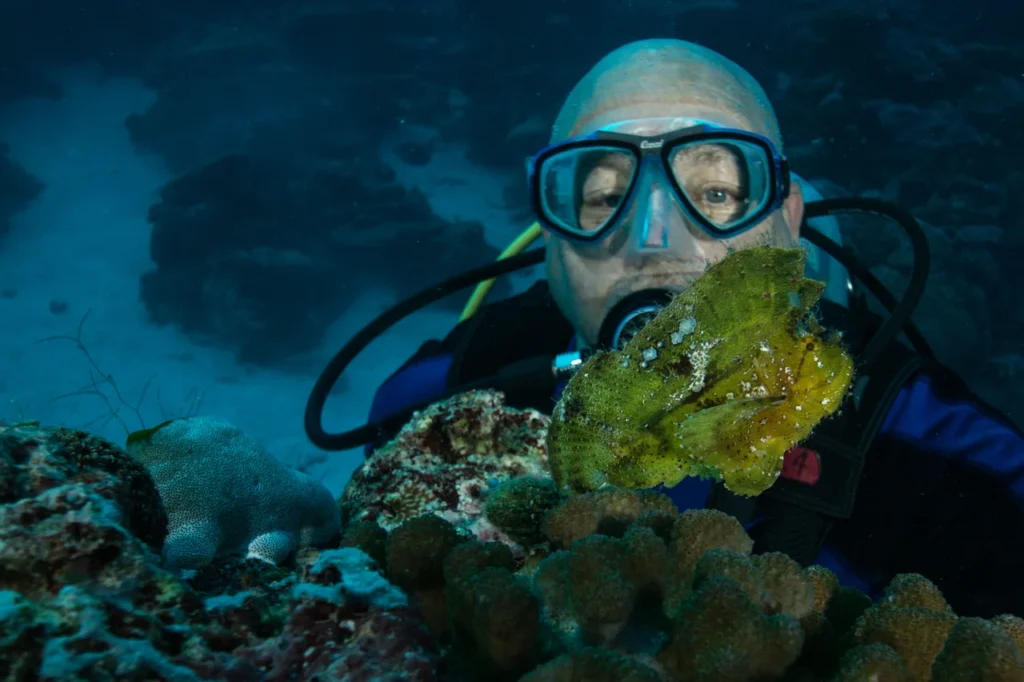
The Macro Maniacs (aka The Nudibranch Hunters)
You will spot them easily. They are the ones who completely ignored the school of hammerheads passing overhead because they were too busy photographing a 2mm sea slug in a crack in the wall. They will spend the entire interval zooming in to 400% on a laptop screen, debating whether that blurry speck is a Flabellina or a Chromodoris.
The Charging Station Colonisers (aka The Photo Pros)
Their mission is maintenance. They are busy downloading gigabytes of data, greasing O-rings with surgical precision, and changing strobe batteries. Their defining trait? They have somehow managed to occupy every single electrical socket in the lounge. If you need to charge your phone, good luck: you are in a queue behind three camera strobes and a drone.
The Kit Connoisseurs (aka The Equipment Nerds)
If you hear a heated debate about the hydrodynamic efficiency of split fins versus jet fins, you have found this tribe. They love to discuss the drag coefficient of a BCD and why their regulator routing is superior to yours.
- Sub-tribe: The Techies. These divers seem to spend more time analysing their dive computers than looking at the fish. They can be found huddled in a corner with a tablet, calculating CNS loading and gas mixes.
The Sun Seekers (aka The Holiday Divers)
The truly relaxed faction. They aren’t here for the species count or the gear specs; they are here for the fun. They drift through the dives, happy to see “some blue fish,” and vanish the moment the briefing ends. You’ll usually find them asleep on the sundeck with a hat over their eyes, successfully avoiding the conversation about split fins happening downstairs.
The Content Creators (aka The Influencers)
You’ll find them on the bow, hair perfectly styled (despite the salt), looking wistfully at the horizon while a GoPro records them doing absolutely nothing. They are the only people on board who manage to look glamorous in a wetsuit, often holding a pose for an uncomfortable amount of time to get the perfect “plandid” (planned candid) shot for the grid. However, their calm facade cracks the moment the boat moves out of phone signal. While the rest of us embrace the digital detox, they can be found wandering the decks in a state of mild panic, holding their phones aloft like frantic divining rods, praying for a signal bar to return.
The “Been-There-Done-That” Brigade
No matter how amazing the shark you just saw was, this diver has seen a bigger one in Galapagos/Palau/Maldives/Truk Lagoon. They are lovely people, but they cannot resist the urge to tell you that “the visibility was much better in ’98.” They are a walking, talking TripAdvisor, full of recommendations on where you simply must go next.
The Historians (aka The Serial Loggers)
While others are grabbing a biscuit, this diver is writing a novel. They have a logbook the size of an encyclopedia, and they are filling it out with the intensity of a court stenographer. They need to know the exact Latin name of every sponge they saw, the water temperature to the decimal point, and the captain’s middle name.
Quiet Moments Between Action
Let’s be honest: diving is exhausting. Off-gassing nitrogen makes us sleepy. Some of the best moments on board are the quiet ones. Reading a book on the sundeck as islands drift past, or taking a cheeky 20-minute power nap in your cabin. The motion of the boat acts like a giant cradle; it is the best sleep you’ll ever have.
Meals at Sea: More Than Just Refuelling
Shared Tables, Shared Experiences
Dining on a liveaboard is rarely a solitary affair. There are no private booths or tables for two here; instead, it is banquet-style seating where “pass the chilli sauce” often leads to a lifelong friendship.
The ocean is the great leveller. On land, social circles are defined by status, age, or profession. On board, those hierarchies evaporate. You might find yourself squeezing in between a high-flying investment banker from London and a bohemian yoga instructor from California. In the real world, their paths would likely never cross. Here, they are bonding over the fact that they both got caught in the same down-current before breakfast.
The usual polite, awkward small talk is thrown overboard. We stop asking, “So, what do you do for work?” Honestly, nobody cares if you are a CEO or a student when you are both wearing mismatched shorts and have mask hair. Instead, the questions go straight to the heart of the matter: “What is the best dive you’ve ever done?” or “Did you see that shark on the safety stop?”
It is networking, but for the soul rather than the career. You aren’t exchanging business cards; you are exchanging bucket lists. By the end of the week, you will likely know these strangers better than you know some of your colleagues back home.
Fuel for the Next Dive
Chefs on liveaboards are wizards. They work in moving galleys to produce buffet feasts that cater to vegans, carnivores, and gluten-free divers alike. They know that diving burns massive calories, so the food is hearty. You might find yourself having a full roast dinner while moored off a tropical island: it’s surreal but so wonderful and yummy!
Afternoons, Sunsets & Final Dives
The Last Dive of the DayOn Board
As the afternoon wears on, the pace slows. The third or fourth dive of the day is often shallower, more relaxed. The light turns golden underwater, casting long shadows. It’s a reflective time, perfect for just hovering and watching the reef work.
Sundowners on Deck
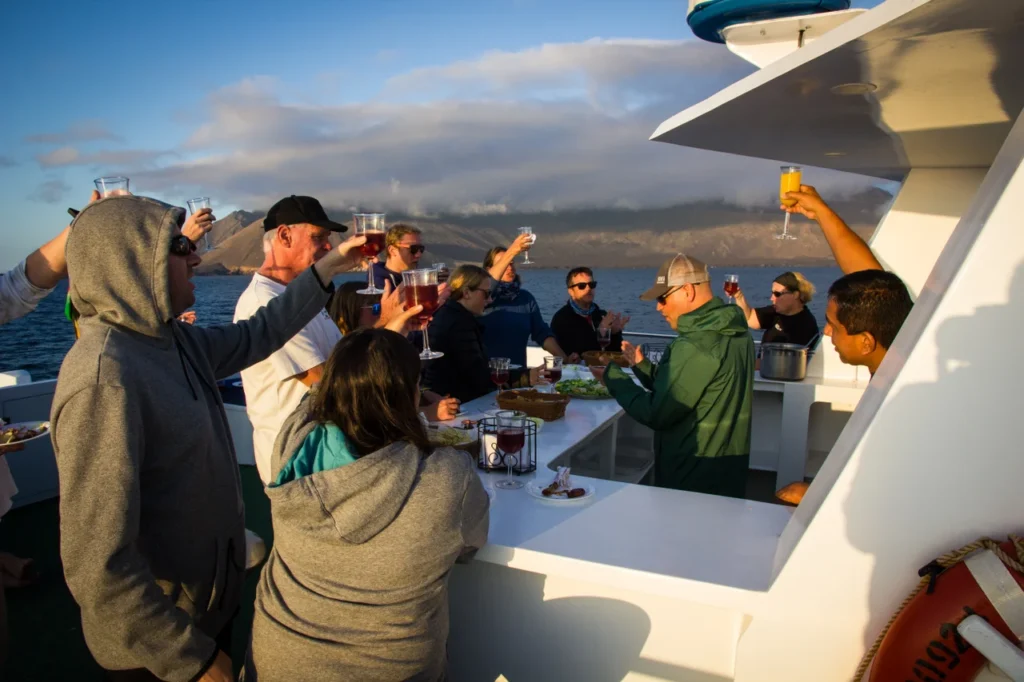
Once the diving is done for the day, the mood shifts perceptibly. If you aren’t heading back in for a night dive, this is the moment the “Deco Beers” appear. There is a universal sound known to divers worldwide: the sharp hiss-crack of a cold can opening on the sundeck, signalling that the work is done and the relaxation has officially begun.
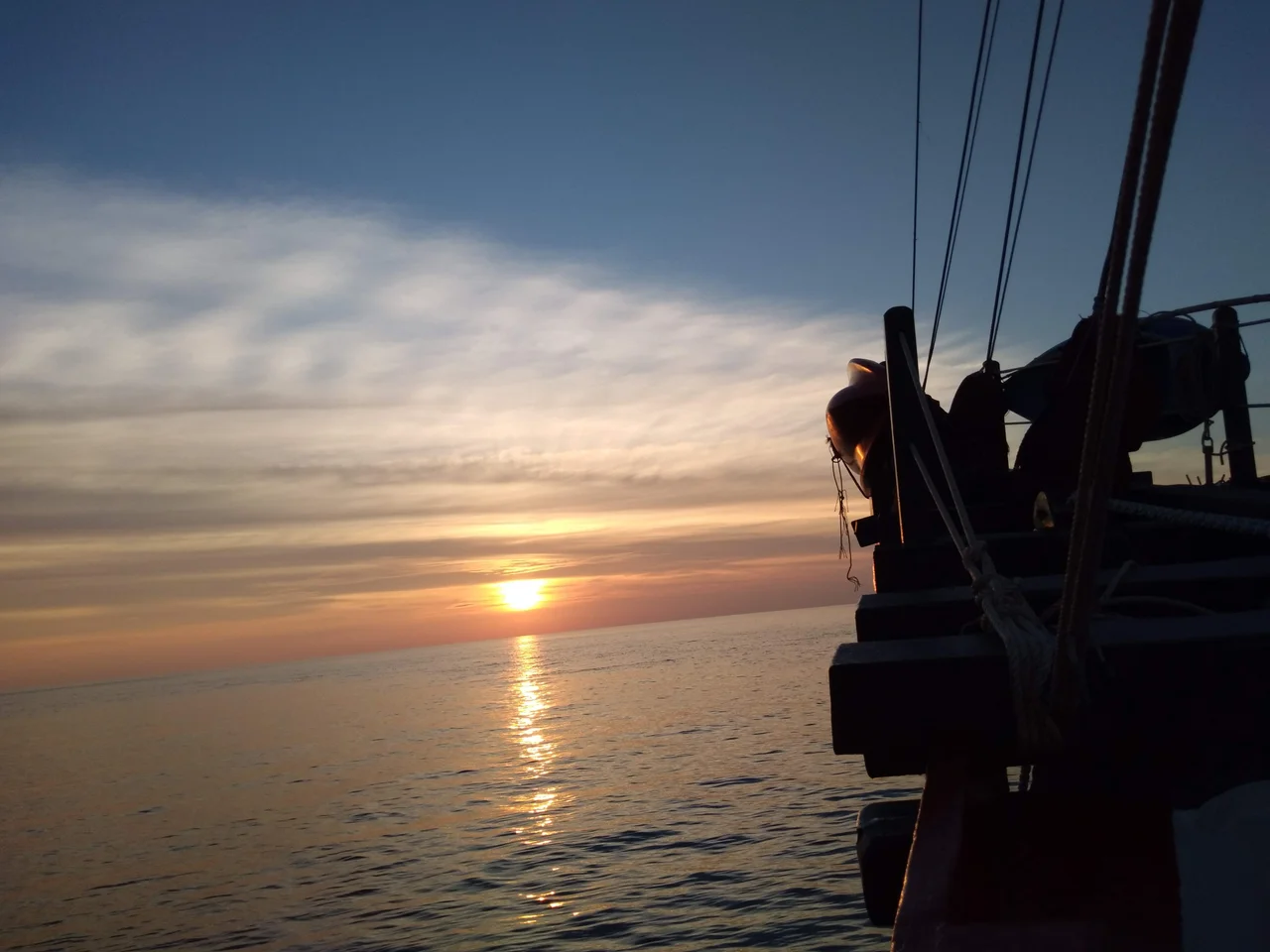
There is an unwritten rule that a cold drink, whether it’s a local lager, a gin and tonic, or an icy fruit juice, tastes 50% better when you are barefoot, watching the sun melt into the horizon. This is “Golden Hour” in every sense. The light softens, painting the ocean in violets and burnt oranges, and the adrenaline of the day gives way to a satisfied exhaustion.
It is often the hardest decision of the day: do you gear up for the night dive to hunt for macro critters in the dark, or do you commit to the beanbag and the sunset? Once that first sip passes your lips, the choice is made (safety first, after all!), and you settle in to watch the stars emerge, free from the light pollution of the real world.
Evenings Onboard: Winding Down at Sea
Night Diving (When Conditions Allow)
For the hardcore amongst us, the day isn’t done. Night diving is an optional adventure. Plunging into black water might sound terrifying, but it reveals a different world. Crabs, shrimps, and hunting lionfish emerge. Turning off your torch to wave your arms and see the bioluminescence sparkle around you is pure magic.
Dinner & Debriefs
Dinner is the main event, the culinary crescendo of the day. Unlike the “fuel-and-go” vibe of lunch, the evening meal is a slower, louder affair. The atmosphere is relaxed, the wine is flowing (for those who have finished diving), and the buffet is decimated with impressive speed. It is a time for second helpings and dessert, because, as we keep telling ourselves, diving burns calories, so it practically counts as diet food.
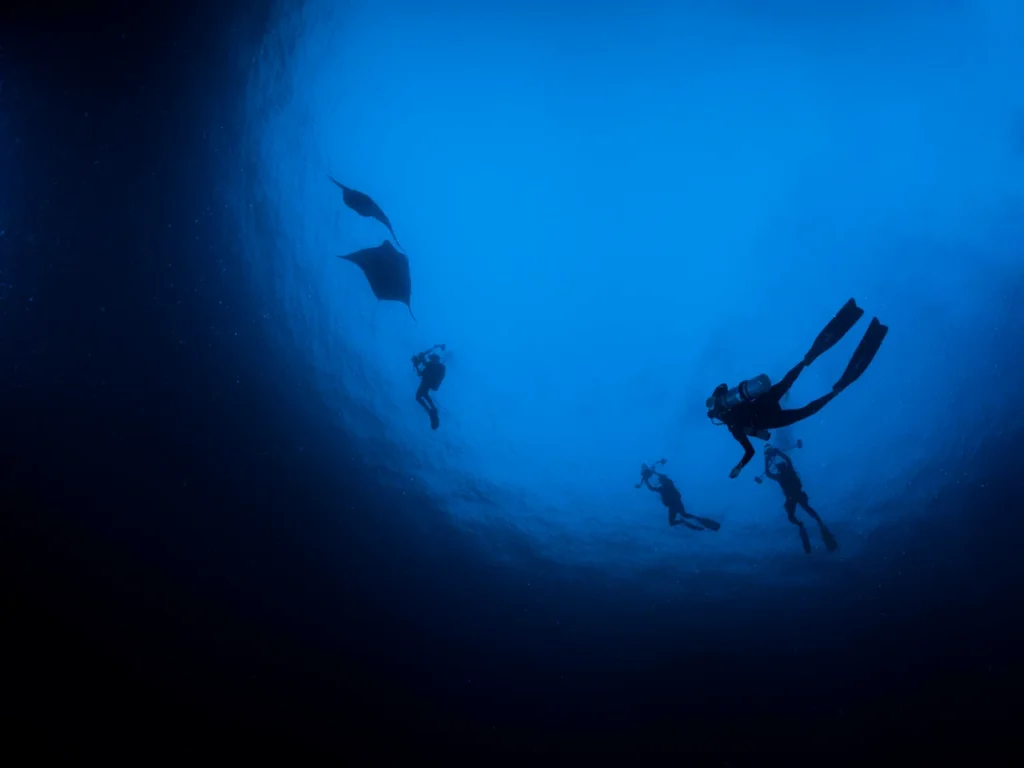
Once the plates are cleared, the Cruise Director takes centre stage. This is the nightly ritual we all wait for. With a whiteboard or a TV screen, they map out the plan for tomorrow. There is a palpable buzz in the room when they point to a specific spot on the map and drop the magic words: “Tomorrow, we are looking for Mantas,” or “We’re hitting the hammerhead cleaning station at sunrise.” It’s the perfect cliffhanger to end the day, sending us off to bed buzzing with anticipation.
Falling Asleep to the Sound of the Sea
On land, 21:30 might be the time you are just settling down to watch a film. On a liveaboard, 21:30 feels like midnight. The combination of nitrogen off-loading, sun exposure, and the sheer physical exertion of the day hits us all at once. The lounge empties rapidly as heavy-eyed divers retreat to their cabins.
That is, except for the Night Owls. While the rest of the boat is comatose, this tribe is just getting started. Seemingly immune to the sedative effects of nitrogen, they can be found on the upper deck, solving the world’s problems under a galaxy of stars. They are the ones who forge deep bonds with the night watch crew. By the end of the trip, they won’t just know the deckhand’s name, they’ll know his mother’s maiden name and his childhood pet’s favourite snack.
Of course, there is a trade-off. You will rarely see a Night Owl at the 06:00 briefing. They tend to emerge around mid-morning, coffee in hand and looking slightly fragile, ready to join the second dive while the rest of us are already raving about the hammerheads we saw at sunrise.
For the rest of us mere mortals, however, the day ends early. There is something deeply hypnotic about sleeping on a moving boat. As the engines hum to life to carry us to the next destination, the vibration acts like white noise. You lie in your bunk, feeling the gentle, rhythmic roll of the vessel, and you don’t just fall asleep; you pass out, sinking into the kind of deep, restorative slumber that you rarely get back home.
How Crew Shape the Day On Board Without You Noticing
While we are napping, eating, or editing our photos, the crew are working flat out. You can read more about their reality in our Indonesia Liveaboard Crew Diaries, but simply put, they are the heartbeat of the boat.
It is a logistical ballet that happens almost entirely behind the scenes. When we descend for a dive, the “Cabin Fairies” rush in to make beds and empty bins, vanishing before we surface so that we assume our cabins just magically clean themselves. In the galley, the chefs are chopping and sautéing while balancing on a moving floor, timing the soufflé perfectly to the captain’s course changes.
On the dive deck, the work never stops. They fill tanks in the tropical heat and analyze nitrox blends. They quietly fix the leaky O-rings we forgot to mention. Meanwhile, tender drivers read the currents, positioning skiffs to pick us up the second we surface, often in rolling swells.
Master Liveaboards crews manage safety so seamlessly, we forget we are miles from civilisation. We see the smile as they hand us a hot towel. We don’t see the engine maintenance, route planning, or weather monitoring that makes it all possible. They allow us the ultimate luxury: the freedom to think of nothing but the ocean.
Ready to Experience the Rhythm?
On a liveaboard, the adventure is woven into every moment, from the sunrise coffee to the starlit conversations. Don’t just read about the lifestyle: live it.
This Rhythm Is What Divers Fall in Love With
Why do we do it? Why do we choose to spend a week or ten days confined to a boat with a group of strangers, miles from the nearest Wi-Fi signal?
Because it is a total mental reset. In our normal lives, choices and obligations bombard us: grocery runs, commutes, emails, and bills.
On a liveaboard, that noise is silenced. The decision fatigue vanishes, replaced by a refreshing simplicity. The most stressful choice you will have to make all week is “Nitrox or Air?” or “Chocolate or Vanilla dessert?”
But beyond the peace, there is the connection. We come on board to find our tribe. In the real world, your colleagues or family might glaze over when you talk about the specific mating dance of a Mandarin fish or the visibility at 30 metres. Here, you are surrounded by people who get it. You don’t have to explain your obsession; you are among the only other people on earth who think waking up at 05:30 on a holiday is a rational thing to do. Unless you are a Night Owl, of course, in which case we will see you at lunch.
We start the week as a random assortment of strangers (different ages, nationalities, and backgrounds), but we end it as a tight-knit unit, bound together by the shared awe of the ocean. It is a place where we can disconnect from the world to reconnect with nature, ourselves, and the people who speak our language.
FAQs
Typically, the bell rings for 3 to 4 dives a day. This usually consists of a morning dive, a mid-morning dive, an afternoon dive, and often a sunset or night dive. However, it is quality over quantity. If you want to stay dry and watch the sunset with a cold drink instead, that is your call.
That is absolutely fine. It is your holiday! If you are a Night Owl who was up late solving world problems with the crew, feel free to sleep through the 06:00 briefing. The ocean will still be there at 10:00. Just let the dive guides know so they aren’t searching the boat for you.
Yes, plenty! Surface intervals usually last 2 to 3 hours. This is when the “tribes” do their thing: the Photo Pros edit images, the Sun Seekers nap, and the Fish ID nerds argue over books. It is your time to recharge however you see fit.
Not at all. As mentioned in the “Shared Tables” section, liveaboards are the easiest places in the world to make friends. The “buffet style” dining means you will always have someone to talk to. By day two, you will likely have found your tribe.
It might seem busy on paper, but the “Dive, Eat, Sleep” rhythm actually feels very relaxed because there is no travel friction. We don’t have to drive to the dive site or walk to a restaurant. The boat moves us.
The captain is always monitoring the weather. If a site is too rough or the current is wrong, they will have a Plan B. Flexibility is key, and often the “Plan B” sites turn out to be the hidden gems of the trip.