
For experienced divers looking to go beyond recreational limits, technical diving liveaboards provide the ideal way to explore deeper wrecks and untouched reefs. Technical diving is no longer an experimental fringe of the sport. It is a structured, training-led discipline designed for experienced divers who want to move beyond recreational depth and time limits. By using mixed gases, equipment redundancy, and precise dive planning, you gain access to deeper wrecks, untouched parts of reefs, and some sites that remain inaccessible to most divers.
For this type of diving, liveaboards are not a luxury. They are the most effective and often the only practical platform. Diving beyond 40 metres requires heavy equipment, gas blending capabilities, crew expertise, and surface support that day boats cannot reliably provide.
This guide explains what technical diving involves, why diving liveaboards are the preferred platform, and where it is best done.
A Quick Summary
- Depth & Complexity: Technical diving goes beyond 40m and involves mixed gases, mandatory decompression, and detailed dive planning.
- Why Liveaboards: They provide space, gas logistics, stability, and crew support essential for safe tech operations.
- Top Destinations: Egypt, Solomon Islands, Truk Lagoon, and Bikini Atoll are among the world’s leading technical diving locations.
- Requirements: Advanced training, redundant equipment, and recent experience are essential.
- The Payoff: Liveaboards allow you to dive deeper, stay longer, and explore sites preserved beyond recreational limits.
Plan Your Tech Diving Adventure
Find liveaboard itineraries tailored for technical divers in:
Where Recreational Diving Ends And Exploration Begins
The underwater world is pretty challenging for divers at the best of times, but beyond 40 metres, it becomes even less forgiving. Beyond this depth, direct ascents are no longer an option due to decompression obligations. You are diving with a mandatory ceiling, meaning every decision underwater must be carefully planned.
In recreational diving, most problems are solved by carefully ascending. In technical diving, you solve problems at depth using your mindset and the equipment and gas you carry. This fundamental difference changes how you plan dives, configure equipment, and operate as a team.
What Is Technical Diving? (And Why It’s Different)
Technical diving is not “recreational diving, but deeper.” It’s a different approach with different risks, equipment, and procedures.
Beyond No-Decompression Limits
The defining feature of technical diving is deliberately exceeding no-decompression limits (NDLs). Once you do this, you must complete staged decompression stops before surfacing. This allows for longer bottom times and deeper dives but requires precise gas planning and redundancy.
You must carry enough gas to handle failures underwater, not rely on the surface as a solution.
Mixed Gases Explained
Air becomes increasingly unsuitable as depth increases due to narcosis and oxygen toxicity.
- Nitrox: Higher oxygen mixes (50–100%) are commonly used during decompression to accelerate off-gassing.
- Trimix: Helium replaces part of the nitrogen content to reduce narcosis on deeper dives, typically beyond 45–50m. It is expensive, but cognitive clarity at depth is essential.
Discipline Over Adventure
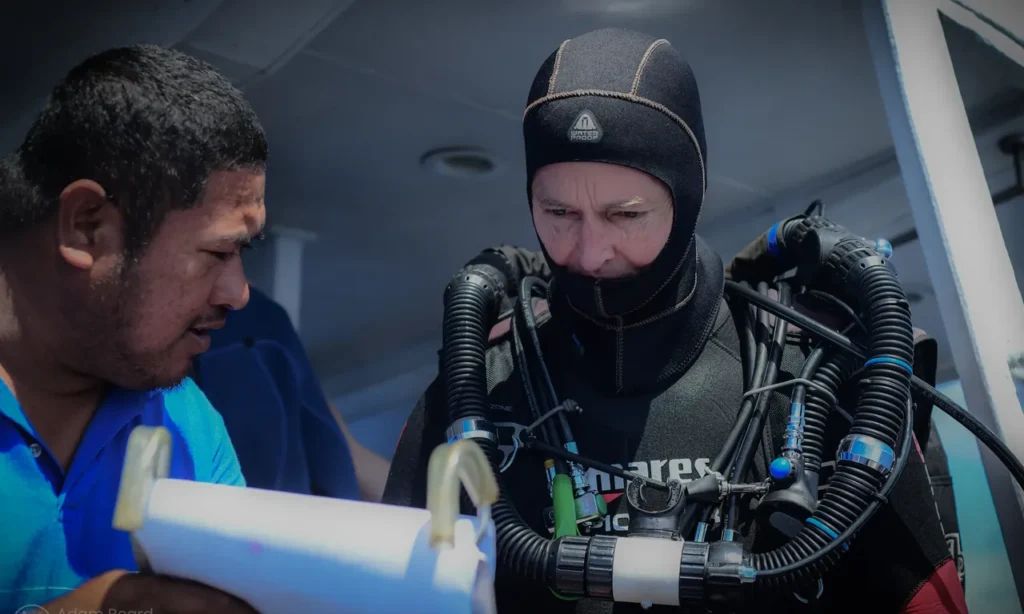
Technical diving is driven by procedures, not impulse. You follow agreed dive plans, maintain team positioning, and carry redundant systems for all critical equipment. If something fails, you switch to the backup and execute the exit plan calmly.
Why Liveaboards Are Ideal for Technical Diving
You can tech dive from shore, but hauling twinsets across a beach at 6:00 AM isn’t fun. Liveaboards remove unnecessary logistical constraints.
Access to Remote and Deep Sites
The best technical dive sites are often far from shore. Liveaboards position directly over wrecks and walls, allowing multiple deep dives without long surface transits that complicate decompression and recovery.
Space, Gas, and Infrastructure
Technical equipment is bulky and complex. Liveaboards designed for tech diving offer:
- Dedicated setup and storage areas
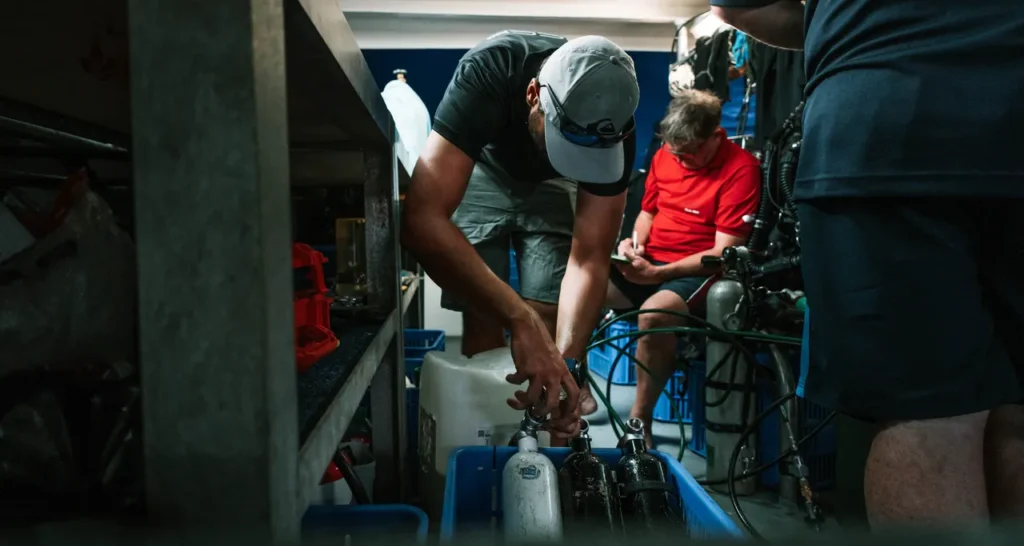
- Oxygen and helium supplies
- Booster pumps and blending systems
- Battery charging stations for lights and DPVs
These are not optional extras for serious technical operations.
Experienced Crew Support
A tech-capable crew understands gas requirements, run-times, and decompression protocols. They know when delays are normal and how to respond appropriately, including deploying safety gas and chase boats when required.
Leading Technical Diving Liveaboards Destinations
If you have the training, these are your various playgrounds around the world.
Red Sea: Deep Wrecks & Historical Icons
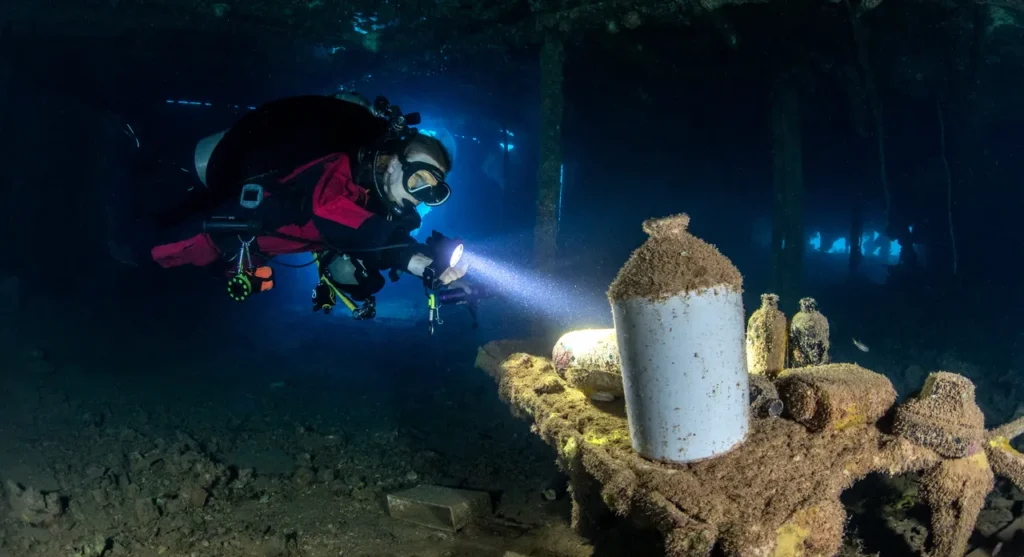
The Red Sea is the classic training ground. While recreational divers crowd the Thistlegorm, tech divers can explore the stern in peace or explore the Rosalie Moller, which sits just deep enough, at 50 metres, to keep the crowds away.
- Key Advantage: High-quality deep wrecks between 40m and 60m with reliable conditions.
- Explore Our Red Sea Liveaboards
Bikini Atoll: The Pinnacle of Wreck Tech Diving
Let’s be clear, this is not a holiday; it’s an expedition. Diving here requires Trimix, extended decompression, and strict operational discipline. Following the nuclear tests of Operation Crossroads, an entire nuclear ghost fleet rests at the bottom of the lagoon, including the USS Saratoga, an aircraft carrier larger than the Titanic.
- Key Advantage: Large-scale warships preserved in situ, offering a historical and technical diving experience unmatched anywhere else. This is for serious technical AND history buffs.
- View Bikini Atoll Itineraries
Truk Lagoon: War History at Depth
While many sites are accessible to recreational divers, Truk’s most significant wrecks lie deeper. For example, the San Francisco Maru rests at 60m and remains one of the world’s most iconic technical dives.
- Key advantage: Deep penetration opportunities with intact cargo and machinery.
- Discover Truk Lagoon
Solomon Islands: Remote Walls & WWII Wrecks
The Solomon Islands combine remote reef walls with a range of World War II wrecks, including the USS Aaron Ward, a destroyer sitting upright in around 60–70m of water that’s a standout deep dive for technical divers. The area saw intense fighting during the war, and the channel between Florida Island and Guadalcanal is known as Iron Bottom Sound.
- Key advantage: Pristine walls and deep historical wrecks accessible only by liveaboard, ideal for advanced and tech‑certified divers.
- Explore The Solomon Islands
What It’s Like to Tech Dive from a Liveaboard
The rhythm of a tech charter is different from a recreational one. It is slower, quieter, and more focused.
Planning Before Every Dive
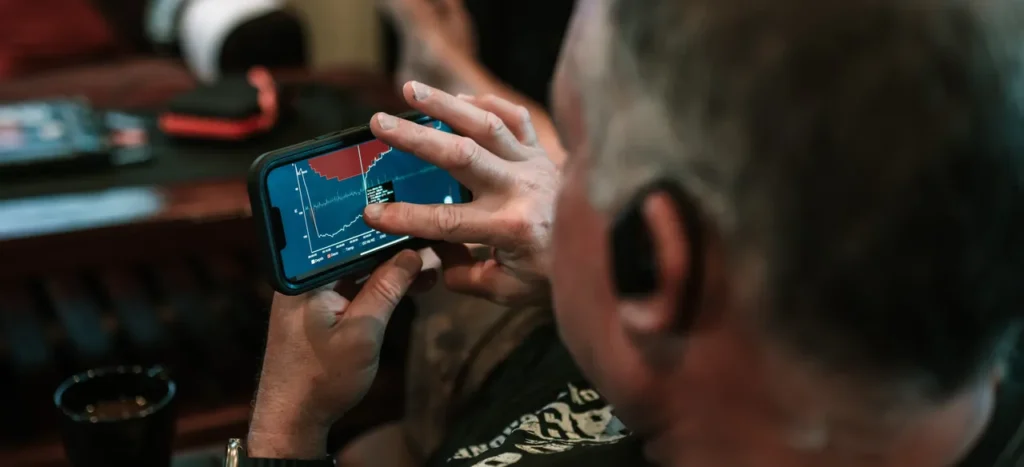
You won’t hear “dive with your buddy, be back in an hour.” Before the dive, teams sit down with software to cut the tables. You agree on a “Run Time”; exactly how many minutes you will spend at your bottom depth and exactly how long your ascent will take. If the plan says you leave the bottom at minute 20, you leave at minute 20.
Longer Dives, Longer Ascents
The dives are longer. You might spend 25 minutes exploring a wreck at 55m, followed by 45 minutes of ascent and decompression. This is where patience is key. You will spend a lot of time hanging on a shot line or drifting in the blue, staring at your computer. It can be meditative, or it can be boring; that depends on you.
Surface Intervals That Matter
Surface intervals are strictly for recovery. You aren’t rushing to the sundeck for a beer. You are rehydrating, analysing your gas for the next dive, and resting. The physiological load of deco diving is higher; you will feel tired, so napping is practically mandatory.
Training, Experience & Requirements
Liveaboards, especially when offering technical diving, need to trust you before they let you drop to 60m.
- Certification: You must hold a valid card from a recognised agency (TDI, SSi Tec, GUE, RAID, PADI TecRec, etc.) for the depth you intend to dive.
- Experience: A card isn’t enough. If you passed your Trimix course last week, do not book a Bikini Atoll trip for next month. You need recent experience in similar gear.
- Gas Management: You must be able to calculate your own consumption rates (SAC rate) and plan accordingly.
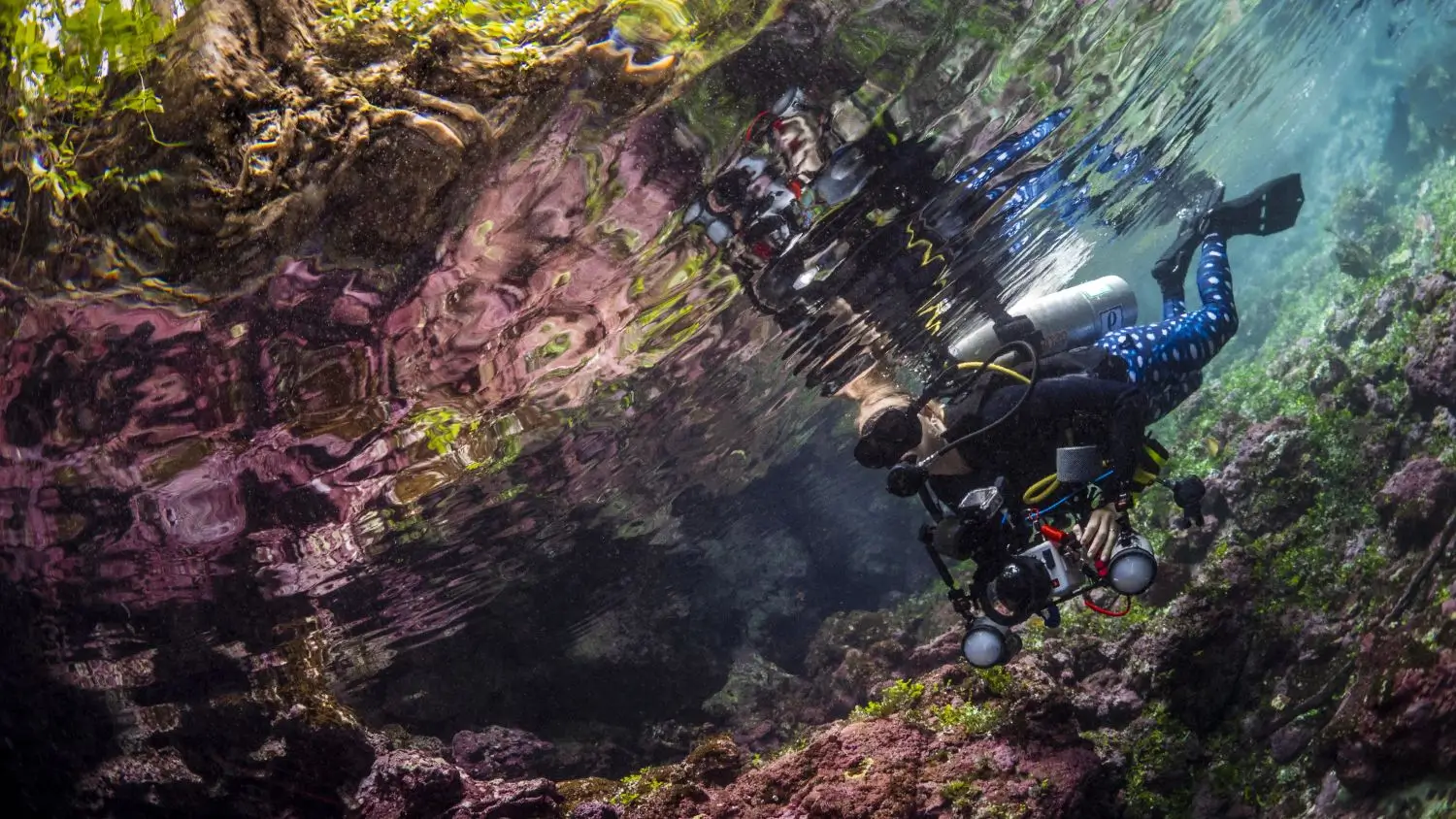
- Equipment Proficiency: You need to be fully familiar with your technical setup: twinsets, stage cylinders, rebreathers, dive computers, and redundant systems. You should be able to configure, check, and troubleshoot all gear independently.
Safety, Redundancy & Risk Management
Tech diving can be seen as relatively safe when done properly because we assume everything will break.
- Equipment: We carry two regulators. We carry backup masks. We carry two dive computers (and possibly even a bottom timer).
- Gas Planning: We follow the “Thirds” rule or similar conservative reserves. You always surface with gas to spare.
- Team Support: On a liveaboard, the surface support is vital. The crew will have a tender boat ready, extra gas hanging on the line at 6m, and 100% oxygen available on deck for immediate emergency use.
Risk is managed through preparation, not bravado.
The Evolution of Tech Diving: From Fringe to Mainstream
Twenty years ago, tech divers were seen as adrenaline junkies making their own equipment in garages. Today, it is highly standardised. Equipment manufacturers build rigorous, tech-specific gear, and liveaboard operators have adapted to support it. Safety cultures have improved drastically, moving away from “machismo” toward “competence.” The focus is now on consistency, competence, and repeatable safety.
At Master Liveaboards, we align with this modern best practice. We don’t just facilitate deep diving; we support the disciplined approach that makes it sustainable.
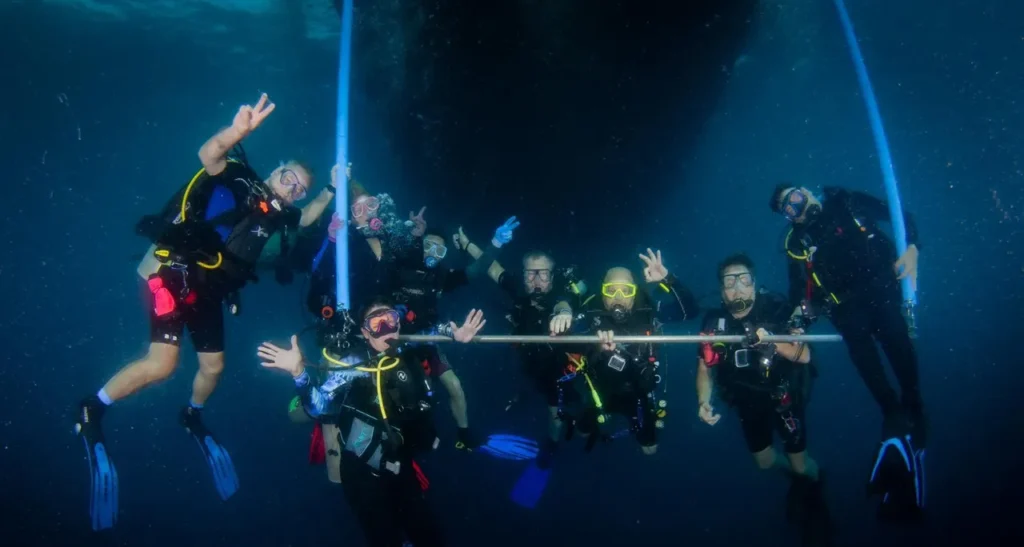
Is Tech Diving Right for You?
Be honest with yourself.
- Are you happy with maths and physics? You need to understand Dalton’s Law and gradient factors as a minimum.
- Do you have patience? You will spend hours prepping gear for 30 minutes of bottom time.
- Can you handle problems? If a regulator free-flows at 50m, you can’t bolt for the surface. You have to shut it down and switch, calmly.
If you answered yes, the underwater world just got twice as big.
FAQs
Generally deeper than 40 metres or any dive involving mandatory decompression or overhead environments.
No. Liveaboards are designed for certified technical divers. You must complete the appropriate Tec 40, Tec 45, or Trimix certification courses before joining a technical liveaboard itinerary. These trips assume you already have the training, experience, and equipment proficiency to dive safely beyond recreational limits.
The Red Sea is ideal for accessibility and variety, offering deep wrecks and walls suitable for advanced divers. Truk Lagoon and Bikini Atoll are premier destinations for deep wreck exploration, while the Solomon Islands provide remote walls, biodiverse reefs, and deep WWII wrecks like the USS Aaron Ward, best accessed via liveaboard for certified technical divers.
It carries higher inherent risks due to depth and decompression obligations. However, the disciplined training and redundancy measures are designed to mitigate these risks significantly.
Tech-specific liveaboards will have helium and oxygen available for blending, though Helium is usually charged by the litre. Always check the vessel specifications before booking.
Dive Deeper With the Right Team
Tech diving isn’t about chasing depth for the sake of a number on your computer. It’s about doing complex dives the right way, with the right people, to see things others can’t.
Extend Your Diving Horizons
If you’re ready to push your limits and explore new depths, we have the liveaboard itineraries and expert guidance to take you there.
About the Author